


Cardano stands at a pivotal regulatory crossroads in late August 2026.
Many investors watch closely as the network’s native token ADA navigates the complex path toward a potential U.S. spot exchange-traded (ETF) fund.
The story involves regulated futures, SEC frameworks, issuer decisions, and broader institutional interest.
This piece unpacks the current landscape through the questions people ask most often, drawing on public timelines and market developments while keeping a clear-eyed view of what eligibility actually delivers.
When did (or will) Cardano become eligible for a spot ETF under SEC rules?
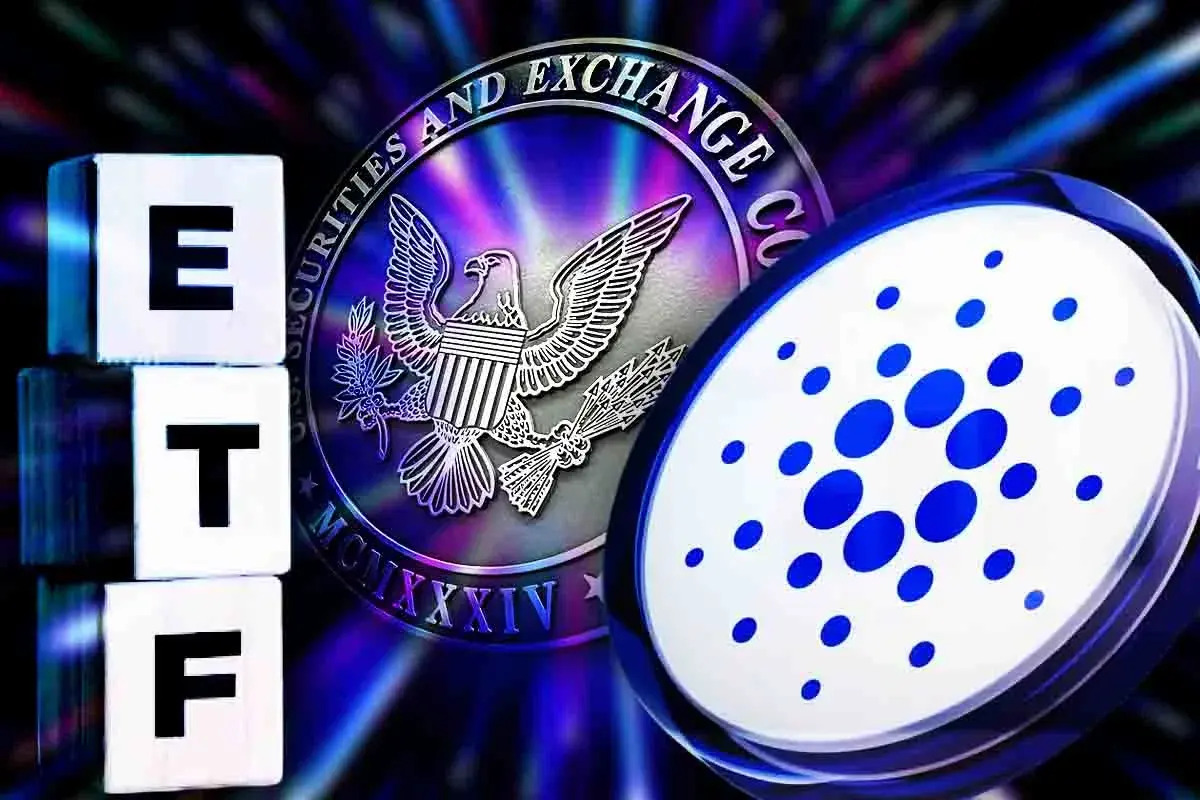
Cardano reached a formal eligibility threshold on August 9, 2026. Chicago Mercantile Exchange (CME) Group had launched regulated ADA futures contracts—both standard sizes of 100,000 ADA and micro contracts of 10,000 ADA—on February 9, 2026.
Six full months of trading history on that CFTC-supervised venue satisfied one of the SEC’s key generic listing standards for spot crypto ETFs.
Under these standards, an asset needs a regulated futures market of sufficient duration before exchanges can pursue a streamlined review process for products that hold the underlying token directly.
Bitcoin and Ethereum cleared similar hurdles years earlier. Cardano now sits in that same category.
Importantly, the date marks eligibility for a faster path, not automatic approval or an immediate product launch.
What is the SEC’s “regulated market of significant size” or six-month futures requirement, and why does it matter for Cardano?
Regulators look for evidence that a futures market can support reliable price discovery and surveillance against manipulation.
The six-month trading requirement on a venue such as CME serves as a practical proxy for that “regulated market of significant size.”
Once the clock completes, an issuer gains the ability to file or activate an application under more predictable review timelines rather than starting from scratch with lengthy individual rule changes.
For Cardano this milestone carries extra weight. The network’s proof-of-stake (PoS) design, large number of independent stake pools, and on-chain governance already position it favourably in commodity-classification discussions.
Meeting the futures-history bar removes one structural obstacle that had kept ADA out of the earliest altcoin ETF waves.
Parallel developments, such as expanded 24-hour trading on the CME contracts, further strengthen the liquidity argument that regulators examine.
Does meeting the six-month CME futures requirement guarantee a spot ETF approval?
No. Eligibility opens a door; it does not walk an application through to final approval. The SEC still evaluates custody arrangements, market surveillance sharing agreements, potential manipulation risks, and overall investor-protection measures.
Historical precedent shows multiple rounds of review, requests for amendment, and occasional denials even after futures thresholds are met.
Cardano’s case benefits from the streamlined process once a filing is active, yet every prior crypto ETF journey demonstrates that timing, political climate, and specific product design influence outcomes.
The August 9 milestone therefore represents progress rather than a finished decision.

Has Grayscale (or any issuer) filed for / withdrawn a Cardano spot ETF? /Are there still active U.S. spot ADA ETF applications after Grayscale’s withdrawal? / Why did Grayscale withdraw its Cardano ETF filing right before the eligibility milestone?
Grayscale filed for a Cardano Trust ETF earlier and then formally withdrew the registration statement on August 7, 2026—two days before the six-month futures clock finished.
The firm stated it no longer intended to proceed with the planned distribution and confirmed that no shares had been issued under the filing.
Parallel withdrawals for other assets occurred around the same time, suggesting a broader product-priority review rather than an ADA-specific judgement.
Following that withdrawal, public reporting indicated no other dedicated U.S. spot ADA application stood fully active at the precise moment eligibility arrived.
Several firms—including Bitwise, Canary Capital, VanEck, and 21Shares—had previously signalled interest or maintained broader crypto product pipelines that could still accommodate Cardano.
New filings remain possible at any time now that the futures-history requirement is satisfied.
The short gap between withdrawal and eligibility created a temporary “eligible but sponsorless” window that market observers continue to monitor closely.
What is the potential decision window if a filing is activated after August 9? / When could a Cardano spot ETF actually launch if approved?
Should an exchange or issuer activate a compliant filing after August 9, the streamlined review typically allows up to roughly 75 days. That arithmetic places a possible decision boundary near October 23, 2026.
Approval, if granted, would still require final listing processes, operational readiness of the fund, and market-maker preparation before trading begins.
Realistic launch timing therefore sits later than the decision date—potentially late 2026 or into early 2027 depending on how quickly remaining operational details are resolved.
No fixed calendar exists until an active application starts the formal clock.

What is the difference between a spot ADA ETF and the existing ADA futures ETFs (e.g., CRDD/CRDX)? / How does a spot ETF create buying pressure on ADA compared to futures products?
Volatility Shares already offers futures-based products such as CRDD and the leveraged CRDX.
These vehicles gain exposure through CME ADA futures contracts rather than holding the token itself.
Investors therefore experience the effects of contract rolls, contango or backwardation, and tracking differences that can diverge from the spot price of ADA over time.
A true spot ETF would purchase and custody actual ADA tokens. Creation and redemption activity by authorised participants can generate direct demand for the underlying asset whenever new shares enter the market.
That mechanism often produces more sustained buying pressure on the token’s price than futures products, which primarily transfer risk among derivatives traders without necessarily requiring large-scale acquisition of the physical cryptocurrency.
The distinction matters for long-term holders who prefer pure price exposure without roll costs.
Is Cardano included in any existing crypto ETFs or index products?
Yes. Beyond dedicated futures products, ADA appears in several diversified vehicles.
T. Rowe Price’s Active Crypto ETF added a modest allocation in August 2026.
Cardano also features in index-oriented funds such as the Bitwise 10 Crypto Index and certain Grayscale multi-asset offerings.
These inclusions provide institutional and retail investors regulated pathways to gain partial exposure without waiting for a pure spot ADA product.
They simultaneously signal growing comfort among traditional asset managers with Cardano’s liquidity and governance profile.

What other catalysts (beyond ETFs) are people watching for Cardano institutional adoption?
Institutional interest extends well past ETF headlines. Network upgrades—including the Van Rossem hard fork earlier in 2026 and the ongoing Dijkstra-era work centred on Ouroboros Leios scalability—aim to raise throughput and support more complex applications.
Parallel research into post-quantum protections, such as CIP-0197 entering formal review, addresses long-term security concerns that large fiduciaries evaluate.
On-chain governance continues to mature through active DRep voting and Constitutional Committee processes.
Stablecoin growth, cross-chain connections, and real-world asset experiments further expand the utility narrative.
CME futures themselves already give institutions a regulated hedging tool. Together these elements create multiple independent reasons for professional capital to engage with Cardano, whether or not a spot ETF arrives on any particular schedule.
Looking across the full picture, Cardano has cleared a meaningful regulatory checkpoint. The combination of CME futures history, existing institutional products, and ongoing technical progress keeps the door open.
Whether a dedicated spot ETF materialises in the near term depends on renewed sponsor filings and the SEC’s subsequent review.
Market participants who follow both the regulatory calendar and the network’s internal upgrades will remain best positioned to understand the next chapter.

1 Comment
Appreciate the actionable advice in this article.