


Yes — institutions continue buying Bitcoin in meaningful size. Recent data from 13F filings, exchange-traded fund (ETF) flow trackers, and public company disclosures show large investors adding exposure even while prices swung lower earlier in 2026.
The buying looks deliberate rather than reactive, and it spans asset managers, banks, sovereign funds, and corporate treasuries.
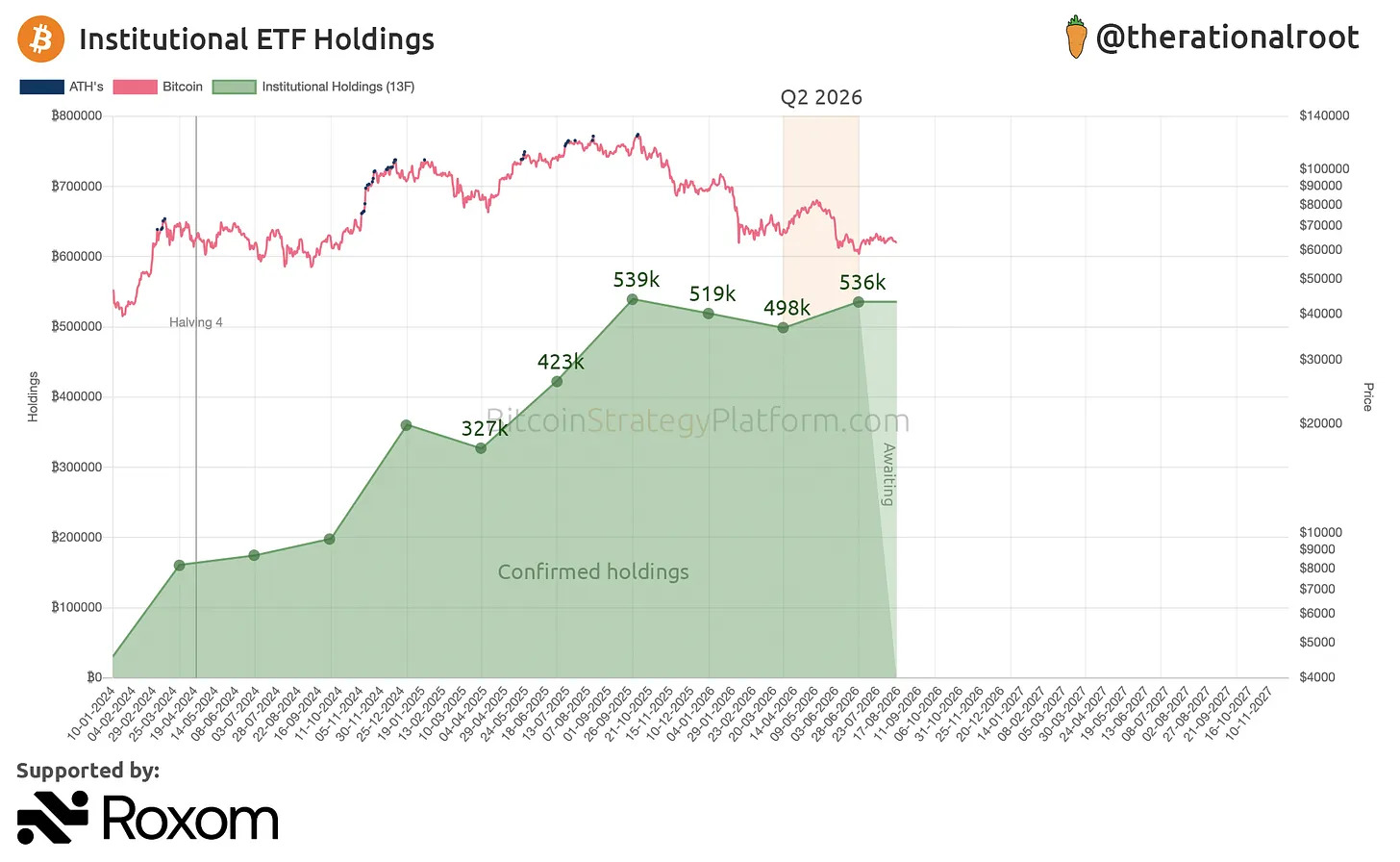
This pattern stands out because it runs counter to classic risk-off behaviour. When Bitcoin dropped roughly 14% in the second quarter, institutional holdings inside U.S. spot Bitcoin ETFs still rose 7.5%.
While many analysts did not see its relevance, that divergence deserves attention.
Are institutions still buying Bitcoin in 2026?
Well, evidence shows they are. Through the first half of 2026 and into August, institutional capital has kept flowing into Bitcoin via ETFs, direct purchases, and corporate balance-sheet additions.
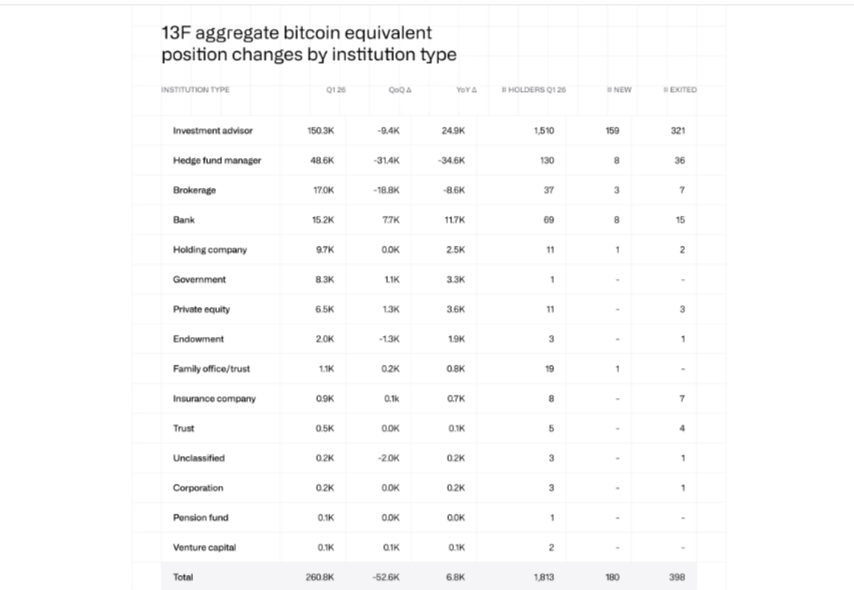
Spot Bitcoin ETFs alone have absorbed billions in net new capital during periods of price recovery, and 13F filings reveal steady accumulation by banks, advisers, and hedge funds.
The activity is not uniform across every week, yet the longer-term trend remains positive.
Which institutions are currently buying Bitcoin?
A broad mix of players remains active. Asset managers such as BlackRock and Fidelity continue to see inflows into their Bitcoin ETFs.
Major banks including JPMorgan and Wells Fargo have expanded their reported positions.
Market makers like Jane Street increased exposure sharply in recent quarters. Sovereign wealth funds, most notably Abu Dhabi’s Mubadala, have added steadily.
Public companies, led by Strategy (formerly MicroStrategy), keep purchasing Bitcoin for their treasuries.
Family offices and a growing list of registered investment advisers also appear in the filings.
Are institutions buying the BTC dip?
Many of them are. During the second-quarter price decline, institutional ownership of Bitcoin held inside ETFs actually increased while total ETF holdings edged lower.
That means large investors absorbed shares that smaller holders sold. Coinbase executives have publicly noted that sovereign wealth funds and Middle Eastern family offices view pullbacks as accumulation opportunities rather than reasons to exit.
The behaviour differs from the more skittish retail response often seen in sharp corrections.
How much Bitcoin do institutions currently hold?
Exact totals vary by category. U.S. spot Bitcoin ETFs hold well over one million Bitcoin in aggregate.
Institutional investors now account for roughly 44% of that ETF-held Bitcoin — a record share.
Corporate treasuries, led by Strategy’s hundreds of thousands of coins, add another large block.
Sovereign funds, pension plans, and hedge funds contribute additional tens of thousands of Bitcoin through ETFs and direct custody.
Combined, these groups control a meaningful and rising percentage of the circulating supply.
Are Bitcoin ETFs still seeing institutional inflows?
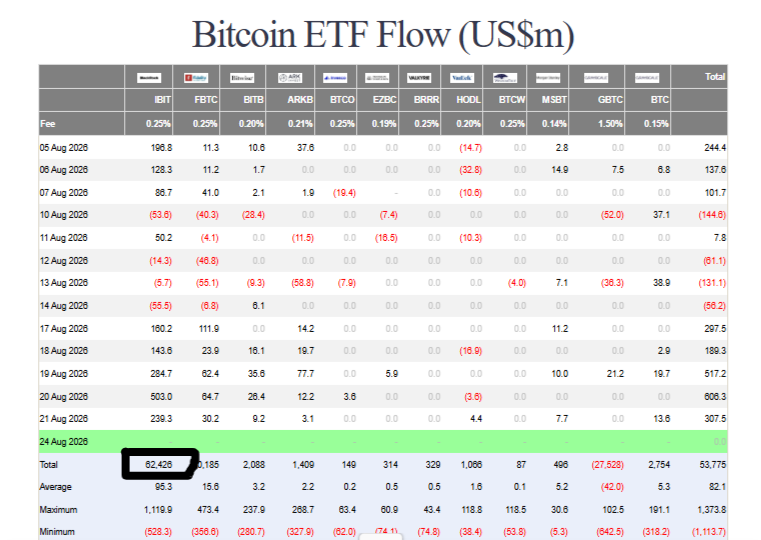
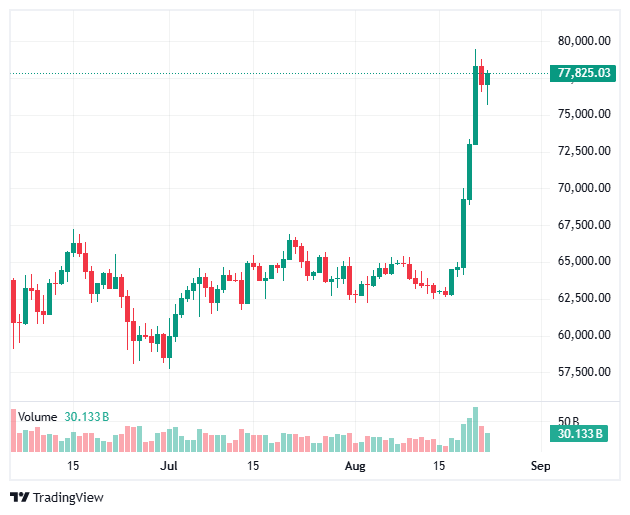
Yes. After a softer stretch earlier in the year, spot Bitcoin ETFs recorded strong net inflows again in August 2026, including several multi-hundred-million-dollar sessions.
BlackRock’s IBIT has captured the largest share of those flows, followed by Fidelity’s FBTC and a handful of other products.
Institutional buyers form a substantial portion of the demand, particularly on days when volume spikes.
Which big names are adding BTC exposure?
BlackRock remains the dominant force through IBIT, which continues to attract the bulk of new capital.
Fidelity’s FBTC holds the clear number-two position. Among banks, JPMorgan and Wells Fargo both increased their ETF holdings in recent 13F reports.
Jane Street made one of the largest single additions among market makers. BlackRock itself has also expanded related equity positions in companies that hold Bitcoin on their balance sheets.
These names appear repeatedly in the data and signal ongoing institutional comfort with the asset.

Are sovereign wealth funds and family offices accumulating Bitcoin?
They are. Abu Dhabi’s Mubadala Investment Company has raised its IBIT position across multiple consecutive quarters, even during price weakness.
Coinbase’s institutional desk has highlighted similar accumulation by other Gulf-region family offices and sovereign entities.
These buyers typically operate with longer time horizons and treat Bitcoin as a strategic reserve asset rather than a short-term trade.
Did institutions increase or decrease Bitcoin holdings during the recent price drop?
Statistics shows they increased holdings. In the second quarter of 2026, while Bitcoin’s price fell about 14%, institutional ETF holdings rose 7.5% in Bitcoin terms.
Total ETF holdings declined modestly, which means institutions absorbed selling pressure from other market participants.
This shift pushed the institutional share of ETF-held Bitcoin to a new high near 44%.

How do institutions buy BTC (ETFs, direct, OTC, corporate treasuries)?
Most regulated institutions prefer spot Bitcoin ETFs because the products sit inside familiar brokerage accounts, carry clear custody arrangements, and meet compliance requirements.
Larger players also use over-the-counter desks for block trades that minimise market impact.
A smaller but highly visible group — public companies — buys Bitcoin directly and holds it on the corporate balance sheet.
Some hedge funds and family offices still use qualified custodians for direct ownership.
The ETF channel has become the primary on-ramp for the majority of new institutional capital.
Is institutional Bitcoin ownership growing despite market volatility?
It is. The second-quarter data provides the clearest recent example: price weakness coincided with rising institutional ownership inside the ETFs.
Earlier periods of volatility produced similar patterns among longer-term allocators.
The growth is not perfectly linear, yet the multi-year direction remains upward as more banks, advisers, and sovereign entities gain comfort with the asset class.
What percentage of Bitcoin ETFs is owned by institutions?
Institutional investors currently own roughly 44% of the Bitcoin held inside U.S. spot Bitcoin ETFs.
That share has climbed from the high-30% range earlier in 2026. The increase reflects both new institutional buying and some retail or smaller-investor selling during weaker price periods.
Are hedge funds still buying or selling Bitcoin?
Activity is mixed but constructive overall. Certain multi-strategy and quantitative funds reduced exposure during the earlier drawdown, while others — including Jane Street — added substantial positions in the second quarter.
The net effect across the larger hedge-fund cohort has been positive in recent filings, though the group remains more tactical than the slower-moving advisory and sovereign channels.
Which companies are adding BTC to their balance sheets?
Strategy continues to lead by a wide margin and regularly announces new purchases.
Other public companies, including various Bitcoin miners and a growing list of international firms, have also expanded their holdings.
The corporate treasury trend has slowed from its peak pace yet remains active, particularly among companies that treat Bitcoin as a long-term reserve asset.
Where can I track institutional BTC buying activity (13F filings, ETF flows)?
Several reliable public sources update regularly. Daily and cumulative ETF flow data appear on Farside Investors and SoSoValue.
Quarterly 13F filings, available through the SEC and specialised trackers, reveal institutional ownership changes inside the ETFs.
Corporate purchases show up in company press releases and 8-K filings. On-chain analytics firms and research desks at CoinShares, Bitwise, and others periodically summarise the broader institutional picture.
Checking these sources side by side gives the clearest view of ongoing activity.
Institutional demand for Bitcoin has matured beyond the early experimental phase. Large investors now treat the asset as a legitimate portfolio component, and the data shows they keep buying through both calm and volatile stretches.
The combination of ETF accessibility, improving custody infrastructure, and longer-term strategic interest continues to support that trend.
