

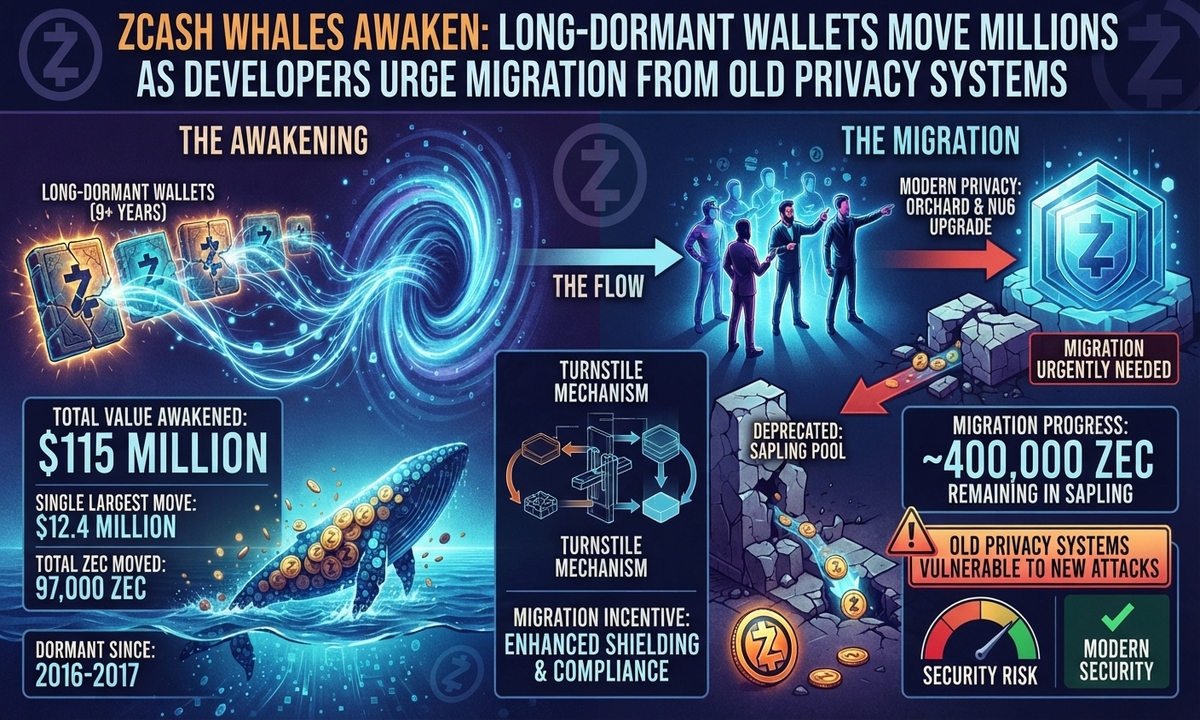
Long-dormant Zcash wallets have stirred back to life in the past day, shifting tens of millions of dollars while core developers issue a pointed call for holders to abandon the older Sapling privacy pool.
On-chain trackers spotted one address silent for nine years sending 15,750 ZEC—worth roughly $11.4 million—to Kraken.
A separate large holder unshielded 47,501 ZEC, valued near $35.8 million, and moved the funds straight to Binance.
At the same time, the Zakura team, led by Zcash co-founder Sean Bowe and developer Dev Ojha, is pressing the community to speed the exit from Sapling into the newer Ironwood system.
About 400,000 ZEC still sits in Sapling, a sum worth around $300 million at recent prices near $755.
These parallel events have drawn fresh attention to Zcash’s privacy architecture and the long-term security of its shielded pools.
The moves arrive against a backdrop of recent network upgrades, including the activation of NU7 that shortened block times and retired the even older Sprout pool.
Holders and observers now watch closely to see whether the latest whale activity and the migration push mark a deeper transition for the privacy-focused coin.
Which Long-Dormant Zcash Wallets Just Moved Millions, and What Are They Doing?
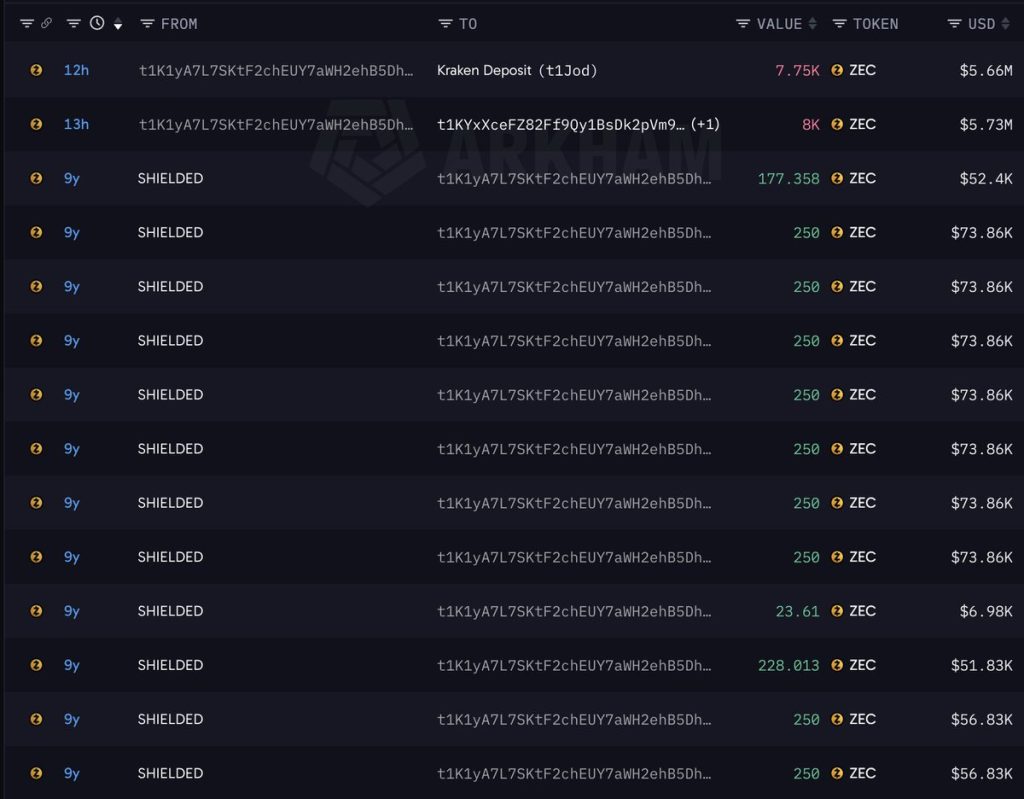
One of the clearest signals came from an early Zcash address that had stayed quiet for nine full years.
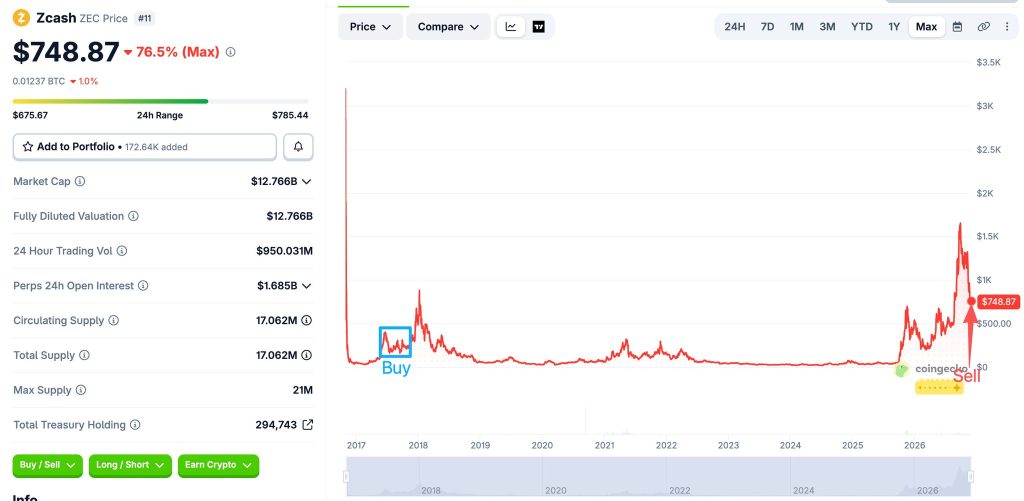
Trackers identified the wallet as having originally acquired 23,412 ZEC at an average price of about $215.
After the long silence, it transferred 15,750 ZEC to Kraken in a single observed deposit.
At the moment of the transfer, the coins carried a value near $11.4 million, leaving the holder with unrealised gains above $12 million on the original purchase cost.
Lookonchain flagged the deposit as a possible first step toward selling by a long-term holder.
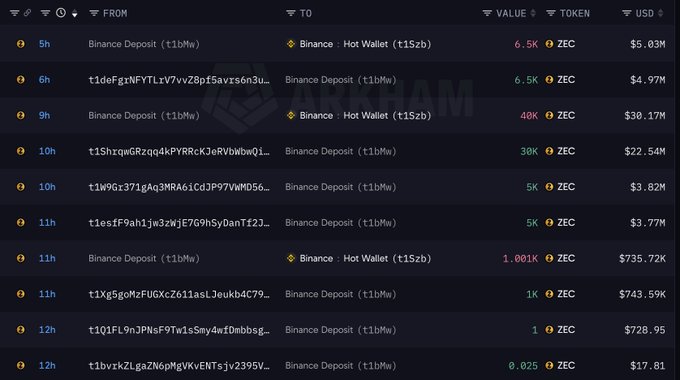
Meanwhile, another large actor unshielded 47,501 ZEC—valued at approximately $35.84 million—and routed the coins to Binance.
The unshielding step itself shows the funds had previously sat inside a private pool before emerging for exchange deposit.
On-chain monitors such as EmberCN and Resin recorded the activity within hours of one another on November 26.
Neither move has been publicly claimed by any known entity, yet both illustrate how concentrated holdings can reappear after years of dormancy and flow toward liquid venues.
Why Are Zcash Developers Suddenly Urging Users to Leave Older Privacy Systems?
Zakura’s recommendation centres on Sapling, the shielded pool launched in 2018.
The system relies on elliptic-curve pairings to verify zero-knowledge proofs quickly.
Developers note that future mathematical advances—or sufficiently powerful quantum computers—could eventually weaken those pairings and allow an attacker to forge proofs.
In a private pool, forged proofs could create counterfeit ZEC that would remain difficult to detect until more coins attempted to leave the pool than had ever entered.
Ironwood, by contrast, uses the Halo 2 proof system that does not depend on pairings at all.
Roughly 85% of private ZEC already resides there. Zakura proposes a two-step path: first a network upgrade that stops new deposits into Sapling while still permitting withdrawals, then the option to freeze the pool entirely if credible signs of an attack appear.
Freezing early would preserve a recovery route for legitimate owners once a new proof system could be swapped in.
The team describes practical pairing breaks as highly speculative, yet still urges holders to migrate while the exit path remains open and frictionless. No activation date has been set.

How Significant Are These Whale Moves Compared to Previous ZEC Activity?
The 15,750 ZEC Kraken deposit stands out because of the nine-year dormancy rather than sheer size alone.
Many earlier large transfers have involved more active wallets or shorter holding periods.
The $35.8 million unshielding-to-Binance movement ranks among the larger single-day exchange inflows observed recently, yet Zcash has seen comparable volumes during periods of heightened interest.
In the broader context, Zcash’s shielded supply has climbed toward nearly 5 million ZEC, or close to 29% of total supply, after successive upgrades.
Whale activity in recent weeks has included both accumulation off exchanges and large deposits onto them, producing mixed net flows.
The latest dormant-wallet awakening therefore adds a distinctive historical flavour rather than rewriting the scale of recent on-chain traffic.
Combined with the Sapling migration call, however, the moves reinforce that substantial value still sits in older pools and can re-enter circulation when holders choose.

What Risks Do the Older Privacy Protocols Pose to Holders Right Now?
Sapling’s reliance on pairings creates a theoretical long-term vulnerability.
An attacker who could forge proofs might mint unauthorised ZEC inside the pool.
Because amounts remain hidden, the inflation could stay invisible for a period.
No working attack has been demonstrated, and the developers themselves call the near-term probability low.
Still, the risk compounds if mathematical progress accelerates or if quantum hardware improves faster than expected.
Holders who leave coins in Sapling also face the practical risk of delayed or more complicated migration if the community later decides to freeze deposits or the entire pool.
Ironwood already carries the majority of shielded value and uses a pairing-free construction, so remaining in Sapling concentrates residual exposure on a shrinking share of the network’s private supply.
The recent NU7 upgrade that rendered Sprout funds unspendable offers a concrete precedent: older pools can be retired, and coins left behind may become harder or impossible to move under ordinary transaction rules.
Could These Whale Actions and the Migration Call Signal a Bigger Shift for ZEC?
Taken together, the dormant-wallet movements and the accelerated Sapling recommendation point toward a network that is actively pruning legacy privacy systems while large holders test liquidity.
The push into Ironwood continues a multi-year pattern of upgrading proof systems for stronger long-term security.
Exchanges such as Gemini have already expanded support for shielded Ironwood deposits and withdrawals, lowering friction for users who choose to migrate.
At the same time, the reappearance of early coins after nearly a decade suggests that some original participants are reassessing their positions amid higher prices and clearer upgrade roadmaps.
Whether the combination produces sustained selling pressure, renewed accumulation into modern pools, or simply orderly migration remains open.
What is already visible is a deliberate effort by developers to reduce reliance on pairing-based cryptography and a readiness among at least some large holders to move sizeable balances after long periods of inactivity.
For a privacy coin whose value proposition rests on cryptographic soundness, these steps form part of an ongoing hardening process rather than a sudden crisis.
The coming weeks will show how quickly the remaining Sapling balance declines and whether further long-dormant addresses follow the recent examples.
For now, the message from both the on-chain data and the developer side is consistent: the older systems are being phased toward retirement, and holders still using them have a clear invitation to move.
