


A prominent Bitcoin whale quietly moved a massive pile of coins back onto Kraken this week, locking in a tidy paper gain after months of holding.
On-chain trackers flagged the deposit almost immediately, and the details paint a clear picture of patient capital at work.
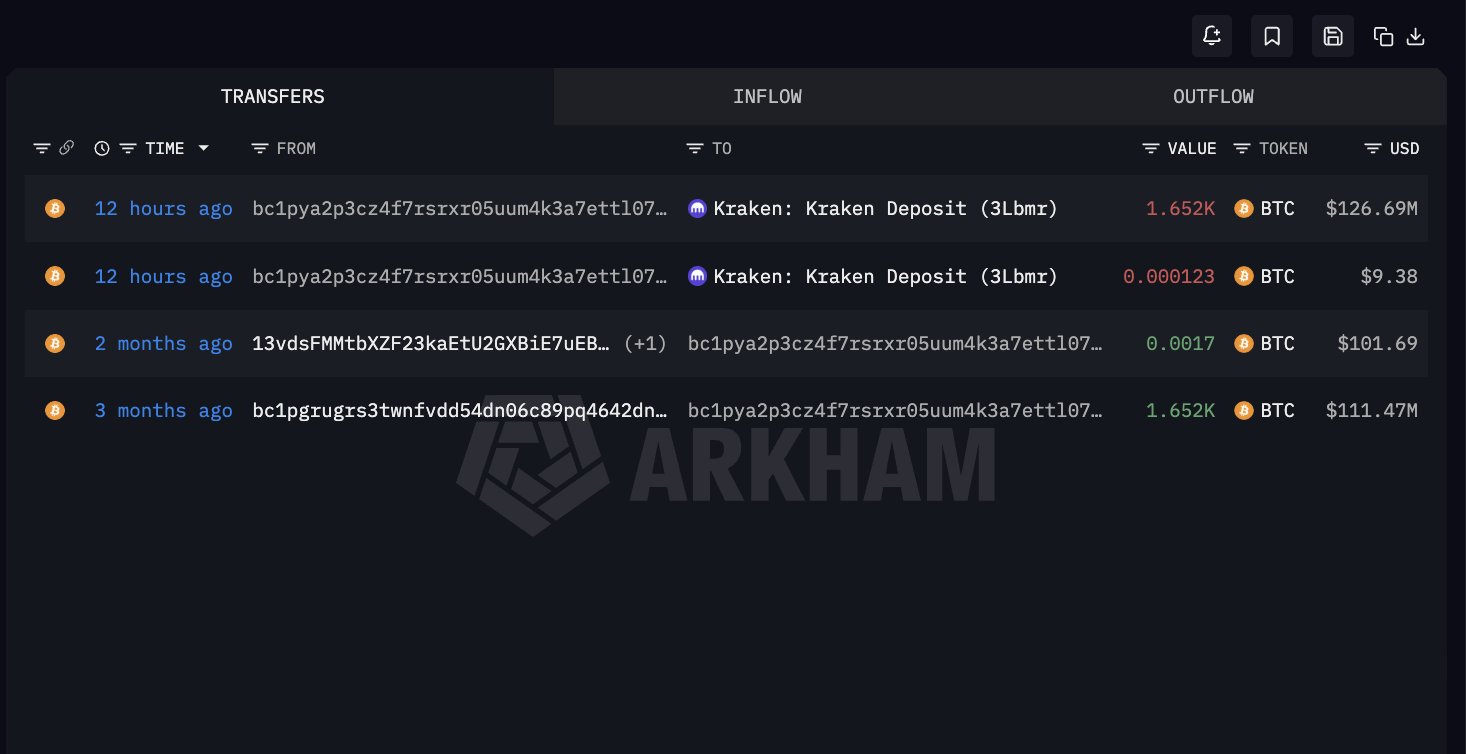
The address labelled bc1py pushed 1,651.82 BTC, valued at roughly $126.69 million at the time, straight into the exchange.
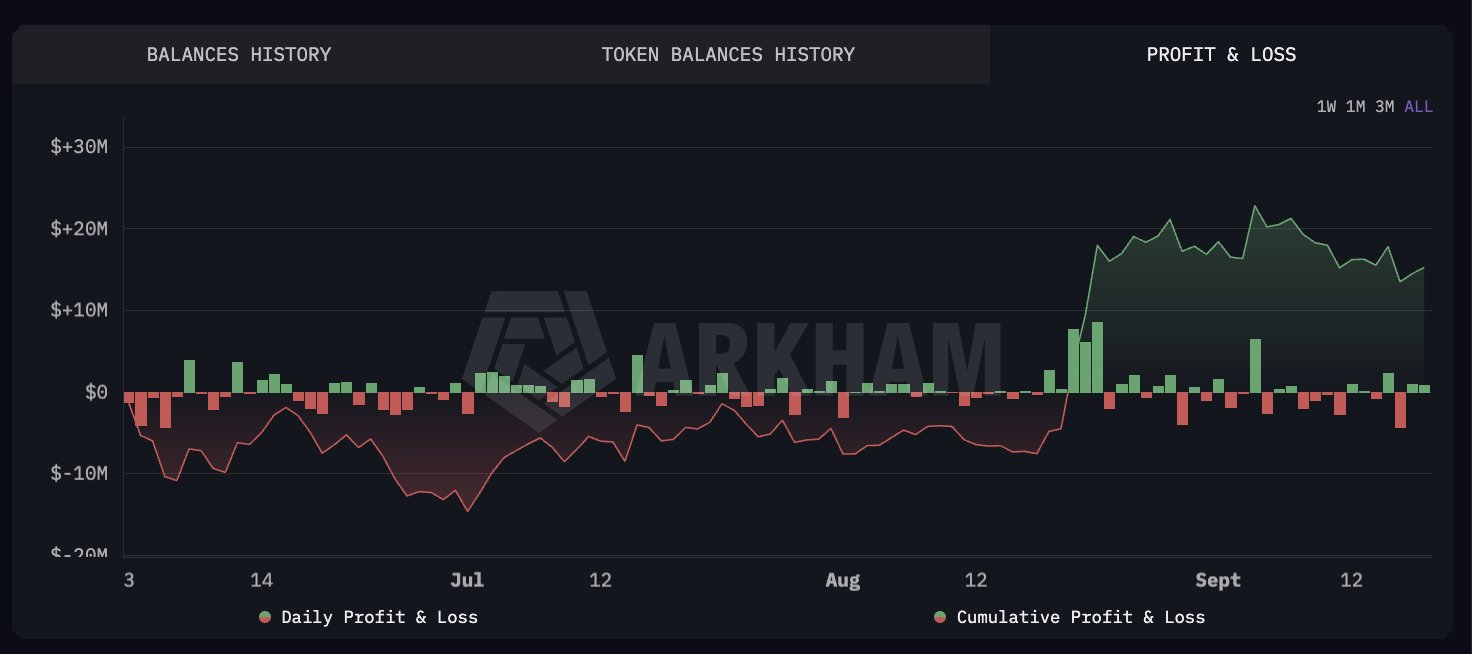
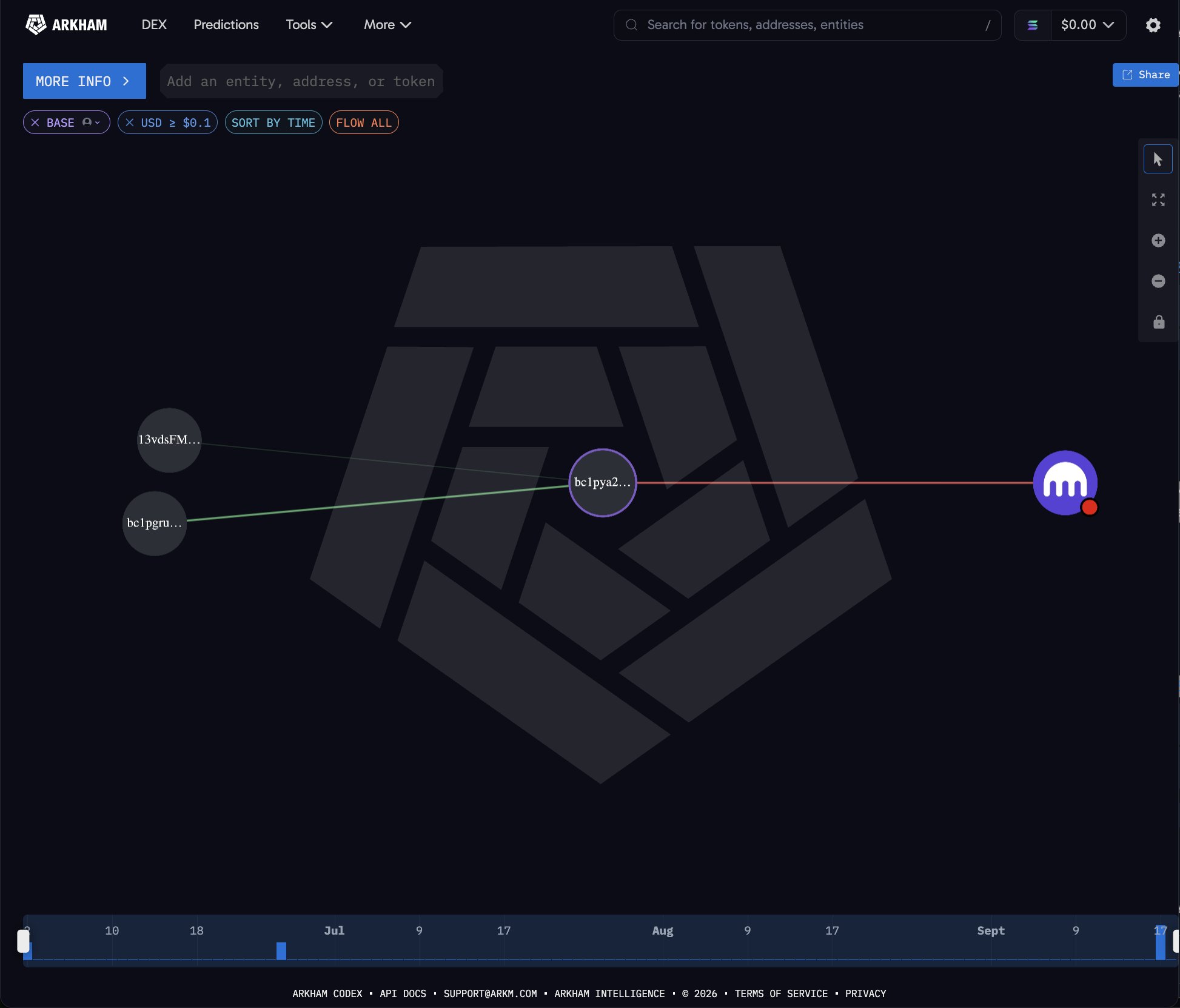
Those same coins had left Kraken back in April, travelled through two brand-new wallets, and only then returned. The wallet now sits empty, and the holder sits approximately $15.21 million ahead.
Arkham Intelligence first surfaced the full trail, complete with the intermediate addresses and the profit calculation.
What Exactly Happened With This Bitcoin Whale Transfer?
The sequence unfolded over several months yet resolved in a single decisive step. In April, the whale withdrew the coins from Kraken.
After that, the coins sat in intermediate wallets that had never held funds before. Once the market moved higher, the same entity consolidated everything and sent the full 1,651.82 BTC back to the exchange in one clean transaction.
The final deposit left the originating address with a zero balance.
Looking closer at the timing, Bitcoin traded in a lower range during the spring withdrawal window.
By mid-September, the price had climbed enough to generate the reported $15.21 million gain on the same stack of coins.
The path through fresh wallets is a common pattern among larger holders who prefer to break the direct link between their cold storage and exchange deposits.
How Did the Bitcoin Whale Secure a $15 Million Profit?
Simple arithmetic tells most of the story. The coins left Kraken when Bitcoin sat at a lower average cost basis.
They returned when the market offered a higher valuation.
The difference between those two price levels, multiplied by 1,651.82 BTC, produces the $15.21 million figure that Arkham highlighted.
Beyond the headline number, the move shows disciplined timing rather than frantic trading.
The holder waited through several months of price action, avoided early exits, and only moved the coins once the unrealised gain reached a meaningful threshold.
Many long-term Bitcoin whales operate exactly this way: withdraw to self-custody, sit through volatility, then return coins to an exchange when they decide the moment is right.
Why Do Bitcoin Whales Route Coins Through Fresh Wallets?
Privacy and operational security drive most of these intermediate hops.
A direct transfer from a known cold wallet to an exchange creates an obvious on-chain fingerprint.
Routing the coins through newly generated addresses interrupts that trail and makes it harder for outside observers to connect the original withdrawal with the later deposit.
In this case, the two intermediate wallets appear to have existed solely for this purpose.
Once the coins moved onward, those addresses no longer held meaningful balances.
Traders who watch whale activity routinely flag such patterns because they often precede larger liquidity events.
Is a Large Deposit to Kraken Always a Sell Signal?
While some analysts may interpret it as such, it is not automatic.
Exchange deposits increase the supply available for potential selling, yet they can also serve other purposes.
Some whales deposit to collateralise loans, prepare for over-the-counter (OTC) trades, or simply rebalance across platforms.
Still, a $126 million deposit stands out because of its size.
When that volume arrives in a short window, market participants usually watch the order books for signs of selling pressure.
Historical patterns show mixed outcomes. Certain large deposits precede sharp local tops, while others coincide with quiet accumulation elsewhere in the market.
The key lies in following what happens next rather than assuming an immediate dump.
What Can Everyday Traders Learn From Tracking This Bitcoin Whale?
On-chain transparency gives every participant the same raw data that institutional desks once guarded.
Tools such as Arkham, Whale Alert, and similar platforms surface these movements within minutes.
Once a transfer of this magnitude appears, the logical next steps include checking whether the coins stay on the exchange, move to another venue, or return to cold storage.
In addition, the profit itself offers a useful benchmark. A five-month hold that produced more than $15 million on a $126 million position demonstrates the power of simply sitting through intermediate volatility.
Many retail traders struggle with the same patience. Watching real whale behaviour can reinforce the value of longer time horizons.
Meanwhile, the broader market continues to process the information.
BTC price action around the deposit window remained relatively orderly, suggesting that other buyers absorbed any incremental supply without major disruption.
That resilience itself becomes part of the story.
Frequently Asked Questions About This Bitcoin Whale Move
Did the whale sell the entire position?
The deposit places the coins on Kraken, yet the on-chain record stops there. Without exchange-level order data, no one can confirm whether the coins were sold, left as balance, or used for other purposes.

How rare is a $126 million Bitcoin transfer?
Transfers of this size still occur regularly among the largest holders, yet they remain infrequent enough to draw widespread attention each time they surface.
Could the intermediate wallets belong to a different entity?
On-chain clustering and timing make that scenario unlikely. The coins moved in a clean sequence that points to the same controlling party.

What stakeholders must consider?
Any subsequent outflows from Kraken, new large deposits from related clusters, or sudden shifts in exchange Bitcoin reserves will add the next chapter to this story.
Large Bitcoin whale movements continue to offer one of the clearest real-time windows into how sophisticated capital behaves.
This particular cycle—from April withdrawal through fresh wallets to a September deposit—illustrates both the patience and the operational care that define many of the market’s biggest players.
The $15.21 million gain stands as tangible proof that holding through noise can still pay.
This confirms our assertion that, “Having time in the crypto market is best than trying to time the highly volatile market“.
