
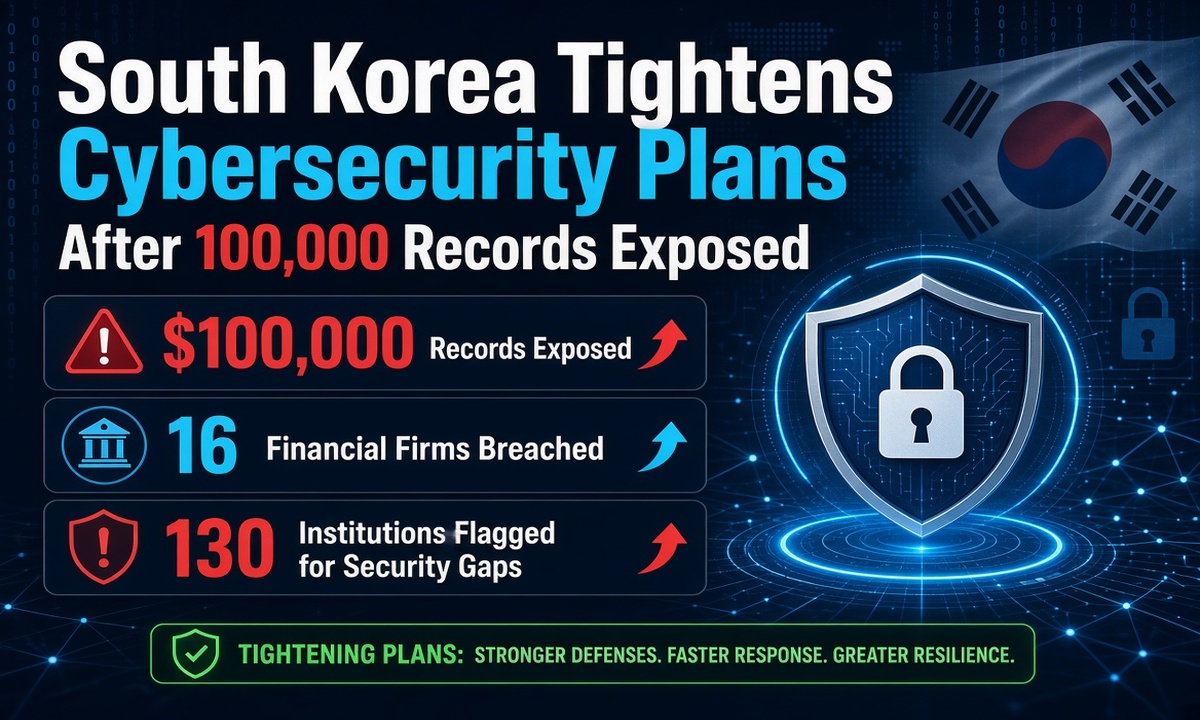
South Korea is planning stricter cybersecurity rules after attacks exposed about 100,000 customer records across 16 financial institutions. The Financial Services Commission (FSC) proposed tougher security checks after finding weaknesses at 130 of 555 financial companies.
The FSC completed its inspection on October 8 using a 12-point checklist to assess cybersecurity controls. The review found that 425 companies reported compliance, while 130 identified security deficiencies requiring corrective action.
However, the 130 companies with security weaknesses were not all victims of confirmed cyberattacks. The FSC separately identified 16 institutions that experienced security incidents.
The attacks exposed customer names, telephone numbers, email addresses, and South Korean resident registration numbers. Investigators had not confirmed whether attackers accessed account passwords or payment card numbers.
The inspection found that some financial companies used outdated security software and unsupported computer systems. Meanwhile, others lacked adequate monitoring or failed to apply stronger authentication controls to sensitive systems. Some companies had also failed to install available security updates that address known software vulnerabilities.
Electronic financial service providers and online lending businesses reported relatively high numbers of security deficiencies. The FSC attributed some of these weaknesses to limited cybersecurity resources in those sectors.

Crypto Exchanges Face Tighter Cybersecurity Checks Under FSC Plan
The FSC identified Streami, which operates the Gopax cryptocurrency exchange, and virtual asset service provider Prabang among the businesses affected by the confirmed incidents.
The affected institutions also included four commercial banks and four savings banks. The commercial banks were Shinhan Bank, KB Kookmin Bank, Busan Bank and Hana Bank. The savings banks were Yegaram, Welcome, DB and OK.
Other affected businesses included Hyundai Capital, KDB Capital, PFCT, Mouda and the Korea Federation of Community Credit Cooperatives.
Following the incidents, South Korean regulators directed affected companies to block suspicious internet protocol addresses and install security updates. They also instructed companies to suspend vulnerable services when necessary. The companies must notify affected customers and provide guidance on protecting their information.
The FSC wants large financial companies to check their computer systems for security risks twice a year instead of once. Companies must already check their external websites twice a year.
The proposed reforms would allow additional cybersecurity inspections outside regular schedules when urgent threats emerge. The FSC also wants companies to review external system connections, authentication procedures and employee access to sensitive information. In addition, the regulator wants financial companies to define the cybersecurity duties of senior executives more clearly.
South Korea Considers AI Tools for Cybersecurity Monitoring
The FSC plans to strengthen information-sharing among financial companies so they can respond faster to emerging cyber threats. The Financial Supervisory Service and the Financial Security Institute currently use the FIRST platform to distribute cybersecurity information.
However, companies do not consistently share threats detected through their own monitoring systems. The FSC wants to improve this process so other institutions can identify similar risks sooner.
The regulator is also considering artificial intelligence tools to help financial companies identify system weaknesses and assess potential cyber threats. A shared AI monitoring service could help smaller businesses detect threats despite their limited cybersecurity resources.
