
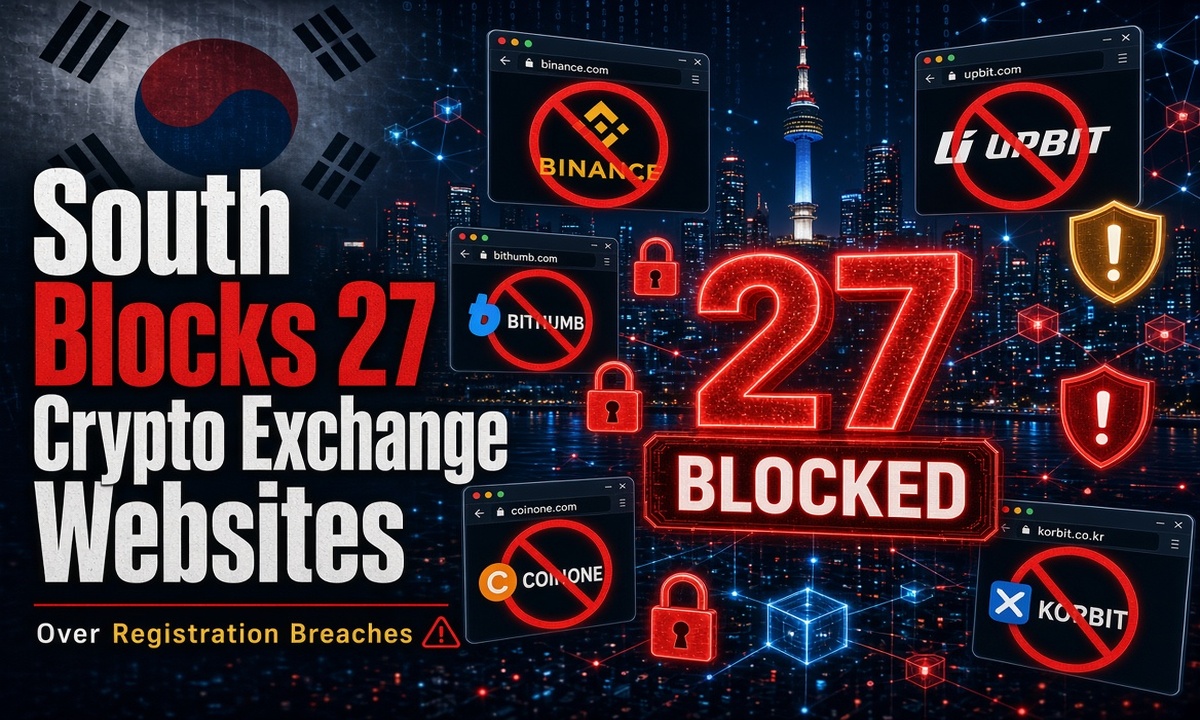
South Korea has ordered access restrictions on 27 overseas cryptocurrency exchange websites, including KuCoin, MEXC and BingX.
The Financial Services Commission (FSC) announced the decision on Tuesday, October 13 after regulatory reviews on October 6 and 7.
The restrictions target overseas exchanges that serve South Korean customers without registering with the Financial Intelligence Unit (FIU).
Other affected platforms include Phemex, XT.com, Bitrue, CoinW, Poloniex, BTCC and BitMart.
South Korea began restricting unregistered exchange apps through domestic app stores in 2025.
Google Play restricted 17 crypto exchange apps in March, while Apple introduced similar restrictions in April.
Regulators are now targeting the websites of overseas exchanges that continue operating without the required registration.
Authorities will block access to overseas-hosted websites from within South Korea. Operators using domestic servers or infrastructure could also face service termination.
South Korean law requires overseas crypto exchanges to register with the FIU when they target local customers. Regulators look at whether platforms use Korean-language websites, advertise their services to residents, or accept payments in Korean won.
The FIU can request website restrictions after identifying suspected unregistered crypto operations. Authorities do not need to wait for criminal investigations to finish or confirm customer losses before seeking restrictions.

What Risks Do Unregistered Exchanges Pose to Users?
South Korea’s FIU has referred 44 unregistered virtual asset operators to investigative agencies over suspected unauthorised business activities. The referrals do not mean investigators have charged or convicted every operator.
Operating a crypto business without registration can carry a penalty of up to five years in prison under South Korean law. Offenders could also face fines of up to 50 million won.
The FIU has warned that customers using unregistered exchanges face risks such as hacking, personal information theft, and money laundering. Customers may also struggle to recover their funds if an overseas platform refuses to cooperate.
Trading fees have raised another concern. A June 2026 investigation by the Digital Asset eXchange Alliance (DAXA) and registered exchanges found that some platforms charged fees between 1.5% and 10%. South Korea’s five largest won-based exchanges charged an average of 0.16%.
At the highest rate, customers paid 62.5 times the average fee charged by major domestic exchanges. However, the findings cover only the businesses investigated and do not represent all 27 websites facing restrictions.
The FIU has also instructed registered exchanges to restrict virtual asset transfers involving identified unregistered operators. Exchanges that breach these restrictions could face administrative sanctions and fines of up to 100 million won per violation.
FIU Plans More Website Blocks and Withdrawal Support for Non-South Korea Trading Platforms
The FIU plans to identify replacement websites and seek further restrictions against unregistered exchanges that continue serving South Korean customers. It will also work with DAXA and relevant businesses to guide affected customers through withdrawal procedures.
The regulator has warned that blocking websites could make it harder for customers to withdraw their funds. However, authorities have not announced a common withdrawal deadline or confirmed that every affected exchange will help customers.
South Korea currently has 28 virtual asset service providers registered with the FIU. The regulator has advised customers to check an exchange’s registration status before depositing funds.
