

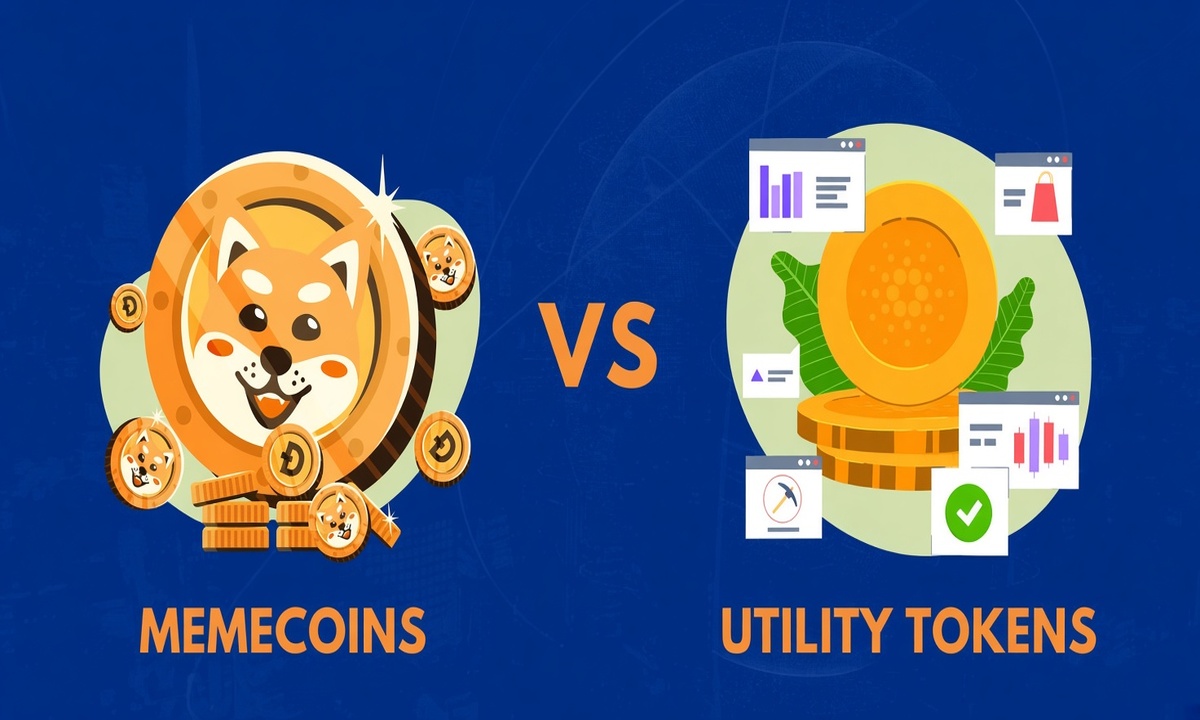
Memecoins vs Utility Tokens remains one of the sharpest debates in crypto.
One side thrives on culture, speed, and viral attention while the other side ties value to actual network activity, fees, and product demand.
In 2026, the market has grown more selective after heavy memecoin drawdowns, yet both categories still attract capital for different reasons.
This guide breaks down the trade-offs so you can decide where your money fits.
What is the difference between memecoins and utility tokens?
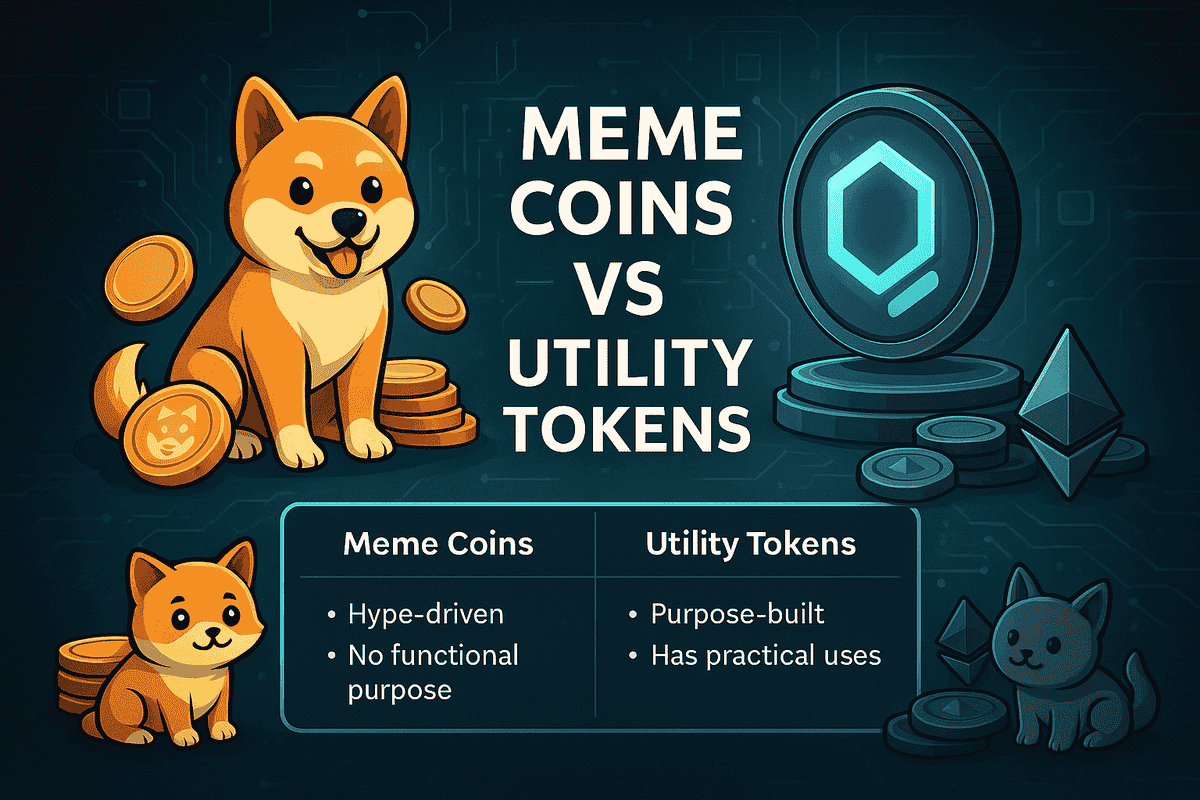
Memecoins draw value mainly from community energy, social media momentum, and cultural resonance. They rarely need a working product beyond the token itself.
Utility tokens power specific functions inside a network or application—paying fees, accessing services, staking for security, or participating in governance.
Demand for utility tokens often rises when people actually use the underlying platform.
The core distinction sits in the source of value: attention versus usage.

Are memecoins still worth investing in 2026?
Memecoins can still produce sharp short-term gains during narrative rotations, yet the broader sector has cooled significantly from earlier peaks.
Many large names sit far below previous highs, and new launches face higher failure rates.
Traders who treat them as high-risk, short-duration positions rather than long-term holdings continue to participate.
The window for easy multi-baggers has narrowed, which raises the bar for timing and risk management.
Which is safer right now — memecoins or utility tokens?
Utility tokens generally present lower relative risk because their value links to measurable activity such as transaction fees, staking demand, or protocol revenue.
Memecoins depend almost entirely on continued attention. When sentiment shifts, prices can collapse quickly with little fundamental support.
Neither category is safe in absolute terms, yet utility tokens tend to hold value better during risk-off periods.
Where should I put my money: memecoins or utility tokens?
The answer depends on time horizon, risk tolerance, and portfolio goals. Investors seeking potential high returns in short windows often allocate a small speculative slice to memecoins.
Those focused on longer-term compounding usually favour utility tokens tied to growing networks.
Many experienced participants keep the majority in utility or blue-chip assets and limit memecoin exposure to amounts they can afford to lose completely.

Do utility tokens have better long-term potential than memecoins?
Utility tokens that power essential infrastructure—block space, data oracles, decentralized compute, or lending markets—carry stronger structural demand over multi-year periods.
Networks that generate real fees and attract sticky users create more durable value accrual.
Memecoins can deliver spectacular returns in the right cycle, yet few maintain relevance once attention moves on.
Long-term potential favours projects with clear product-market fit.
Can memecoins still deliver high returns in the current market?
Yes, individual memecoins can still rally hard when a new narrative catches fire or liquidity rotates into the sector.
Historical patterns show that attention-driven assets produce outsized percentage moves during hot windows.
At the same time, the majority of launches fail quickly, and many established names have given back large portions of prior gains.
High returns remain possible, though probability and sustainability have declined.

What are the biggest risks of holding memecoins vs utility tokens?
Memecoins face extreme volatility, rapid attention decay, low liquidity on many names, and high rates of abandonment or outright failure.
Utility tokens carry smart-contract risk, competitive pressure from newer protocols, token unlock schedules, and the possibility that usage fails to grow as expected.
Both categories can experience sharp drawdowns during broader market stress.
The difference lies in the speed and depth of those declines.
How do I choose between a memecoin and a utility token?
Start by clarifying your goal. If you want cultural participation and short-term speculation, memecoins fit that role.
If you want exposure to network growth and potential fee capture, utility tokens align better.
Check on-chain activity, community strength, token distribution, and whether the project has a clear path to sustained demand.
Avoid deciding solely on recent price charts.
Are there any utility tokens that still have strong upside?
Tokens linked to high-demand infrastructure such as decentralised AI compute, oracle networks, high-throughput block space, and real-world asset platforms continue to attract interest.
Projects that show rising usage metrics, expanding developer activity, and improving revenue often maintain upside potential even after market corrections.
Upside still depends on execution and broader market conditions.
Should beginners avoid memecoins completely?
Beginners often benefit from limiting or avoiding pure memecoins until they understand volatility, liquidity, and position sizing.
Starting with larger, more established utility tokens or blue-chip assets helps build experience without the extreme swings common in the memecoin sector.
Those who still want exposure can treat a very small allocation as educational risk capital.
How much of a portfolio should be in memecoins vs utility tokens?
Conservative approaches keep memecoins at a small single-digit percentage of total crypto holdings, if any.
Utility tokens and major network assets usually form the core.
Aggressive traders sometimes run higher memecoin allocations during strong speculative phases, yet they accept the higher chance of large losses.
Position size should match the ability to withstand a total loss on the speculative portion.
What makes a utility token actually useful?
A utility token becomes useful when people need it to access a service, pay for network resources, secure the chain, or participate in decision-making that affects real value.
Tokens that capture fees, reduce costs for users, or unlock features create ongoing demand.
Pure governance rights without economic linkage often prove weaker over time.

Which category has performed better recently — memecoins or utility tokens?
Recent periods have shown rotation away from pure memecoins toward sectors with clearer utility, including real-world assets, AI infrastructure, and established DeFi protocols.
Memecoins still produce occasional strong short-term moves, yet many have underperformed on multi-month and yearly time frames after earlier peaks. Relative performance shifts with market regime.
Can a memecoin ever become a real utility token?
Some projects begin as pure memes and later add products, Layer-2 networks, or ecosystem features in an attempt to create lasting demand.
Success remains rare. Most attempts struggle to convert speculative holders into actual users.
A few larger names have built secondary ecosystems, yet the majority stay attention-driven throughout their lifespan.
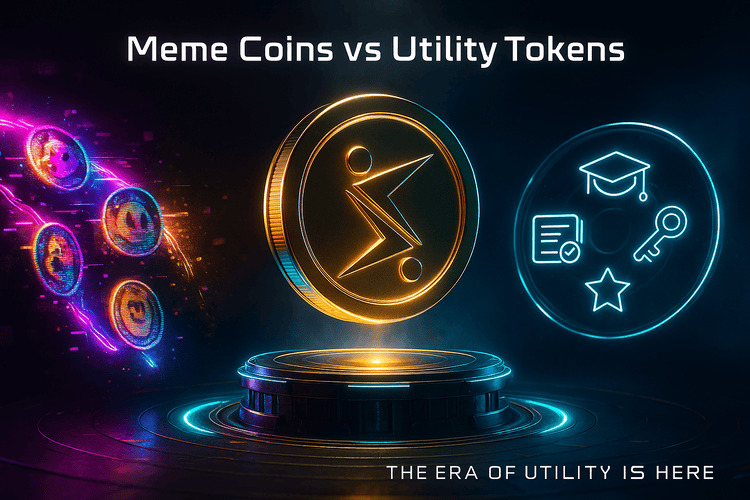
What are the best strategies for balancing memecoins and utility tokens in 2026?
Treat utility tokens as the foundation for longer-term exposure and limit memecoins to a clearly defined speculative sleeve.
Rebalance periodically based on risk tolerance rather than emotion.
Track on-chain usage and narrative strength instead of chasing every new launch.
Keep detailed records for tax purposes and never size positions larger than the amount you can lose without lifestyle impact.
Combining patience on the utility side with disciplined speculation on the meme side creates a more resilient approach.
Memecoins vs Utility Tokens is not a pure either-or choice for every investor. The two categories serve different roles in a portfolio. Utility tokens offer a clearer link to network growth and real economic activity.
Memecoins provide high-risk, high-reward exposure to culture and attention cycles.
Understanding the difference, sizing positions carefully, and matching choices to personal goals remain the most practical ways to navigate both sides of the market in 2026.
