
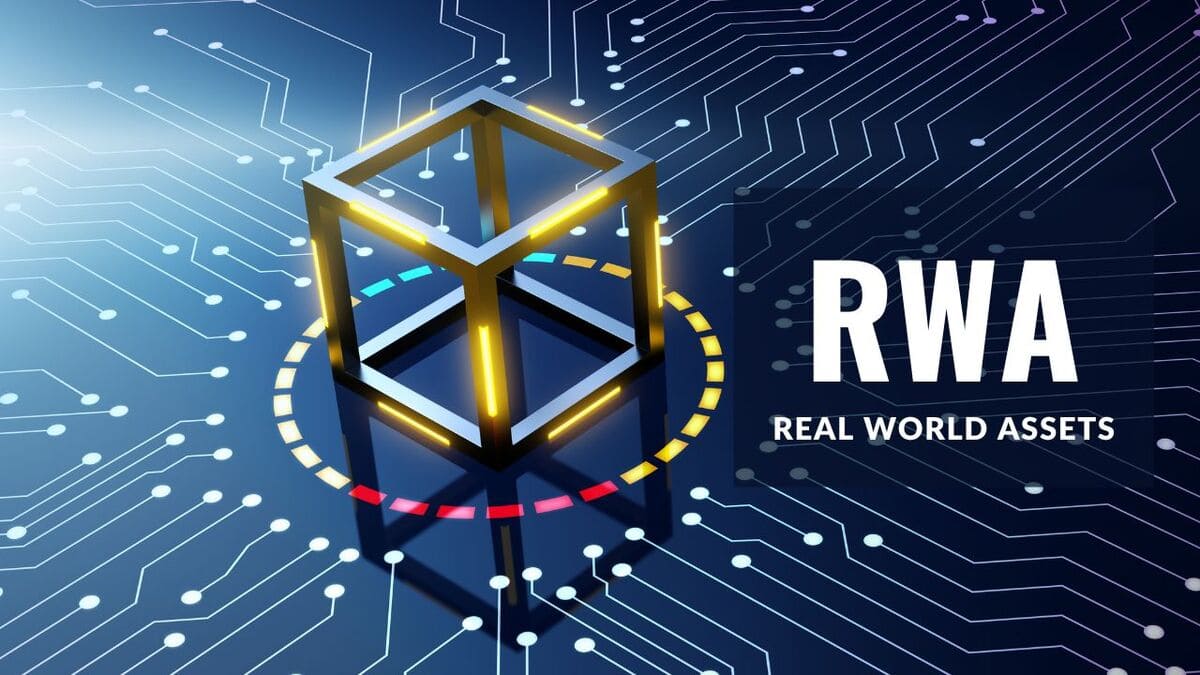
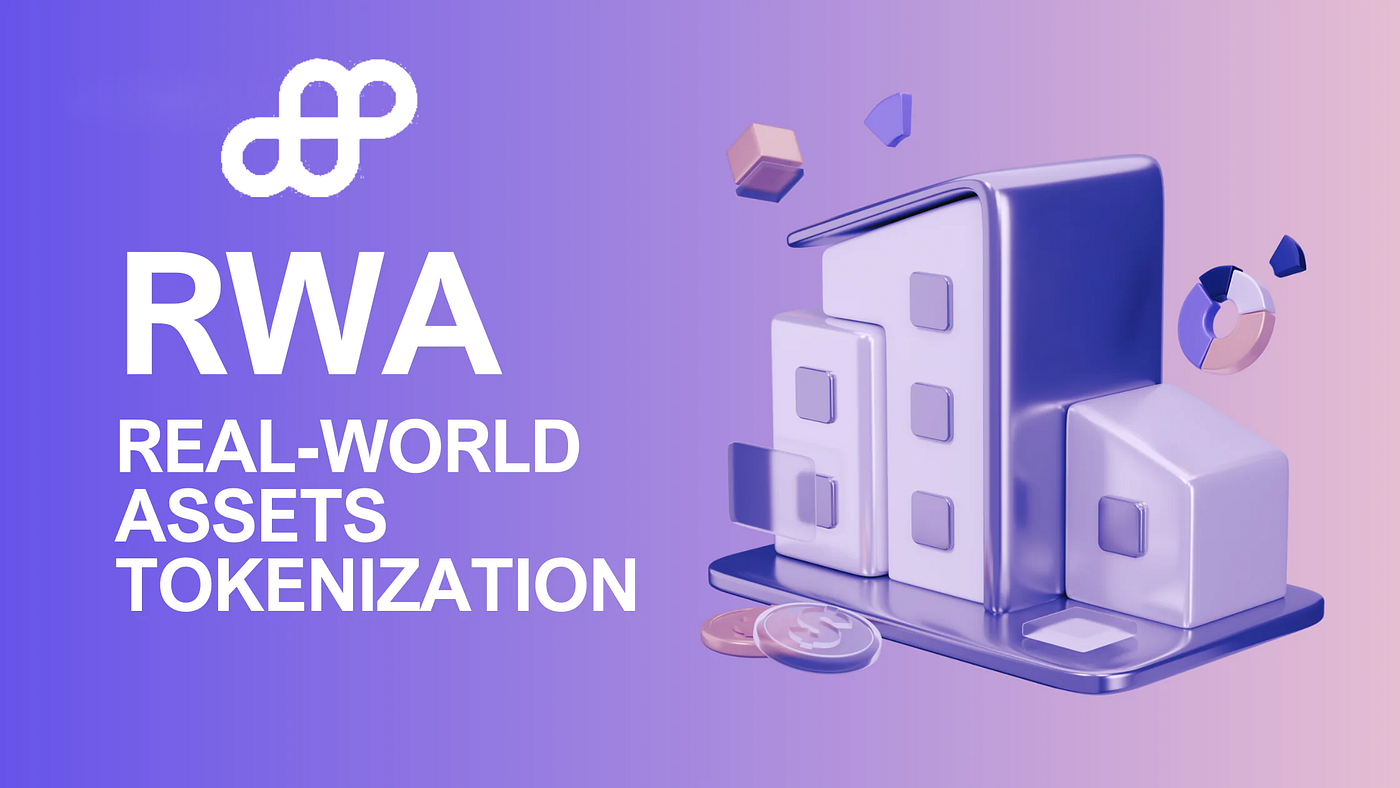
Real-World Asset (RWA) tokenisation turns traditional assets that exist outside blockchain—such as government bonds, real estate, private credit, commodities, or fund shares—into digital tokens that live on a blockchain.
The token does not magically become the physical or financial asset itself. Instead, it functions as a programmable, transferable record of a legal or economic claim on that asset.
Investors hold the token in a wallet, while a regulated custodian or special-purpose vehicle holds the actual asset off-chain and maintains the legal link between the two.
This structure lets people trade, fractionally own, and program around assets that previously required slow paperwork, intermediaries, and restricted access.
How does RWA tokenisation actually work?
The process begins when an issuer selects an asset and places it inside a legal wrapper, often a trust or special-purpose vehicle.
A regulated custodian then takes physical or legal custody of the asset. Next, the issuer mints blockchain tokens that represent proportional claims on the wrapper.
Smart contracts or transfer rules enforce who may hold the tokens, when they can move, and how redemptions work.
Cash flows such as interest or rental income flow off-chain to the issuer or administrator, who then distributes equivalent value to token holders according to the governing documents.
When an investor wants to exit, the token can be redeemed or sold, and the underlying claim is settled through the same legal structure.
Every step relies on both on-chain transparency and off-chain enforceability.

What is the difference between RWA tokens and regular cryptocurrencies like Bitcoin?
Bitcoin and similar native cryptocurrencies derive value from network effects, scarcity, and demand inside the blockchain itself. No external asset backs them.
In contrast, an RWA token draws its value from an off-chain asset plus the legal arrangements that connect the token to that asset.
The token can be transferred at blockchain speed, yet its ultimate worth and recovery rights depend on custodians, contracts, and courts rather than pure code.
This hybrid nature creates different risk profiles and different regulatory treatment.
How big is the Real-World Asset market right now?
On-chain tokenised real-world assets (excluding pure stablecoins in some measurements) expanded rapidly and reached tens of billions of dollars by mid-to-late 2026.
Tokenised U.S. Treasuries and private credit form the largest categories. Institutional names including BlackRock, Franklin Templeton, and others have launched or expanded products, pushing the sector from early experiments into more visible market infrastructure.
Exact figures shift with new issuances and redemptions, yet the directional growth remains clear.
What are the main benefits of RWA tokenisation?
Fractional ownership opens previously inaccessible assets to a wider group of investors.
Settlement can occur around the clock rather than during traditional market hours.
Programmability allows tokens to serve as collateral, integrate with automated strategies, or distribute cash flows with less manual intervention.
Transparency on the blockchain improves auditability of ownership and transfers.
Operational efficiency rises because intermediaries and paper processes shrink.
These advantages attract both crypto-native users seeking yield and traditional institutions seeking better capital markets infrastructure.
What are the biggest risks of investing in tokenised Real-World Assets?
The token remains only as strong as the legal and custodial structure behind it.
If the issuer or custodian fails, recovery depends on bankruptcy remoteness and enforceable claims rather than the blockchain ledger alone.
Smart-contract bugs, oracle failures, and wallet security issues add technical layers of risk.
Regulatory treatment still varies by jurisdiction and can change.
Liquidity may stay limited because many RWA tokens restrict transfers to approved addresses.
Underlying asset risks—credit defaults, interest-rate moves, or property-value declines—travel with the token.
Investors therefore face the original asset risks plus new operational and legal ones.
Do RWA tokens give you actual ownership of the underlying asset?
In most designs the token represents a claim or beneficial interest rather than direct legal title to the physical or financial asset.
The special-purpose vehicle or trust holds formal ownership, while token holders possess contractual or trust-based rights.
Strong structures make those rights enforceable; weaker ones leave holders with limited recourse.
Due diligence therefore focuses on the quality of the legal wrapper, the identity of the custodian, and the precise rights attached to each token.
How can I buy or invest in Real-World Asset tokens?
Access usually requires an account with a platform that supports the specific token, completion of Know Your Client (KYC) checks, and often placement on a whitelist of eligible investors.
Some products appear on centralised exchanges (CEXs) or specialised RWA marketplaces; others live primarily in permissioned DeFi environments.
Investors transfer stablecoins or other accepted assets, receive the RWA tokens, and store them in compatible wallets. Availability, minimum sizes, and eligibility rules differ by product and jurisdiction.
Always review the offering documents before participating.
Are RWA tokens regulated, and do they require KYC/AML?
Many RWA tokens fall under existing securities or financial-instrument rules because they represent claims on traditional assets.
Issuers and platforms therefore apply know-your-customer and anti-money-laundering (AML) controls, investor-accreditation checks, and transfer restrictions.
Regulatory approaches continue to evolve across the United States, Europe, Asia, and other regions.
Compliance obligations are typically stricter than those for purely crypto-native tokens.
Can Real-World Asset tokens be used in DeFi (as collateral, for lending, etc.)?
Selected RWA tokens already serve as collateral inside specialized lending markets and institutional DeFi venues.
Protocols such as certain Aave Horizon deployments and other permissioned platforms accept tokenised Treasuries or credit products under controlled conditions.
Full composability remains limited by whitelist requirements, oracle reliability, and liquidation mechanics that must respect off-chain redemption processes.
Integration continues to expand, yet most RWA tokens still operate with more constraints than native crypto collateral.
Real-World Asset (RWA) tokenisation therefore bridges traditional finance and blockchain by creating digital, transferable claims on off-chain value.
The technology improves speed, accessibility, and programmability, yet it never removes the need for robust legal structures, reliable custodians, and careful risk assessment.
Traders and investors exploring the RWA space benefit from examining both the on-chain transparency and the off-chain enforceability of any specific product.
