

Bitcoin continues to spark intense debate among investors in 2026 due to mixed trading feelings among millions of BTC holders.
After reaching elevated levels in late 2025 and then experiencing a substantial pullback, many people now ask a sharper version of the classic question: Is Bitcoin a good investment in 2026?
Well, the honest answer depends far more on the individual investor than on any universal market narrative.
This article examines the most common follow-up questions that arise under this topic and provides a clear framework for evaluation.
How Much Bitcoin Should I Allocate to My Portfolio?
Most practical discussions begin with position sizing. Financial research and advisor commentary in 2026 consistently highlight that allocation decisions matter more than precise entry timing.
This confirms an experts take on the subject many years ago, that having time in the market is better than trying to time this highly volatile crypto market.
Therefore, many experienced voices recommend keeping Bitcoin between 1 percent and 5 percent of a total portfolio for most participants.
Moreover, higher allocations only suit investors with both elevated risk tolerance and multi-year horizons.
Thus, an oversized position can transform normal volatility into genuine financial stress.
In contrast, a modest allocation allows the asset to contribute potential diversification benefits without dominating overall results.
Ultimately, the right percentage emerges from personal cash-flow needs, existing holdings, and genuine ability to hold through large declines rather than from any single market forecast.
What Are the Biggest Risks of Investing in Bitcoin in 2026?
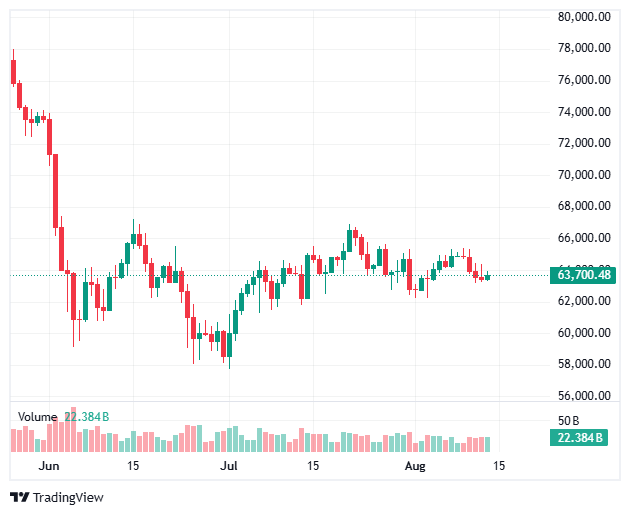
Volatility remains the most visible risk. Bitcoin has produced multiple drawdowns exceeding 50 percent across its history, and the 2025-to-2026 decline once again illustrated this characteristic.
Furthermore, regulatory developments can shift quickly across jurisdictions and affect access, taxation, or institutional participation.
In addition, custody risk persists even as infrastructure improves. Investors who hold Bitcoin outside regulated products must protect private keys, while those using intermediaries accept counterparty exposure.
Meanwhile, correlation patterns can change during broad market stress, reducing the diversification benefit that some expect.
As a result, anyone evaluating Bitcoin must treat these risks as structural features rather than temporary inconveniences.
Is It Too Late to Buy Bitcoin?
This question surfaces repeatedly after every major advance. By mid-2026, Bitcoin traded well below its previous peak, prompting many newcomers to wonder whether the opportunity has already passed.
However, the asset’s history shows repeated cycles of significant gains followed by deep corrections and subsequent recoveries.
Moreover, new cohorts of capital—through exchange-traded funds (ETFs), corporate treasuries, and longer-term holders—continue to enter the market.
Therefore, “too late” often reflects a short-term price lens rather than a long-term structural assessment.
Nevertheless, investors who require rapid returns or cannot tolerate further declines should recognise that the easy early phase has ended.
Ultimately, the more useful question becomes whether current levels offer an acceptable risk-reward profile for a multi-year holding period.
Should I Buy Bitcoin During the Current Dip / Is This A Buying Opportunity?
Price declines naturally attract both opportunistic buyers and cautious observers. Lower entry points improve long-term return potential if the broader thesis remains intact. On the other hand, attempting to catch an exact bottom introduces its own risks.
Furthermore, successful participants in previous cycles often accumulated gradually rather than deploying everything at a single perceived low.
As a result, dollar-cost averaging (DCA) or staged purchases can reduce the pressure of perfect timing.
In addition, any decision should rest on portfolio construction principles rather than pure price action.
Therefore, the current environment may offer a more attractive entry for disciplined, long-horizon investors while remaining unsuitable for those seeking short-term certainty.
What Time Horizon Do I Need for Bitcoin to Make Sense As An Investment?
Time horizon ranks among the most decisive factors. Most credible analyses in 2026 emphasise a minimum window of five years, and many prefer longer.
Bitcoin’s price history contains extended periods of stagnation or decline that punish investors who need liquidity on short notice.
Moreover, the asset rewards patience more reliably than frequent trading. Therefore, money required for near-term goals—home purchases, education expenses, or emergency reserves—belongs elsewhere.
In contrast, capital that can remain invested through multiple market cycles stands a better chance of capturing any long-term appreciation.
Ultimately, matching the investment horizon to Bitcoin’s cyclical nature forms a core requirement for responsible participation.
Does BTC Still Have Strong Upside Potential After the 2025 Peak?
The 2025 advance and subsequent correction have not eliminated longer-term structural arguments.
Fixed supply, ongoing institutional infrastructure, and growing recognition as a distinct asset class continue to support optimistic scenarios for some investors. However, upside potential never equates to guaranteed outcomes.
Furthermore, future returns will likely prove more modest and more volatile than the extraordinary early years.
Meanwhile, competing narratives around alternative technologies and shifting capital flows can influence intermediate performance.
Consequently, any assessment of upside must remain probabilistic rather than deterministic. In addition, realistic expectations improve decision quality far more than aggressive price targets.
Is Bitcoin Suitable for Average or Conservative Investors?
Suitability depends heavily on risk tolerance and overall financial stability. Average investors with diversified portfolios and long horizons may reasonably consider a small allocation.
Conservative investors who prioritise capital preservation and predictable outcomes often find Bitcoin mismatched to their objectives.
Moreover, the ability to remain calm during 40–60 percent declines separates theoretical interest from practical readiness.
Therefore, many advisers restrict Bitcoin exposure to clients who explicitly accept high volatility.
In contrast, forcing the asset into a conservative framework frequently leads to poor behavioural outcomes.
As a result, honest self-assessment of risk capacity provides clearer guidance than general market commentary.
How Do Spot BTC ETFs Change the Investment Case in 2026?
Spot Bitcoin ETFs have meaningfully lowered practical barriers. Investors can now gain exposure through traditional brokerage accounts without managing private keys or navigating crypto-native platforms.
Furthermore, these products have attracted substantial institutional capital and improved market liquidity.
In addition, regulated wrappers increase transparency and operational convenience for many participants.
Nevertheless, ETFs introduce their own fee structures and still deliver the full price volatility of the underlying asset.
Consequently, easier access does not remove the fundamental risks. Ultimately, ETFs expand the set of investors who can participate efficiently while leaving the core investment decision unchanged: whether Bitcoin’s risk-return profile fits the individual’s circumstances.
Conclusion: Is BTC Still A Buy in 2026?
BTC in 2026 presents a clearer institutional foundation than in earlier cycles, yet it retains the high-volatility character that has defined its entire history.
Therefore, the asset can serve as a satellite holding for investors who combine adequate risk tolerance, multi-year horizons, and disciplined position sizing.
However, it remains unsuitable as a core holding or short-term vehicle for most people.
Moreover, no single price level or market narrative answers the question for everyone.
Instead, careful evaluation of allocation size, personal time horizon, genuine risk capacity, and portfolio context produces the most reliable guidance.
Investors who approach Bitcoin with realistic expectations and process-driven decisions stand better positioned than those chasing certainty in an inherently uncertain market.
