

Bitcoin remains the most liquid digital asset in the market, yet the distribution of that liquidity across exchanges continues to shift.
Recent data from CoinRanking places BTCC at the top of Bitcoin spot volume rankings, with approximately $1.75 billion in reported 24-hour activity.
This figure sits ahead of Bitrue, Binance, Hotcoin, and several other major platforms.
The ranking invites a closer look at the forces that can push a long-established but less mainstream exchange into the leading position for the world’s largest cryptocurrency.
Snapshot of the Current Bitcoin Landscape
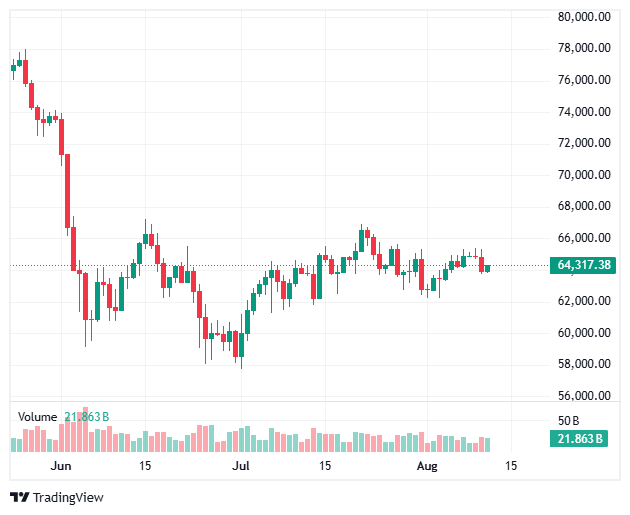
Bitcoin currently trades near the $64,200–$64,300 range across the listed venues.
Moreover, the asset continues to dominate overall market capitalisation and daily turnover.
In addition, institutional and retail flows remain active as traders react to macroeconomic signals and exchange-traded fund (ETF)-related activity.
Therefore, absolute Bitcoin volume stays elevated on nearly every major platform.
Nevertheless, the concentration of that volume still varies significantly from one exchange to another.

Factors Supporting Elevated Bitcoin Activity on BTCC
Several platform-specific characteristics help explain the strong showing for Bitcoin on BTCC.
First and foremost, BTCC has operated continuously since 2011, giving it one of the longest track records in the industry.
In addition, the exchange has built a substantial futures business alongside its spot markets, and the interaction between the two often amplifies reported spot activity as traders hedge and rebalance.
As a result, Bitcoin pairs frequently attract heavy participation from users seeking high leverage and rapid execution.
Furthermore, BTCC has expanded its product set to include tokenized traditional assets and a wide range of perpetual contracts.
Meanwhile, promotional campaigns and competitive fee structures periodically draw additional flow into major pairs such as BTC/USDT.
In addition, the platform maintains a growing international user base that appears particularly active in high-volume Bitcoin trading sessions.
At the same time, order-book depth and matching-engine performance influence where large tickets prefer to execute.
When a venue displays consistent size on both the bid and ask sides of the Bitcoin book, professional participants and algorithms often route volume toward that platform.
Therefore, temporary leadership in ranking tables can reflect genuine improvements in available liquidity as much as pure marketing efforts.
Implications for Bitcoin Traders and Market Structure
Higher reported volume on any single exchange delivers clearer short-term benefits.
Moreover, deeper books generally produce tighter spreads and more reliable fills during periods of rapid price movement.
In addition, the presence of active market makers reduces the impact of individual large orders.
As a result, traders who monitor real-time rankings sometimes adjust their preferred venues when leadership changes.
However, volume concentration also carries practical considerations. Meanwhile, rankings can shift within hours as competing platforms adjust incentives or as regional trading sessions rotate.
In addition, different data providers apply varying methodologies when calculating and displaying exchange volumes.
Therefore, participants benefit from cross-checking multiple sources rather than relying on a single snapshot.
Broader Observations on BTC Liquidity Distribution
Bitcoin’s status as the primary crypto asset ensures continuous competition among exchanges for its flow.
Furthermore, established global platforms such as Binance, Coinbase, and OKX continue to command substantial absolute volume and brand recognition.
In addition, newer or regionally focused venues occasionally capture temporary leadership through aggressive fee policies, leverage offerings, or targeted campaigns.
As a result, the current position of BTCC illustrates how liquidity can migrate even for the most mature digital asset.
Still, the underlying drivers of Bitcoin demand—macro sentiment, institutional adoption, and on-chain activity—remain far more influential than any single exchange ranking.
Meanwhile, traders who prioritise execution quality continue to evaluate depth, fees, security history, and withdrawal reliability alongside pure volume numbers.
Takeaway for BTC Stakeholders
Bitcoin liquidity remains highly competitive and dynamic. Moreover, the latest CoinRanking data shows BTCC currently recording the highest reported volume among the listed platforms.
In addition, the combination of long operating history, futures-spot interplay, promotional activity, and order-book conditions helps account for this positioning.
Traders seeking optimal Bitcoin execution should compare live depth and costs across several venues rather than anchoring solely to any one leader.
At the same time, understanding why volume concentrates on particular platforms improves decision-making in a market where rankings can change rapidly.
Continuous monitoring of these shifts remains one of the more practical habits for active Bitcoin participants.
