
Stellar’s XLM token posted one of the stronger monthly advances among large-cap cryptocurrencies in September 2026.
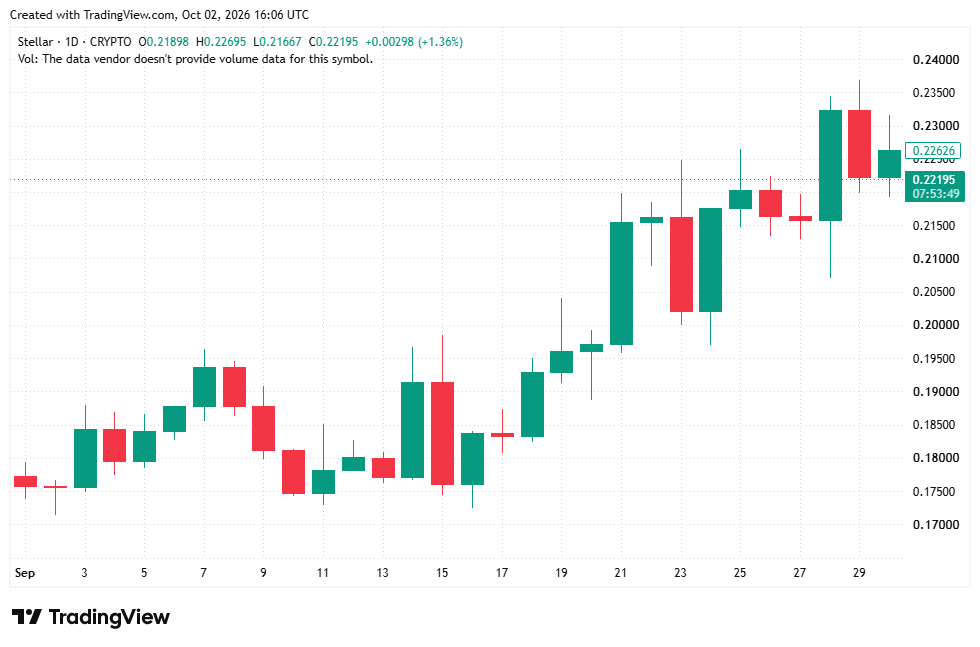
The token climbed nearly 29% over the 30-day window, rising from mid-month lows near $0.17–$0.18 toward highs around $0.23–$0.235 before modest pullbacks.
This Stellar rally left it ahead of several major peers during the same stretch.
What Drove XLM’s Nearly 29% September Gain?
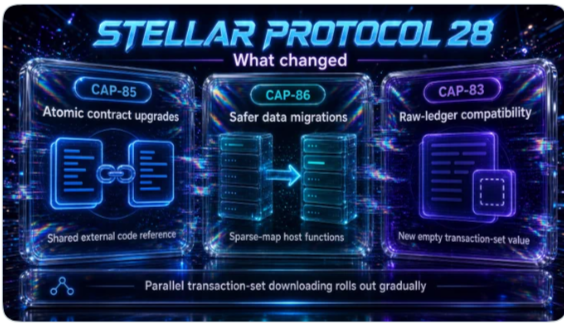
Mid-month momentum shifted after Stellar activated Protocol 28, known as Adapter, on September 17.
The upgrade introduced new consensus tooling and contract-migration features. Network throughput then hit sustained records of 211 transactions per second (TPS) across 100 blocks, later climbing higher still.
Traders responded quickly as volume expanded and the price reclaimed key moving averages.
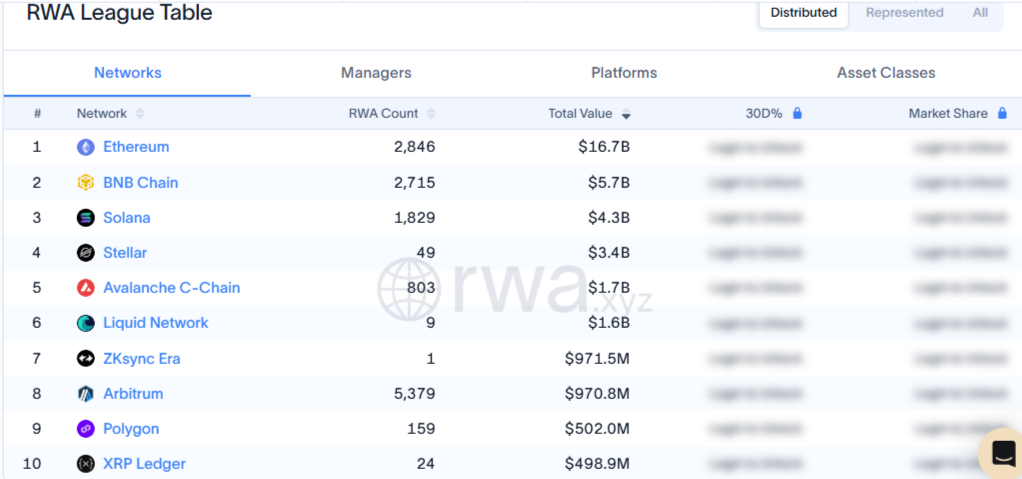
Alongside the technical lift, real-world asset (RWA) activity accelerated. Stellar ranked third among blockchains for tokenized RWA value, hosting roughly $2.75 billion to nearly $4 billion in assets by month’s end.
Stellar was fourth on the RWA table trailing Ethereum, Binance (BNB) Chain, and Solana with approximately $3.4 billion.
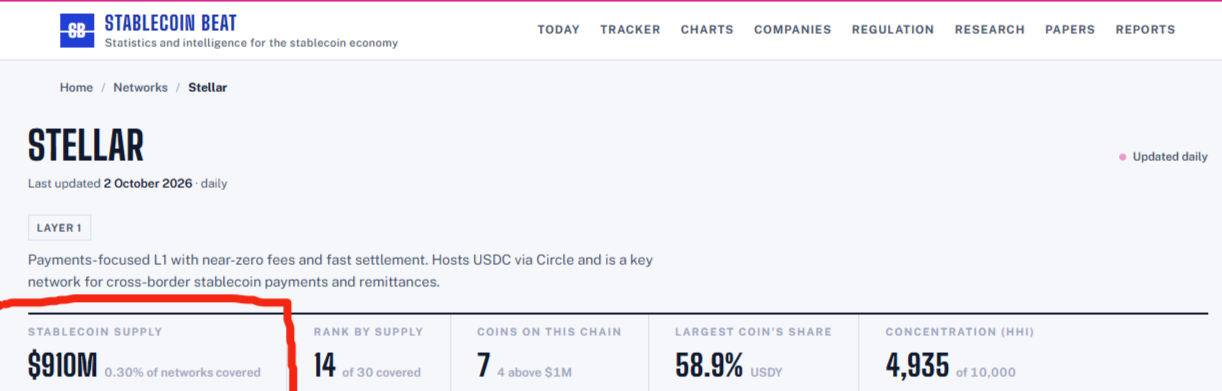
Stablecoin supply on the network pushed past $900 million while transfer volumes stayed elevated. These metrics gave the price move a clearer usage foundation than pure speculation.
How Did Institutional Moves Support the Stellar Rally?
U.S. Bank ran a live pilot of its USBDC dollar-backed stablecoin on the public Stellar network, testing minting, redemption, and cross-border transfers between its own entities.
BVNK, the payments firm later linked to MasterCard, added full Stellar support across more than 130 markets for business payouts and treasury flows.
State Street and Galaxy brought their tokenized SWEEP fund onto the network as well.
Further along the institutional path, Depository Trust & Clearing Corporation (DTCC) continued plans to connect its tokenization platform to Stellar by the first half of 2027.
Franklin Templeton’s BENJI fund and other established names already operated on the chain. These steps reinforced Stellar’s position as a practical rail for payments and tokenized finance rather than a pure speculative vehicle.
Did Network Growth Match the XLM Price Action?
During the same weeks, RWA holders on Stellar increased more than 10% while average transaction volumes for those assets stayed robust.
Stablecoin turnover repeatedly exceeded the circulating supply many times over, pointing to repeated settlement use.
Open interest in XLM futures also climbed as leverage entered the move, yet spot participation remained visible.
Can XLM Maintain Its Edge Over Other Payment Tokens?
XLM finished the month with stronger relative performance than XRP, the novel token behind Ripple on several multi-week measures and held above its 50-week moving average while peers lagged.
Resistance clustered near $0.23–$0.24, with longer-term structures still pointing toward higher zones if buyers defend the recent breakout levels.
Continued RWA expansion and additional bank integrations remain the clearest near-term catalysts.
In short, the Stellar advance combined a concrete protocol upgrade, measurable growth in tokenized assets and stablecoins, and a string of institutional pilots.
The nearly 29% monthly gain reflected genuine network progress rather than isolated hype, positioning XLM as one of the clearer payment-infrastructure stories exiting September 2026.
