
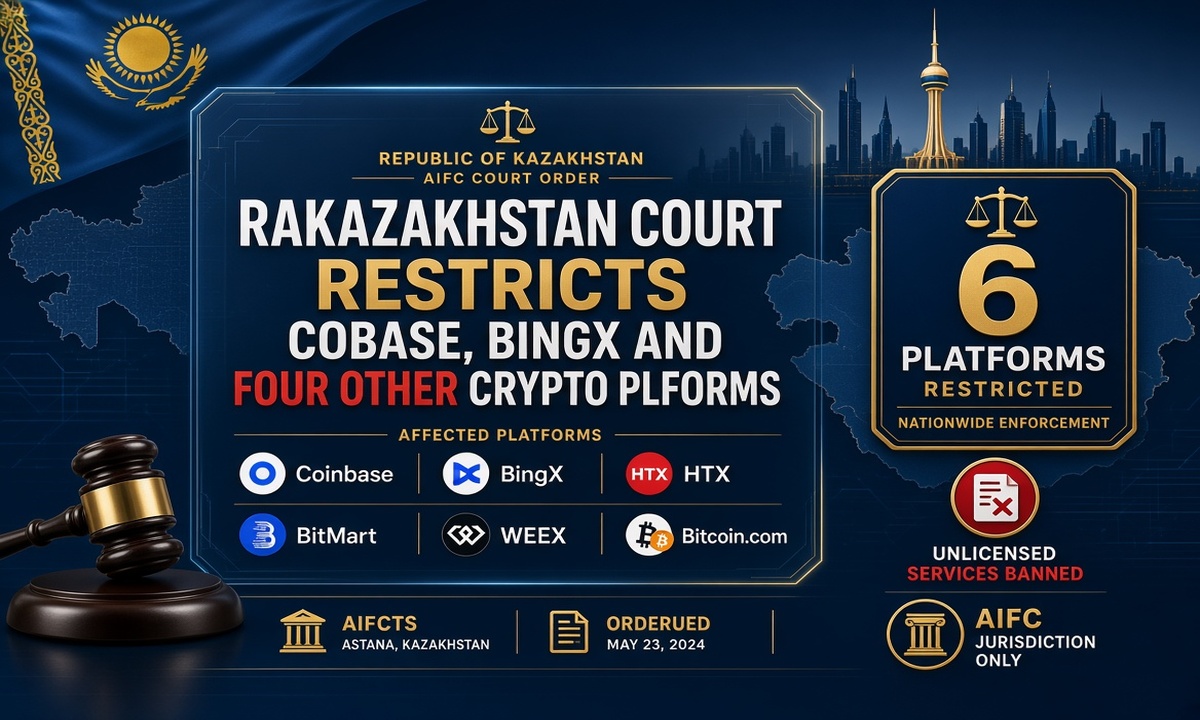
The financial regulator of Kazakhstan has secured court injunctions against six cryptocurrency platforms over unlicensed digital asset services. The affected platforms include Coinbase, BingX, Bitcoin.com, Huobi Global (HTX), BitMart and WEEX.
The Astana Financial Services Authority (AFSA) initiated legal proceedings against the operators. On September 15, the Astana International Financial Centre (AIFC) Court issued its original judgment.
However, the court amended the order on September 18 and removed LBank after its operator independently restricted access to its services in Kazakhstan.
The injunctions prohibit the six platforms from offering unauthorised digital asset services within the AIFC. They also prevent the companies from advertising these services or distributing related mobile applications without the required licenses.
The court order also covers Google and Apple as operators of the app stores that distribute these applications. AFSA plans to send both companies the relevant documents to enforce geographic access restrictions.
The six operators must also pay approximately 1.995 million Kazakhstani tenge in legal costs and court fees.
However, AFSA has not confirmed whether the platforms have stopped operating across Kazakhstan. The restrictions specifically target unauthorised services within the AIFC and access through relevant app stores.
Why Did AFSA Take the Exchanges to Court?
AFSA began warning cryptocurrency platforms about licensing requirements in 2025. According to chief executive Evgeniya Bogdanova, the regulator contacted more than 20 platforms to explain the rules.
The authority warned operators against offering digital asset services or advertising them without authorization. However, some companies continued operating without the required licenses, prompting AFSA to begin court proceedings in early 2026.
Meanwhile, nine platforms voluntarily restricted access to their applications in Kazakhstan through Google Play and Apple’s App Store. As a result, AFSA withdrew its claims against those operators.
Another seven platforms told the regulator they intended to obtain licenses to operate digital asset trading facilities. However, AFSA did not identify these companies or confirm whether it had approved them.
The court also addressed compliance requirements for authorised cryptocurrency businesses. These include customer identification, anti-money laundering controls, counterterrorism financing measures and ongoing regulatory supervision.
According to the court, licensed operators incur costs to meet these obligations. Companies operating without authorization may avoid those expenses while offering similar services.
Moreover, AFSA warned that unlicensed platforms do not provide the safeguards required of licensed firms. These protections cover asset custody, information disclosure, complaint handling, and dispute resolution.
Since May 2026, AFSA has worked with Kazakhstan’s National Bank to address unauthorised activity in the digital asset industry.
Kazakhstan Steps Up Crypto Crackdown
The court action follows wider efforts to restrict unlicensed cryptocurrency businesses across Kazakhstan. In January 2026, reports indicated that authorities had blocked access to more than 1,100 unlicensed crypto exchange platforms during the previous year.
AFSA also warned major exchanges about licensing requirements on April 29, 2026. The notice named HTX, OKX, Bitget and MEXC.
In addition, national enforcement efforts have targeted unauthorised over-the-counter trading and platforms suspected of facilitating financial crimes. Users can check AFSA’s public register to verify whether a cryptocurrency business holds authorization to provide specific digital asset services under the AIFC framework.
