


Digital assets continue reshaping global finance, and investors actively seek those with substantial growth trajectories.
In 2026, several stand out due to technological upgrades, institutional adoption, real-world utility, and sector-specific narratives such as decentralised artificial intelligence (AI), real-world asset (RWA) tokenisation, high-performance blockchains, and decentralised trading infrastructure.
Thus, this analysis highlights ten digital assets demonstrating compelling upside potential based on network activity, revenue generation, regulatory clarity, and analyst perspectives from sources including Motley Fool research, Grayscale outlooks, and institutional reports.
Moreover, the crypto market has shown resilience amid volatility, with themes like tokenisation and AI integration driving capital flows.
Therefore, careful evaluation of fundamentals remains essential, as past performance never guarantees future results.
Furthermore, these selections emphasise active projects with measurable catalysts rather than pure speculation.
Also Read: Will AKEDO (AKE) Reach $1?
Why Digital Assets Matter in the Current Market Cycle
Digital assets encompass cryptocurrencies, tokens, and blockchain-based representations of value recorded on distributed ledgers.
Specifically, they offer programmable money, transparent ownership, and efficient settlement.
In addition, 2026 marks a potential shift away from strict four-year cycle assumptions, according to Grayscale analysis, as sustained institutional interest and infrastructure maturation support broader valuation increases.
Meanwhile, real-world adoption accelerates through stablecoins, tokenised securities, and cross-chain interoperability.
As a result, projects solving concrete problems—data oracles, high-throughput transactions, decentralised intelligence, and on-chain trading—position themselves for outsized returns.
Nevertheless, risks including regulatory shifts, smart-contract vulnerabilities, and market liquidity fluctuations persist, so diversified approaches and thorough due diligence prove critical.

Top 10 Digital Assets with Highest Upside Potential in 2026
1. Hyperliquid (HYPE)
Hyperliquid operates as a high-performance decentralised perpetual futures exchange on its own Layer-1 blockchain.
Notably, it has generated substantial protocol revenue while implementing buyback mechanisms that reduce circulating supply.
Thus, strong trading volumes and product expansion into additional markets create a clear path for further appreciation.
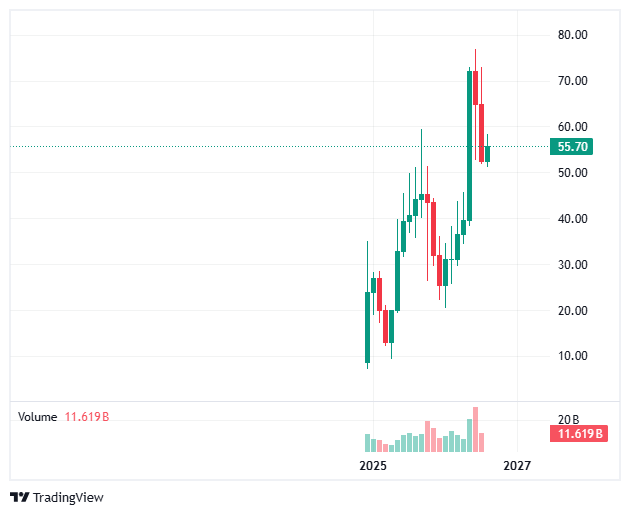
Furthermore, its focus on delivering centralised-exchange-like experiences without custody risks attracts sophisticated traders.
Therefore, many analysts view HYPE as a high-conviction growth name in decentralised trading infrastructure.
2. Bittensor (TAO)
Bittensor powers a decentralised network for machine learning (ML) and artificial intelligence models.
Specifically, participants contribute computational resources and earn rewards based on the value of their contributions.
In addition, the rise of AI demand across industries amplifies interest in open, incentivised intelligence marketplaces.
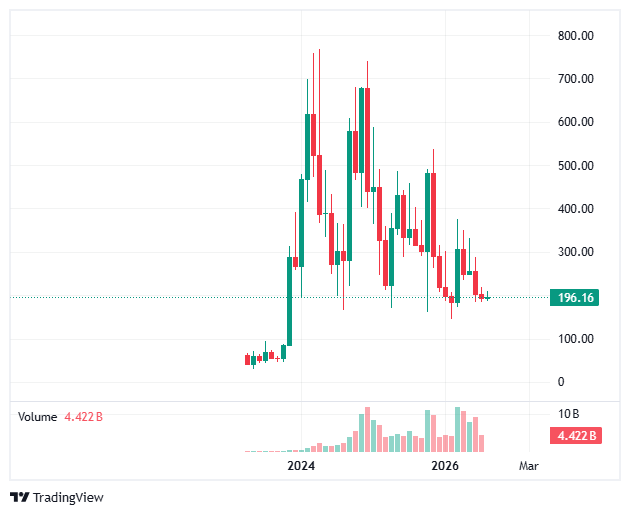
Moreover, its position as a leading AI-focused digital asset supports potential expansion as more subnets and applications emerge.
As a result, TAO offers exposure to one of the fastest-growing technology intersections.
3. Chainlink (LINK)
Chainlink provides decentralised oracle services that securely connect blockchains to real-world data and systems.
Furthermore, its Cross-Chain Interoperability Protocol (CCIP) and expanding role in RWA tokenisation position it as critical infrastructure.
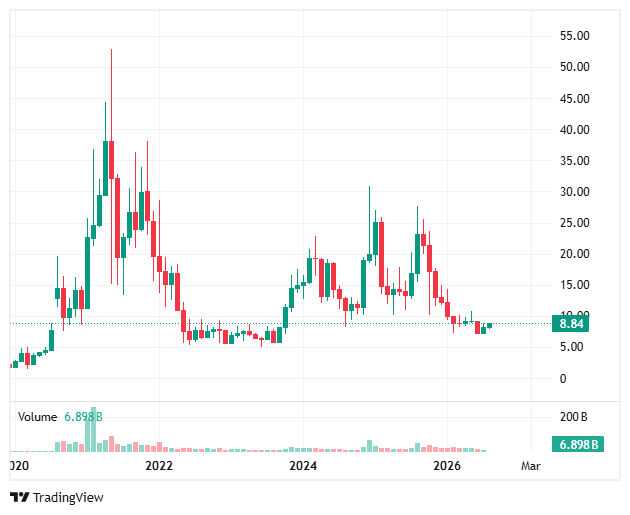
Notably, institutional forecasts highlight significant fee-generation upside as tokenised assets scale.
Thus, LINK benefits from both oracle demand and broader blockchain adoption. Meanwhile, ongoing integrations with traditional finance entities strengthen its long-term utility.
4. Solana (SOL)
Solana delivers high throughput and low transaction costs, supporting consumer applications, DeFi, and growing economic activity.
In particular, network upgrades continue improving performance and reliability.
Additionally, record levels of on-chain activity and institutional interest fuel optimism.
Therefore, SOL remains a core high-performance Layer-1 contender capable of capturing substantial market share during periods of expansion.

5. Ondo Finance (ONDO)
Ondo Finance specialises in tokenised real-world assets, including treasuries and equities.
Specifically, it bridges traditional finance with on-chain accessibility and compliance features.
Moreover, as tokenisation volumes grow, platforms enabling efficient issuance and trading stand to benefit.
Thus, ONDO provides targeted exposure to one of the most prominent institutional narratives of the decade.
6. Sui (SUI)
Sui operates as a high-performance layer-1 blockchain designed for scalability and developer-friendly asset programming.
Furthermore, features such as gasless stablecoin transfers and confidential transactions expand its use cases beyond conventional DeFi.
In addition, its relatively smaller market capitalisation relative to larger peers creates room for significant relative growth during Layer-1 rotations.
As a result, SUI attracts attention from investors seeking high-beta exposure.
7. Aave (AAVE)
Aave leads decentralised lending and borrowing protocols. Notably, protocol upgrades and institutional credit initiatives enhance its revenue potential and product suite.
Moreover, as DeFi matures and more capital flows into yield-generating strategies, established lending platforms with strong security track records tend to capture share.
Therefore, AAVE continues offering meaningful upside tied to broader DeFi adoption.
8. XRP
XRP focuses on efficient cross-border payments and institutional settlement.
Specifically, improved regulatory clarity in key jurisdictions has removed major overhangs.
In addition, expanding integrations and potential ETF-related demand support further utility growth.
Thus, XRP benefits from both payments infrastructure development and broader institutional infrastructure themes.
9. Ethereum (ETH)
Ethereum remains the dominant smart-contract platform and settlement layer for DeFi, non-fungible tokens (NFTs), and Layer-2 ecosystems.
Furthermore, ongoing upgrades improve scalability and efficiency while maintaining strong developer mindshare.
Meanwhile, its role in tokenisation and institutional applications reinforces long-term demand.
As a result, ETH continues serving as a foundational digital asset with meaningful upside potential alongside ecosystem growth.
10. Bitcoin (BTC)
Bitcoin functions as the leading store-of-value digital asset and institutional entry point.
Notably, ETF inflows, corporate treasury adoption, and scarcity dynamics after successive halvings underpin its thesis.
Although relative upside may appear more moderate than smaller-cap names, BTC often leads market recoveries and provides portfolio ballast.
Therefore, it remains essential in most digital asset allocations.
What Are the Key Factors Driving Upside Potential for These Digital Assets in 2026?
Several interconnected drivers support potential appreciation. First and foremost, institutional capital continues entering through ETFs and treasury strategies.
Secondly, technological catalysts—network upgrades, revenue-sharing mechanisms, and interoperability solutions—create tangible value capture.
Moreover, narrative alignment with AI, RWA tokenisation, and decentralised trading amplifies attention and capital allocation.
Also, clearer regulatory frameworks in major markets reduce uncertainty and encourage broader participation.
Nevertheless, execution risk and macroeconomic conditions can influence outcomes significantly.
How Should Investors Evaluate Digital Assets for High Upside?
Investors should examine multiple dimensions actively. Specifically, assess on-chain metrics such as active addresses, transaction volume, and total value locked.
Furthermore, review tokenomics, including supply schedules, emission rates, and buyback or burn mechanisms.
In addition, evaluate team track records, partnership quality, and competitive positioning. Meanwhile, monitor regulatory developments and macro liquidity conditions.
Combining quantitative data with qualitative research produces more robust decisions than relying on price action alone.
What Risks Accompany High-Upside Digital Assets?
High potential returns typically accompany elevated risks. Volatility remains inherent, and drawdowns of 50 percent or greater can occur even in strong projects.
Moreover, smart-contract bugs, governance failures, or competitive disruption pose threats.
Additionally, regulatory actions or sudden shifts in institutional sentiment can pressure prices. Therefore, position sizing, diversification across sectors, and ongoing monitoring prove essential.
Investors should never allocate capital they cannot afford to lose.
How Do Digital Assets Differ from Traditional Investments?
Digital assets operate on 24/7 global markets with transparent, programmable settlement.
In contrast to traditional securities, many derive value from network effects, utility, and scarcity rather than cash flows alone.
Furthermore, ownership is often self-custodied, introducing both empowerment and operational responsibility.
As a result, they demand different analytical frameworks focused on technology adoption curves, protocol economics, and on-chain behaviour.
Conclusion: Positioning for Potential Growth in Digital Assets
In summary, the digital assets highlighted—Hyperliquid, Bittensor, Chainlink, Solana, Ondo Finance, Sui, Aave, XRP, Ethereum, and Bitcoin—present distinct pathways to upside in 2026 through revenue generation, infrastructure utility, AI integration, tokenisation progress, and institutional infrastructure development.
Moreover, transitional market conditions favour projects delivering measurable real-world value.
However, thorough research, risk management, and a long-term perspective remain indispensable.
Ultimately, the landscape evolves rapidly. Therefore, continuous education and disciplined evaluation help investors navigate opportunities while respecting the inherent uncertainties of emerging asset classes.
Always consult qualified financial professionals before making investment decisions, as this analysis serves educational purposes only and does not constitute personalised advice.
