

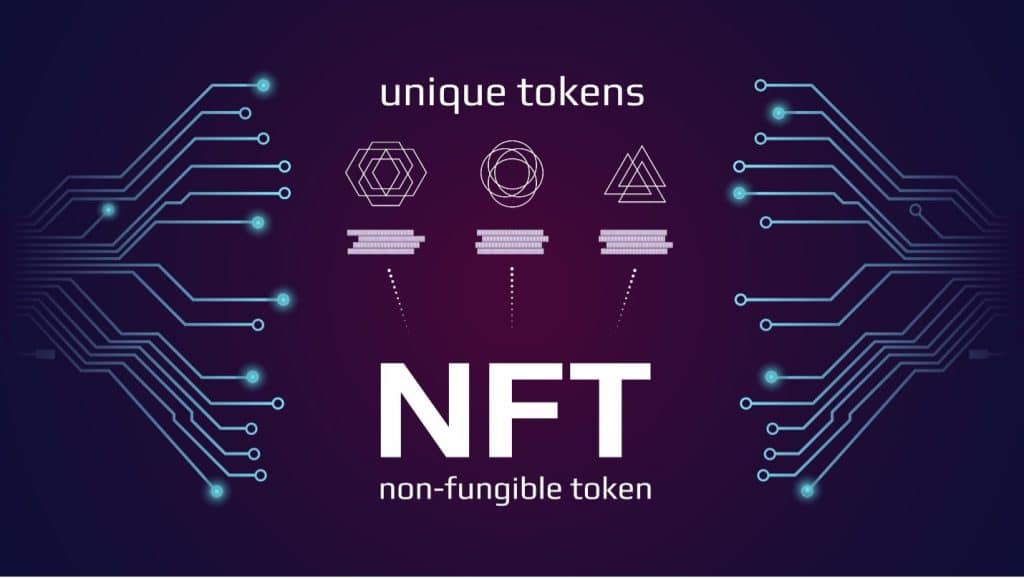
The question of whether NFT Buyers will reach 25 million and push sales volume above $80 billion in the near future remains highly debated.
Current activity levels sit well below these ambitious targets. Moreover, the market has matured into a more selective environment after earlier speculative excesses.
Therefore, achieving such scale would require sustained growth in both participation and genuine demand.
However, several structural and behavioural factors will determine whether these milestones become realistic.
NFT Buyers today number far fewer than 25 million on a consistent basis. Furthermore, monthly and annual sales volumes operate in a much lower range than the $80 billion threshold.
As a result, the gap between present reality and these projections appears substantial.
In addition, previous forecasts from earlier cycles often proved overly optimistic once hype subsided.
Thus, any path toward those numbers demands careful examination of catalysts and obstacles.
NFT Buyers: Current Reality Versus Ambitious Targets
NFT Buyers engage primarily through established collections, gaming assets, and utility-driven projects.
Meanwhile, total unique participants remain concentrated among experienced crypto users rather than mainstream audiences. In contrast, reaching 25 million would require broad onboarding of new demographics.
Therefore, education, simpler interfaces, and clearer value propositions become essential.
Moreover, sales volume reflects both the number of NFT Buyers and the average value of transactions.
Higher participation alone does not guarantee $80 billion if average prices stay modest. Furthermore, wash trading and speculative spikes can distort short-term figures without building lasting foundations.
As a result, sustainable volume growth depends more on organic demand than temporary surges.

Potential Catalysts for Expansion
Several developments could accelerate growth in NFT Buyers. First and foremost, deeper integration with gaming and virtual worlds may attract non-crypto audiences seeking functional digital items.
Secondly, brand and entertainment partnerships can introduce familiar names to new users.
In addition, improved wallet experiences and lower transaction costs reduce friction for first-time participants.
Thus, these improvements expand the addressable market beyond current crypto-native circles.
Meanwhile, real-world asset tokenisation and identity-focused non fungible tokens offer practical use cases that appeal to broader groups.
Similarly, social platforms that surface digital ownership more seamlessly may normalise collecting behaviour.
Therefore, utility and cultural relevance stand as stronger drivers than pure scarcity narratives.
On the other hand, progress in these areas remains uneven across projects and chains.
Significant Barriers That Remain for Potential NFT Buyers
Despite positive signals, meaningful obstacles persist. Regulatory uncertainty continues to limit institutional and mainstream comfort.
Furthermore, security concerns and past losses have left many potential NFT Buyers cautious.
In addition, the complexity of wallets, gas fees, and cross-chain movement still deters newcomers.
As a result, conversion from awareness to active participation stays relatively low.
Moreover, market fatigue after previous cycles has reduced speculative capital inflows.
Meanwhile, competition from other digital entertainment formats limits attention and spending.
Therefore, NFT projects must deliver consistent value to retain and grow their user bases.
In contrast to earlier periods, hype alone no longer sustains elevated buyer numbers or volume.
Pathways Toward Scale and Realistic Outlook
Achieving 25 million NFT Buyers and $80 billion in sales volume would require multiple simultaneous advances.
For example, mass-market applications that embed NFTs invisibly into everyday experiences could drive adoption.
In addition, clearer ownership benefits and secondary market liquidity would encourage longer-term holding and trading. Meanwhile, stronger infrastructure and user protections would build necessary trust.
Furthermore, growth is more likely to occur gradually across several years rather than in a sudden surge.
As a result, intermediate milestones in unique active users and organic volume will serve as better indicators than distant headline targets.
Similarly, quality of participation may matter more than raw headcount for long-term market health.
In summary, NFT Buyers reaching 25 million and driving sales volume above $80 billion remains an ambitious possibility rather than a near-term certainty.
Current levels sit considerably lower, and structural barriers continue to constrain rapid expansion.
Moreover, genuine utility, simplified access, and sustained cultural relevance will determine progress more than speculative forecasts.
By focusing on these fundamentals, the sector can expand NFT Buyers meaningfully while building more resilient sales volume over time.
