

Tokenised Stocks have moved from niche experiments into a visible segment of on-chain finance.
Investors now encounter products that track major companies and indices while trading on blockchain networks.
This article examines the most common questions surrounding Tokenised Stocks and provides a clear framework for evaluating them.
What Are Tokenised Stocks?
Tokenised Stocks are blockchain-based tokens designed to track the price of traditional equities or equity indices.
In simple terms, each token aims to reflect the value of an underlying share or basket of shares.
Platforms issue these tokens so users can gain economic exposure without holding the stock through a conventional brokerage account.
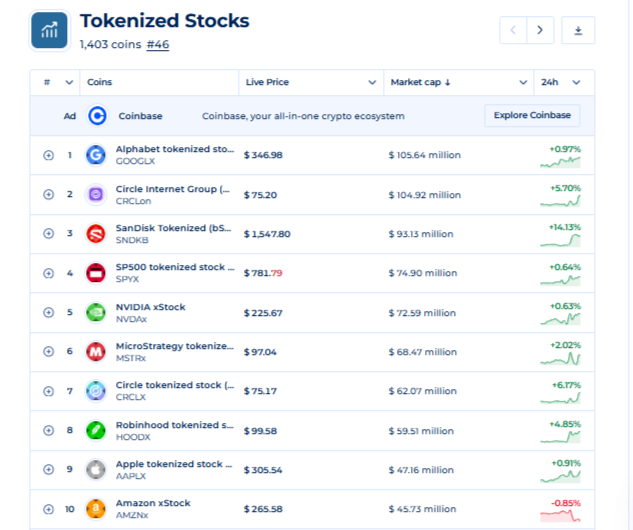
Moreover, popular examples currently include Alphabet tokenised stock (GOOGLX), NVIDIA xStock (NVDAx), Apple tokenised stock (AAPLx), and SP500 tokenised stock (SPYX).
Thus, tokenised stocks combine familiar company names with the transferability and settlement speed of crypto assets.
Therefore, they attract both crypto-native users and traditional investors seeking alternative access methods.
Do I Actually Own the Underlying Share When I Hold A Tokenised Stock?
In most cases, holders do not own the underlying share in the legal sense. Instead, the token provides economic exposure through a claim against an issuer or special-purpose vehicle.
The actual shares typically sit with a regulated custodian, while the token represents a contractual right that tracks the share’s performance.
Furthermore, this structure differs sharply from direct beneficial ownership recorded by a transfer agent.
As a result, token holders usually lack the full suite of rights that traditional shareholders enjoy.
Nevertheless, the price of the token still moves in line with the referenced equity under normal market conditions.
Ultimately, understanding this distinction protects investors from incorrect assumptions about ownership.
Do Tokenized Stocks Pay Dividends?
Dividend treatment varies by product. Many backed tokenised stocks pass dividend value through to holders, either as additional tokens, stablecoin distributions, or automatic reinvestment that increases the token’s value. In contrast, synthetic versions generally do not distribute dividends at all.
Moreover, the exact mechanism depends entirely on the issuer’s terms. Therefore, investors must review the product documentation before assuming any income will appear.
In addition, tax treatment of these distributions can differ from traditional dividend payments.
Thus, careful reading of the corporate-actions policy remains essential for accurate expectations.
Do Holders of Tokenised Stocks Get Voting Rights?
Voting rights almost never pass through to token holders in current third-party structures.
Traditional shareholders receive proxy voting privileges because their ownership appears on the company’s official register.
Tokenised Stocks, however, usually sit one layer removed from that register.
Furthermore, the issuer or custodian retains the formal shareholder position. As a result, token holders typically cannot influence corporate decisions.
In contrast, a smaller category of issuer-sponsored tokens may eventually convey fuller rights, yet most widely available products do not.
Therefore, investors seeking governance influence should continue using conventional brokerage accounts.
Are Tokenised Stocks the Same as Traditional Stocks?
Tokenised Stocks and traditional stocks share price exposure but differ in almost every other material respect.
Traditional stocks confer direct beneficial ownership, voting rights, established investor protections such as SIPC coverage in the United States, and settlement through regulated clearing systems.
Tokenised stocks offer 24/7 transferability, fractional ownership, and on-chain composability.
However, they generally provide only economic exposure rather than legal ownership.
Moreover, settlement finality, custody arrangements, and regulatory safeguards operate under different frameworks. C
The two instruments serve overlapping but not identical purposes. Overall, treating them as interchangeable can lead to mismatched expectations.
Are Tokenised Stocks Legal / Available in the United States?
Regulatory status remains jurisdiction-specific and product-specific. In the United States, tokenised securities fall under existing securities laws.
The SEC has issued staff statements clarifying that tokenisation does not remove securities-law obligations.
Many third-party Tokenised Stocks currently restrict U.S. persons from purchasing them.
Meanwhile, issuer-sponsored models and certain regulated initiatives continue to advance under clearer pathways.
Furthermore, availability outside the United States is often broader, especially through platforms operating under European or other frameworks.
Therefore, investors must verify eligibility and local rules before participating.
As a result, geographic restrictions form a practical constraint for many potential buyers.
What Are the Main Risks of Holding Tokenised Stocks?
Several distinct risks accompany tokenised stocks. Issuer and custodian risk ranks among the most important: the token represents a claim, so the financial health and legal structure of the issuer matter greatly.
Custody risk arises if the underlying shares are not properly segregated.
Regulatory uncertainty can affect trading venues, redemption processes, or product availability.
In addition, liquidity can thin outside traditional market hours, producing wider spreads.
Smart-contract or platform risk also exists because the tokens live on public blockchains.
Consequently, these products carry layers of risk that traditional brokerage holdings do not. Therefore, position sizing and due diligence become especially important.
Can The Stocks Be Traded 24/7?
Yes, secondary-market trading of many tokenised stocks occurs around the clock on supported blockchain venues.
This continuous availability stands in clear contrast to conventional stock exchanges that operate only during set hours.
However, primary minting and redemption usually align with the trading hours of the underlying equity markets.
Moreover, liquidity often declines during nights and weekends, which can increase price divergence from the last official close.
As a result, 24/7 trading offers convenience but does not guarantee tight spreads at every moment.
Overall, investors should treat after-hours prices as indicative rather than definitive.
How Do Tokenised Stocks Work?
The typical process begins when an issuer or its agent acquires the underlying shares and places them with a regulated custodian.
The issuer then mints blockchain tokens that correspond to those shares, often on a one-to-one basis. Investors buy the tokens on supported platforms or decentralised venues.
When holders redeem, the tokens are burned and the corresponding economic value is returned according to the product terms.
Furthermore, smart contracts automate many of these steps, while oracles or internal mechanisms keep the token price aligned with the reference equity.
Thus, the system relies on both traditional custody infrastructure and blockchain settlement rails.
Therefore, the quality of the entire chain determines the reliability of the product.
Are These Stocks Fully Backed 1:1 By Real Shares?
Many leading products advertise 1:1 collateralisation and publish proof-of-reserves data.
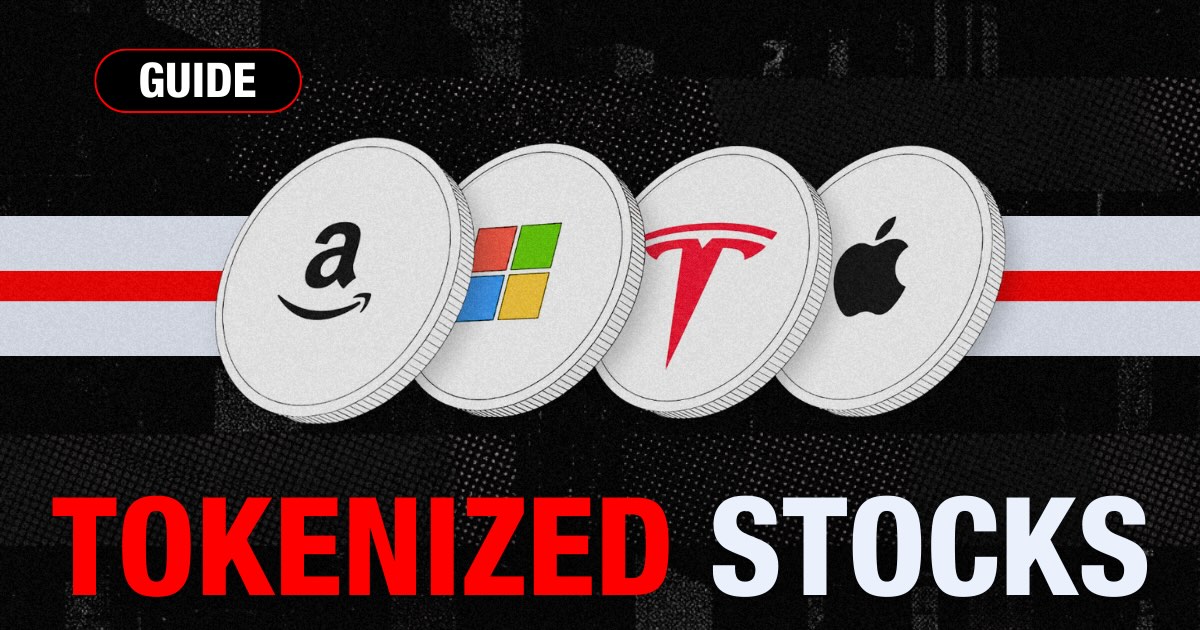
Examples currently visible in market rankings include tokens tracking Alphabet, NVIDIA, Apple, Amazon, and broad indices such as the S&P 500.
These products generally maintain underlying shares in segregated custody equal to the tokens in circulation.
However, not every tokenized equity follows the same standard. Synthetic versions may track price without holding the actual shares.
Moreover, the legal enforceability of the backing depends on the issuer’s jurisdiction and documentation.
As a result, investors should verify current reserves, audit reports, and redemption terms rather than relying solely on marketing claims.
Ultimately, robust 1:1 backing improves confidence but does not eliminate all other risks.
Tokenised stocks expand access to equity exposure and introduce new settlement efficiencies.
At the same time, they introduce distinct ownership, rights, and risk profiles that differ from traditional stocks.
Investors who understand these differences, verify the specific product structure, and size positions appropriately can evaluate whether tokenised stocks fit their objectives.
Those seeking full shareholder rights, established investor protections, or simplicity may still prefer conventional brokerage channels.
Careful comparison of both options remains the most reliable path forward.
