


Investors actively explore emerging digital assets that combine artificial intelligence (AI) with blockchain utility due to one of the best crypto gainers in the form of AKEDO crypto.
AKEDO (AKE) has drawn attention as an AI-powered game and content creation platform operating on BNB Smart Chain.
Moreover, the project enables users to generate playable games from natural-language prompts through specialised multi-agent systems.
Therefore, understanding the pros and cons of investing in AKEDO becomes essential before allocating capital.
Furthermore, this analysis examines whether AKE can potentially serve as a millionaire-maker token while highlighting both opportunities and risks with transparency.
Key Points
- AKE powers AI-driven game creation, publishing, staking rewards, and launchpad liquidity pairing on BNB Smart Chain.
- The token features a deflationary fee model that permanently burns a portion of platform activity fees.
- AKEDO launched in August 2025 through platforms including KuCoin Spotlight and has attracted strategic investors.
- High volatility and large total supply create both upside potential and significant dilution risk.
What Is AKEDO?
AKEDO functions as a multi-agent AI framework designed specifically for autonomous game and digital content creation.
Specifically, specialised agents handle distinct tasks such as world building, rule design, gameplay balancing, and storytelling.
As a result, users can turn simple text prompts into playable experiences far faster than traditional development methods.
Meanwhile, the platform includes a launchpad that allows creators to tokenise their games with one-click launches.
The native token AKE operates as a BEP-20 asset on BNB Smart Chain. In addition, holders use AKE to pay for AI prompts and publishing fees, stake for a share of protocol revenue, and provide liquidity for newly launched game tokens.
Moreover, protocol fees follow a clear three-way split: one-third burns permanently, one-third rewards stakers, and one-third supports platform operations.
Consequently, increased platform activity can create ongoing demand and gradual supply reduction.
Furthermore, the total supply stands fixed at 100 billion AKE, with approximately 22.8 billion in circulating supply according to recent market data.
Therefore, the project sits at the intersection of generative AI, Web3 gaming, and creator economies.
The Pros of Investing in AKEDO
What Are the Benefits of Investing in AKEDO?
Several structural advantages support the case for AKE. First and foremost, the utility model directly ties token demand to real platform usage.
Users must spend AKE to generate content and publish games, which creates consistent organic demand as adoption grows.
In addition, the 33% burn mechanism introduces a deflationary pressure that strengthens over time with higher activity.
Moreover, the multi-agent AI approach differentiates AKEDO from generic large language model (LLM) tools by specialising agents for coherent game creation.
As a result, the platform aims to improve development efficiency dramatically compared with conventional methods.
Furthermore, the integrated launchpad links every new game token to AKE liquidity pairs, which can amplify demand during periods of creator activity.
Strategic backing from investors and listings across multiple exchanges have also improved accessibility and visibility.
Meanwhile, the combination of AI narrative strength and gaming utility positions AKE within two high-interest sectors simultaneously.
Therefore, successful user adoption could drive meaningful network effects and token value appreciation.
The Cons of Investing in AKEDO
What Are the Drawbacks of Investing in AKEDO?
Despite the promising concept, several material risks require careful consideration. For the start, the project remains relatively young, having launched its token in August 2025.
Thus, it still needs to prove sustained creator and player adoption beyond initial hype cycles.
In addition, the large total supply of 100 billion tokens and ongoing vesting schedules introduce dilution pressure.
Unlock events can increase circulating supply and potentially weigh on price. Moreover, token concentration among top holders has raised concerns in independent risk assessments, which can amplify volatility and manipulation risk.
Furthermore, AKEDO operates as an application-layer project rather than an independent blockchain.
Therefore, it inherits both the benefits and limitations of BNB Smart Chain without full control over its underlying infrastructure.
Competition in AI content tools and Web3 gaming remains intense, and alternative platforms or free features inside major engines could erode differentiation over time.
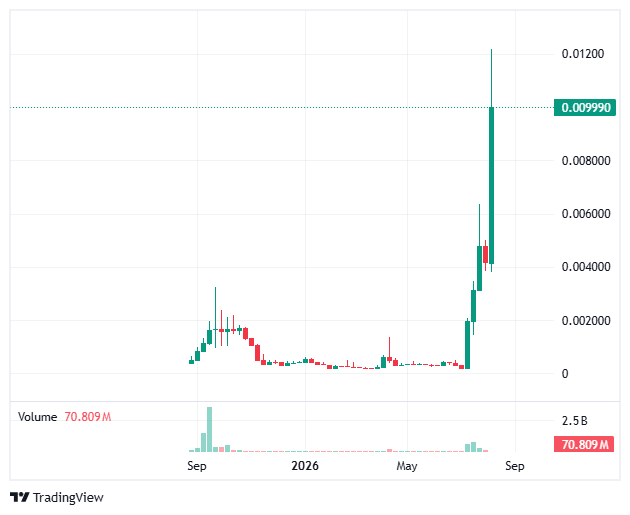
Market data also shows extreme price swings typical of mid- and small-cap tokens.
As a result, investors must prepare for substantial drawdowns even if the long-term thesis holds.

Will AKE Be a Millionaire Maker Token?
AKE could theoretically generate life-changing returns under highly favourable conditions. However, the path depends heavily on both capital deployed and future price appreciation.
Consider simple mathematics. At a hypothetical entry price near current ranges, an investor would need a very large position and multi-hundred-fold growth to reach millionaire status from modest capital.
Alternatively, larger initial investments combined with more moderate multiples could achieve the same outcome.
Nevertheless, such outcomes require exceptional execution on user growth, sustained fee generation, successful burn mechanics, and favourable broader market conditions.
Moreover, the fixed supply and burn mechanism create a theoretical scarcity pathway, yet unlocks and competitive pressures can offset those benefits.
Therefore, while the upside narrative exists, treating AKE as a probable millionaire-maker remains speculative rather than probable.
Careful position sizing and realistic expectations prove essential.
Frequently Asked Questions About AKEDO and AKE
What Is the Primary Utility of the AKE Token?
AKE pays for AI prompts and game publishing, enables staking for fee-share rewards, and serves as the base pairing asset for tokens launched on the platform’s launchpad.
In addition, a portion of fees burns permanently, linking activity to supply reduction.
Is AKEDO Built on Its Own Blockchain?
No. AKEDO runs as a BEP-20 token and application on BNB Smart Chain. As a result, it benefits from existing liquidity and speed while remaining dependent on that ecosystem.
How Does the Fee Burn Mechanism Work?
Platform fees split equally: one-third burns, one-third goes to stakers, and one-third supports operations. As a result, higher usage can gradually reduce supply over time.
What Are the Main Risks of Holding AKE?
Key risks include high token concentration, ongoing unlocks, intense competition in AI tools, limited proven long-term adoption, and extreme price volatility common to emerging tokens.
Conclusion: Is AKEDO (AKE) a Good Investment?
AKEDO presents an intriguing thesis that merges multi-agent AI with Web3 gaming and creator monetisation.
Furthermore, the token’s utility design, burn mechanics, and launchpad integration create clear demand drivers when the platform succeeds.
Nevertheless, the project remains early-stage, faces dilution risks, and competes in a rapidly evolving landscape.
Therefore, AKE may suit investors with high risk tolerance who believe strongly in AI-generated content economies and can tolerate significant volatility.
On the other hand, more conservative participants should carefully weigh the cons before allocating meaningful capital.
Always conduct independent research, verify contract addresses, review current tokenomics and unlock schedules, and consider only capital you can afford to lose.
Market conditions change quickly, and past performance or speculative narratives never guarantee future results.
This analysis aims to provide balanced, insightful information to support informed decision-making rather than specific investment advice.
