
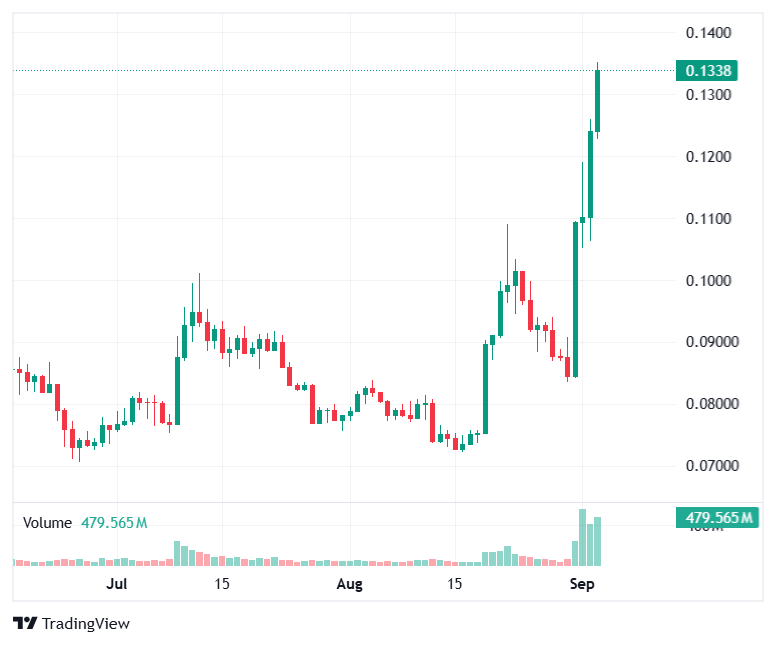
Arbitrum has once again grabbed market attention after ARB climbed roughly 18% in a short window, pushing the governance token higher amid broader Layer-2 activity.
Traders and long-term holders are asking the same set of practical questions: what exactly sparked the move, whether the rally has legs, and how the token itself connects to the underlying network.
This piece walks through the current catalysts, the token’s real role, the risks that still sit in plain view, and the practical steps for anyone looking to participate.
Why is ARB pumping?
The recent climb traces back to a clear and measurable revenue event rather than pure speculation.
Robinhood Chain, a dedicated network built on Arbitrum’s Orbit technology stack, generated over $1 million in fees within a single 24-hour period in late August, with one later day reaching as high as $3.75 million.
Under the Arbitrum Expansion Program, 10% of that net protocol revenue flows back to the broader Arbitrum ecosystem—most of it landing in the decentralised autonomous organisation (DAO) treasury.
That direct economic link turned an external chain’s success into a visible positive for ARB holders and the Foundation.
Meanwhile, the ArbOS Elara upgrade activated in mid-August, adding protocol-level priority-fee support and improved compliance tools for Orbit chains.
At the same time, tokenised stocks and other real-world assets on Arbitrum One and Robinhood Chain continued to expand, with tokenised equity market caps crossing notable thresholds and Arbitrum ranking first by number of tokenized RWA deployments.
Bridge inflows and rising perpetual open interest added further fuel, while stablecoin transfer volumes on the network stayed elevated.
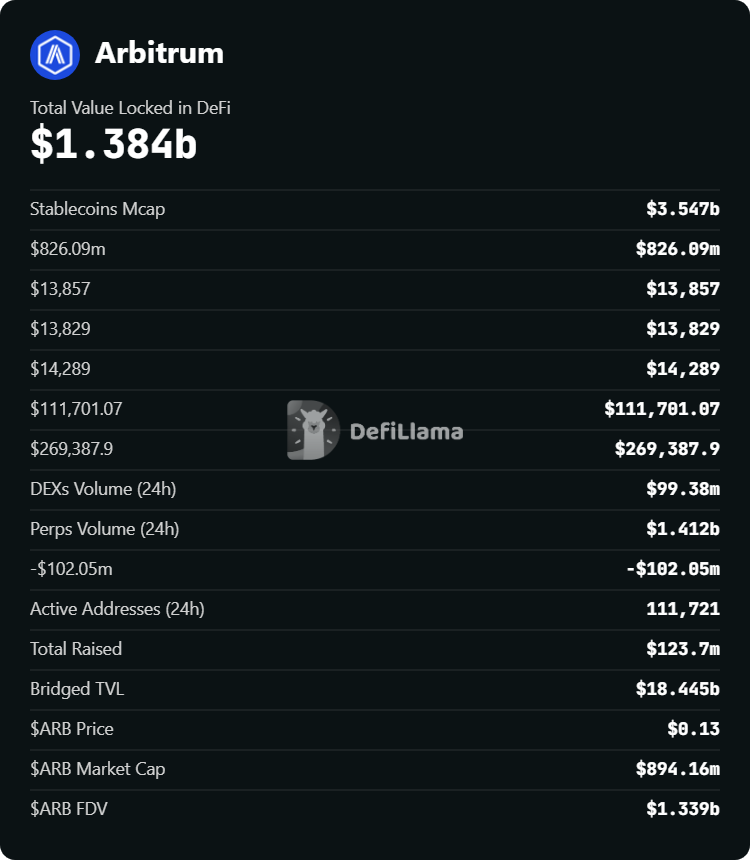
Looking closer at the data, Arbitrum One still processes millions of transactions daily and maintains a DeFi TVL near $1.4 billion, yet the new revenue stream from Orbit chains is what shifted sentiment.
Is ARB a good buy after the 18% rally?
Buying after a sharp move always carries timing risk.
The network fundamentals look healthier than they did in mid-August when ARB sat near multi-month lows.
Revenue diversification through the Expansion Program gives the DAO a new income line that did not exist at scale before Robinhood Chain went live.
Ecosystem GDP figures and the steady rise in stablecoin holders also point to real usage rather than purely speculative volume.
Even so, ARB remains a pure governance token. Price appreciation still depends heavily on market narrative and the expectation that future DAO decisions will eventually create stronger value capture.
Short-term traders have already taken profits in previous rebounds, and on-chain data sometimes shows exchange inflows during rallies.
For longer-horizon participants who believe Orbit chains will keep expanding, the current levels may represent a more constructive entry than the August lows.
Anyone treating the position as a high-conviction hold should size it according to personal risk tolerance and accept that volatility remains elevated.
What is the Arbitrum token actually used for (does it capture network value)?
ARB is the governance token of the Arbitrum DAO.
Holders can vote on proposals that affect Arbitrum One, Arbitrum Nova, treasury allocations, and Security Council elections, or they can delegate that voting power. It does not pay for gas—users still settle transaction fees in ETH.
The token currently captures network value only indirectly.
Sequencer and protocol fees flow primarily in ETH, and the DAO controls a large treasury that can be directed through governance.
The Expansion Program creates a clearer revenue path: 10% of net fees from qualifying Orbit chains return to the ecosystem, with the majority allocated to the DAO.
In theory the DAO could later vote to burn tokens, distribute rewards, or fund buybacks, yet no such mechanism is automatic today.
In short, ARB gives holders influence over a growing treasury and the future direction of the protocol, but it does not automatically share in every fee generated on Arbitrum One.
Value accrual remains a governance decision rather than a built-in economic feature.
What are the biggest risks of buying Arbitrum at these levels (especially token unlocks)?
Token unlocks form the most immediate supply-side pressure.
Investor and team allocations continue to vest on a monthly schedule through early 2027.
The next notable release sits in mid-to-late September 2026 and is expected to introduce roughly 90–140 million ARB into circulation, depending on the exact vesting line.
These unlocks typically represent 1–2% of market capitalisation and can create selling pressure if recipients choose to liquidate.
Beyond supply, ARB still faces the classic Layer-2 risks: a relatively centralized sequencer, the multi-day withdrawal delay inherent to optimistic rollups (unless users pay for fast bridges), and smart-contract or bridge vulnerabilities.
Competition from other L2s remains intense, and the token’s lack of direct fee capture means price can decouple from network usage for extended periods.
Macro crypto conditions also matter. A broad risk-off move can erase short-term gains regardless of fundamental progress.
Position sizing that assumes the possibility of a 30–50% drawdown remains prudent.
How do I buy ARB and bridge assets to Arbitrum safely?
Most major centralised exchanges list ARB with deep liquidity—Binance, Coinbase, Bybit, Kraken and others.
After purchase, withdraw the tokens to a self-custody wallet that supports Arbitrum One (MetaMask, Rabby, or hardware wallets with the correct network added).
To move assets from Ethereum to Arbitrum, use the official Arbitrum Bridge or well-audited third-party bridges that support fast withdrawals for a fee.
Always verify the contract addresses through official documentation or trusted explorers such as Arbiscan.
Start with a small test transaction, confirm the funds arrive, and only then move larger amounts.
Once on Arbitrum, ETH is still required for gas. Keep a modest ETH balance on the network for future transactions.
Enable two-factor authentication (2FA) on exchange accounts and prefer hardware wallets for any sizeable long-term holdings.
Avoid interacting with newly launched or unaudited contracts during periods of high excitement.
Arbitrum’s latest price move reflects a genuine shift in how the protocol monetises its technology stack.
Orbit chains are no longer theoretical; they are generating measurable fees that flow back to the ecosystem.
Whether that economic link eventually translates into stronger token demand depends on continued adoption, careful governance decisions, and the market’s willingness to look beyond short-term unlock schedules.
For now the network is busier, the revenue picture is broader, and the questions surrounding ARB have become more concrete than they were only weeks ago.

1 Comment
Well structured post, easy to skim through.