


Bitcoin Mining operators stepped into September 2026 carrying mixed signals from the previous month.
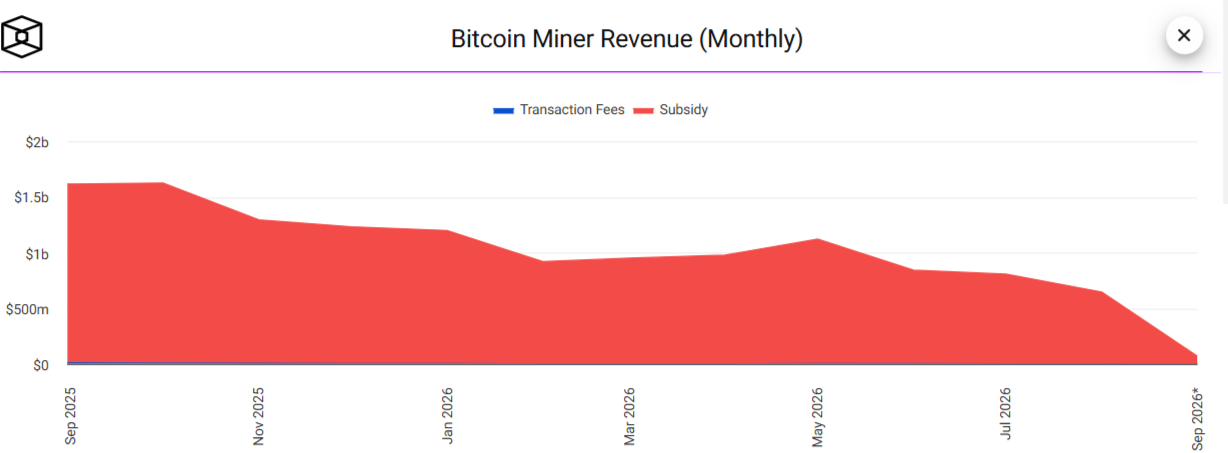
August delivered only $644 million in total network revenue. That figure sits well below the $1.2 billion recorded in January 2026 and trails the $805 million logged in July.
Year-over-year (YoY) the gap widens further because August 2025 produced roughly $1.7 billion.
These numbers force every serious participant to re-examine margins before the fourth quarter begins.
Hashprice hovered near the high $30s per petahash for much of late summer while network hashrate stayed elevated above 900 EH/s.
Block subsidies remained fixed at 3.125 BTC and transaction fees continued contributing less than one percent of total income.
Under those conditions, many fleets found cash flow tighter than earlier in the year.
Yet, the same environment still rewards the most efficient machines that secure low-cost power.
What electricity price (or power rate) do I need to stay profitable / what is the breakeven cost?
Operators ask this question first. This is because power cost now decides survival more than almost any other variable.
At current hashprice levels a modern machine running between 10 and 15 J/TH typically reaches cash breakeven somewhere between $0.06 and $0.08 per kilowatt-hour.
Rates below $0.06 open comfortable margins. Rates between $0.08 and $0.10 leave only the newest hydro-cooled units in positive territory.
Older hardware above 25 J/TH usually requires power under $0.04–$0.05 simply to avoid losses.
Public miner disclosures and independent hashprice trackers both confirm the same pattern.
Facilities that locked in industrial or renewable contracts years ago continue generating positive cash flow.
Those paying residential or peak-hour rates face immediate pressure.
The difference between a 5-cent contract and a 9-cent contract can swing monthly results by tens of thousands of dollars on a mid-sized farm.
How much does a specific ASIC (S21, S23 Hydro, S19 XP, etc.) earn per day or per month right now?
Gross revenue calculations begin with hashprice. At roughly $38–39 per PH/s per day an Antminer S23 Hydro delivering 580 TH/s produces about $22–23 of daily revenue before any costs.
After electricity at $0.06/kWh the same unit still clears roughly $14–15 net.
An S21-class machine at 200 TH/s and 17.5 J/TH generates closer to $7.50–$8.00 gross and $2.50–$3.00 net under identical power rates.
An older S19 XP at 140 TH/s and 21.5 J/TH often slips to $1 or less of daily profit once power is deducted, and it turns negative the moment rates climb above $0.07.
Monthly figures simply multiply those daily results by thirty while adding typical pool fees of one to two percent.
Hosting contracts, when used, further reduce the net.
Real-world operators therefore track both the machine’s nameplate efficiency and the exact delivered power price rather than relying on manufacturer marketing claims.

How is Bitcoin Mining profitability actually calculated in 2026?
The core formula remains straightforward yet sensitive to several moving inputs.
Daily revenue equals a miner’s hashrate in petahash multiplied by the prevailing hashprice.
Hashprice itself embeds the 3.125 BTC block subsidy, the current Bitcoin price, the network difficulty, and the modest contribution from transaction fees.
Subtract electricity cost (machine wattage times 24 hours times the rate per kilowatt-hour) and any pool fees.
The remainder is cash profit before depreciation, hosting, labor, or debt service.
Network difficulty adjusts every 2 016 blocks, so a sudden hashrate surge immediately dilutes every participant’s share of the fixed subsidy.
Bitcoin price swings alter the dollar value of that subsidy within hours.
Fees stay negligible, leaving price and difficulty as the two dominant external variables.
Operators who model these factors daily rather than weekly gain an edge when conditions shift quickly.
Which hardware is still profitable (and which older machines are no longer viable)?
High-efficiency units under 15 J/TH, especially liquid-cooled models such as the S23 Hydro series, continue to post positive cash margins across a wider band of power rates.
Mainstream air-cooled machines in the 15–20 J/TH range remain viable only where power stays below roughly $0.08.
Legacy fleets above 25 J/TH have largely exited profitable territory unless they enjoy extremely cheap stranded or curtailment power.
Public filings from large operators show the same split.
Companies that upgraded aggressively through 2025 and early 2026 report healthier unit economics.
Those still running large percentages of S19-generation equipment either shut machines off during low-price periods or accelerated their pivot toward artificial intelligence (AI) and high-performance computing workloads.
The hardware refresh cycle has therefore become non-negotiable for pure-play Bitcoin Mining.
Bitcoin Mining: What is the current cost to mine 1 BTC (cash cost or all-in production cost) compared to the spot price?
Cash production costs for efficient fleets currently range from the mid-$40 000s to the low $60 000s depending on power price and machine efficiency.
All-in costs that include depreciation, overhead, and capital recovery sit higher, often between $70 000 and $90 000 for the average public miner.
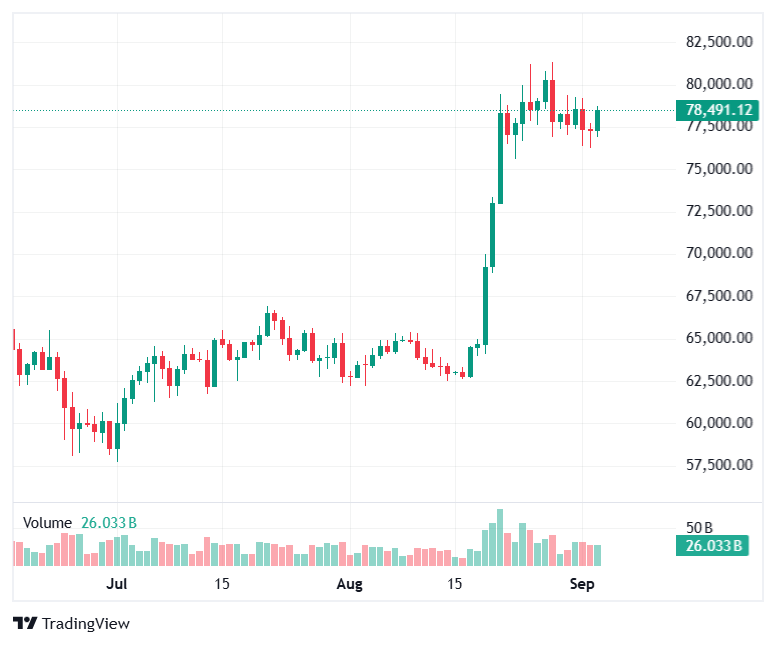
Spot Bitcoin prices in early September traded in a band that left the most efficient operators with healthy cash margins while leaving higher-cost producers closer to breakeven or slightly underwater on a full-cost basis.
The gap between cash cost and all-in cost explains why some miners continue to expand hashrate even when headline profitability looks thin.
Cash-flow-positive machines still generate Bitcoin that can be held or sold, while fully loaded accounting may show temporary losses.
Investors therefore examine both metrics rather than relying on a single number.
Looking ahead into Q4 2026, three variables will shape outcomes more than any others: BTC price trajectory, the pace of further hashrate growth, and each operator’s ability to secure or maintain sub-$0.07 power.
August’s $644 million revenue total already sits 46 percent below January’s $1.2 billion and 62 percent below the $1.7 billion recorded in August 2025.
July’s $805 million offered a modest improvement over the weakest summer months yet still lagged the stronger periods earlier in the year.
Miners who entered the fourth quarter with upgraded fleets and locked-in low-cost energy contracts hold the clearest path to sustained profitability.
Those still operating older hardware at elevated power rates face continued pressure and an accelerating incentive to repurpose capacity for alternative high-density compute uses.
Bitcoin Mining remains a viable business in Q4 2026, yet it rewards only the disciplined and the efficient.
