

Last week’s on-chain data painted a clear picture of fresh capital entering the crypto ecosystem, particularly stablecoin supply.
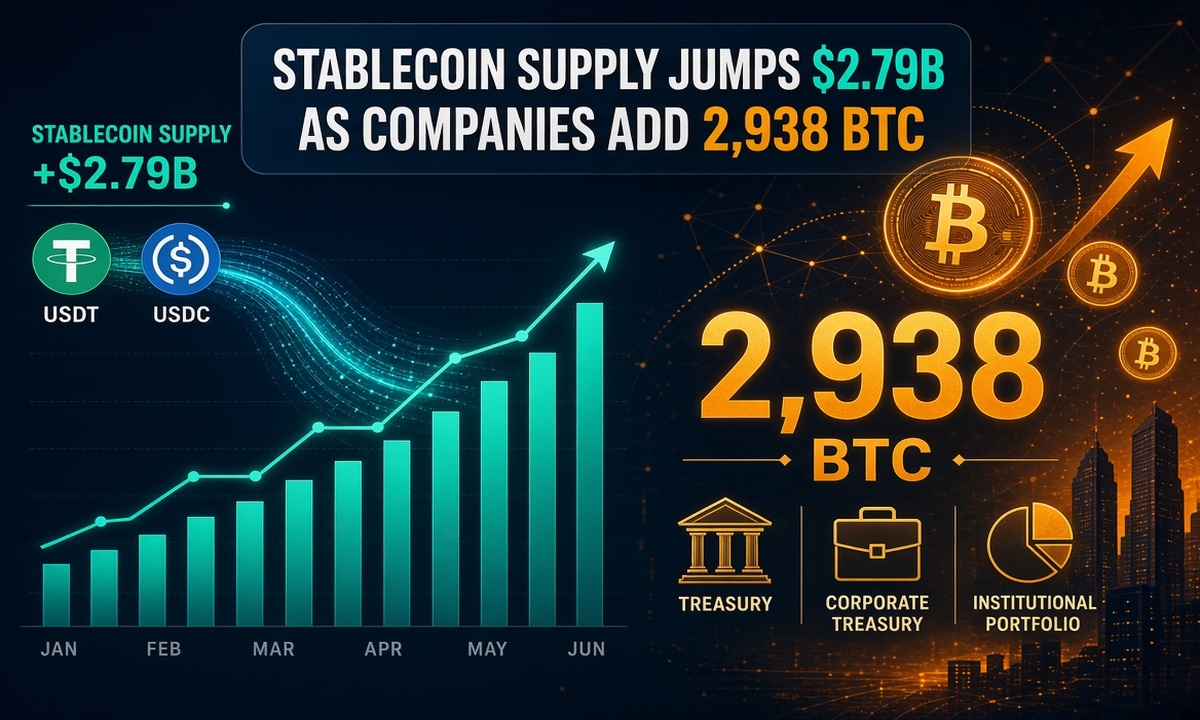
Between Monday, September 21 and Sunday, September 27, 2026, total stablecoin supply expanded by $2.79 billion, according to Lookonchain’s weekly report.
At the same time, four public companies increased their Bitcoin holdings by a combined 2,938 BTC, valued at roughly $246 million.
These two movements unfolded side by side while decentralised exchange (DEX) activity cooled.
DEX spot volume dropped 6.44% week-over-week and perpetual futures volume slipped 1.71%.
Protocol revenue, however, edged higher by 3.41%, with one standout project recording extreme growth.
What Does a $2.79B Jump in Stablecoin Supply Mean for Liquidity?
Stablecoin supply acts as a direct proxy to trade or invest across chains. When the aggregate market capitalisation of USDT, USDC and smaller dollar-pegged tokens rises by nearly $2.8 billion in seven days, new capital is clearly moving on-chain.
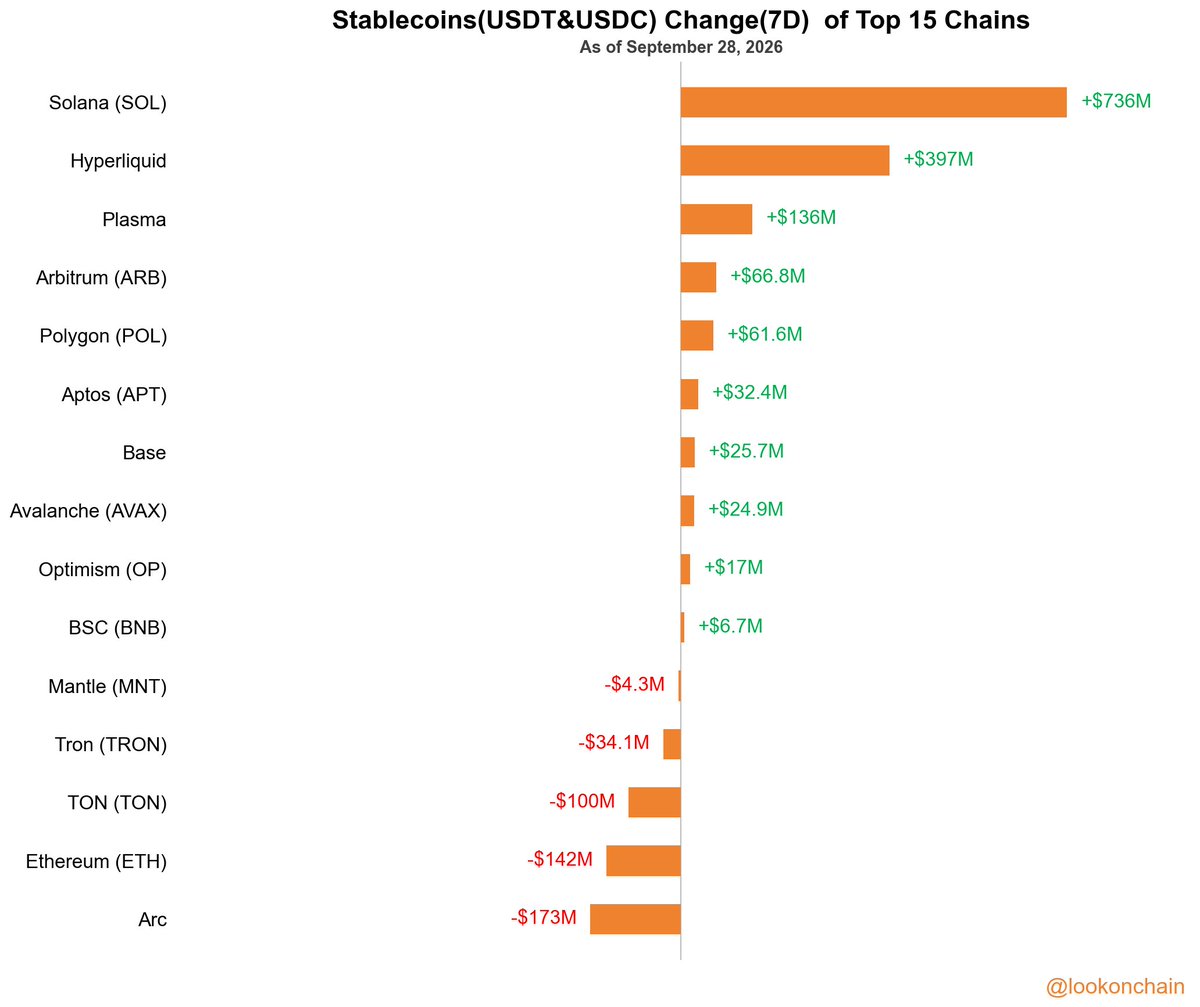
Meanwhile, Solana, Ethereum and Hyperliquid absorbed the bulk of the fresh issuance, according to separate chain-level breakdowns circulating this week.
Beyond that numerical increase, the expansion signals readiness among market participants to deploy funds without first converting fiat through traditional rails.
In the meantime, trading volumes on decentralised platforms actually contracted, creating an interesting divergence between available liquidity and realised turnover.
Why Are Public Companies Adding Bitcoin While Stablecoin Supply Expands?
Corporate treasuries continued their accumulation strategy even as stablecoin balances grew.
Strategy alone purchased 1,666 BTC for approximately $140 million during the period, lifting its total holdings above 847,000 BTC.
Other firms contributed the remaining portion of the 2,938 BTC total.
In addition, Bitmine acquired more than 17,000 ETH, showing that institutional interest extended beyond Bitcoin.
Still, the simultaneous rise in stablecoin supply and corporate Bitcoin buying suggests two parallel flows: one building cash-like reserves on-chain and another locking value into longer-term holdings.

How Does Rising Stablecoin Supply Interact with Soft Trading Volumes?
New stablecoin issuance often precedes higher trading activity, yet last week the opposite pattern appeared.
Spot and perpetual volumes declined even while supply expanded.
The data implies that much of the newly minted stablecoins may be sitting in wallets or moving into yield products rather than immediate speculative trades.
At the same time, protocol revenue managed a modest 3.41% increase, indicating that certain on-chain applications continued to generate fees.
Moreover, the contrast between growing stablecoin supply and softer DEX volumes highlights a market that is stocking up on liquidity without yet deploying it aggressively.

Is the Latest Growth a Sign of Strengthening Fundamentals?
Persistent expansion in stablecoin supply has historically preceded periods of broader market activity.
Currently, the $2.79 billion weekly rise arrives alongside continued corporate Bitcoin accumulation, reinforcing the view that larger players remain committed.
Yet, softer trading volumes remind observers that capital availability alone does not guarantee immediate price momentum.
Furthermore, the combination of rising stablecoin supply and steady institutional purchases creates a supportive backdrop.
Also worth watching is whether the new liquidity eventually rotates into spot markets or remains parked in stablecoin form.
Previously, similar supply jumps have accompanied accumulation phases rather than pure retail FOMO.
Overall, the latest Lookonchain figures show a market quietly building capacity.
Stablecoin supply continues to climb while public companies keep adding Bitcoin, painting a picture of deliberate capital formation rather than short-term speculation.
