

A sharp-eyed crypto trader just turned a quick 100 percent profit on the STANDARD token.
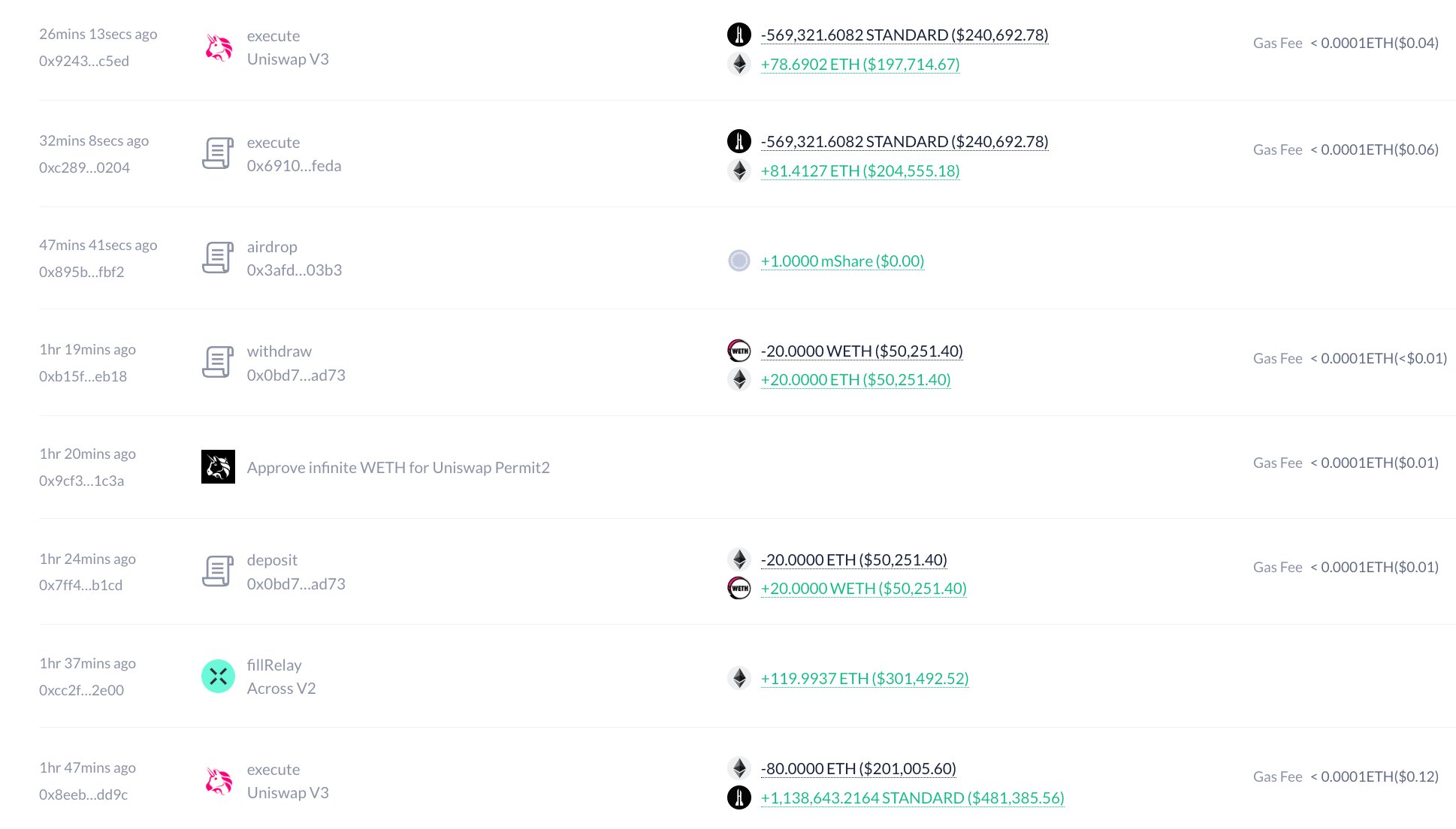
Wallet 0x6910 spent 80 ETH, worth roughly $201,000, to scoop up 1.14 million STANDARD tokens.
Within a single hour, the same wallet sold the entire position for 160 ETH, locking in another $201,000 in pure profit.
On-chain records from DeBank and Uniswap activity show the entire round-trip happened at lightning speed.
The trader entered near the early surge, rode the momentum, and exited cleanly before the inevitable pullback.
Market watchers are already calling it one of the cleanest short-term flips of the day.
What Exactly Is the STANDARD Token?
STANDARD powers The Standard Reserve, a new on-chain monetary system that runs entirely on immutable code. The protocol treats itself like a digital central bank.
It adjusts token issuance according to net ETH flows through its main Uniswap pool and channels trading fees into reserves, permanent liquidity, and buybacks.
Holders can simply trade the token or go deeper by acquiring a “charter” that lets them operate branches and earn newly issued STANDARD.
The maximum supply sits near one billion tokens, with continuous burns reducing the circulating amount over time.
The project launched on Robinhood Chain and quickly attracted speculative interest.
How Did This Trader Double Their Money So Fast?
Timing and size made the difference. The wallet first bridged or withdrew enough ETH, then executed a large buy of 1.14 million STANDARD through Uniswap.
Price action on the STANDARD/ETH pair climbed sharply in the following minutes, creating a wide enough window for a full exit at nearly double the entry cost.
Transaction history reveals the buy used 80 ETH and the sell returned 160 ETH, with only minor gas fees eating into the gains.
The entire sequence lasted about sixty minutes from first purchase to final sale.
In fast-moving new token markets, that kind of precision separates skilled traders from the crowd.
Why Are Sudden 100% Moves Common With New Tokens Like STANDARD?
Fresh launches often experience extreme volatility in the first hours and days.
Low initial liquidity, concentrated early holders, and rapid social media attention can push prices higher in short bursts.
At the same time, large wallets that enter early can also exit early, creating the exact 100 percent opportunity this trader captured.
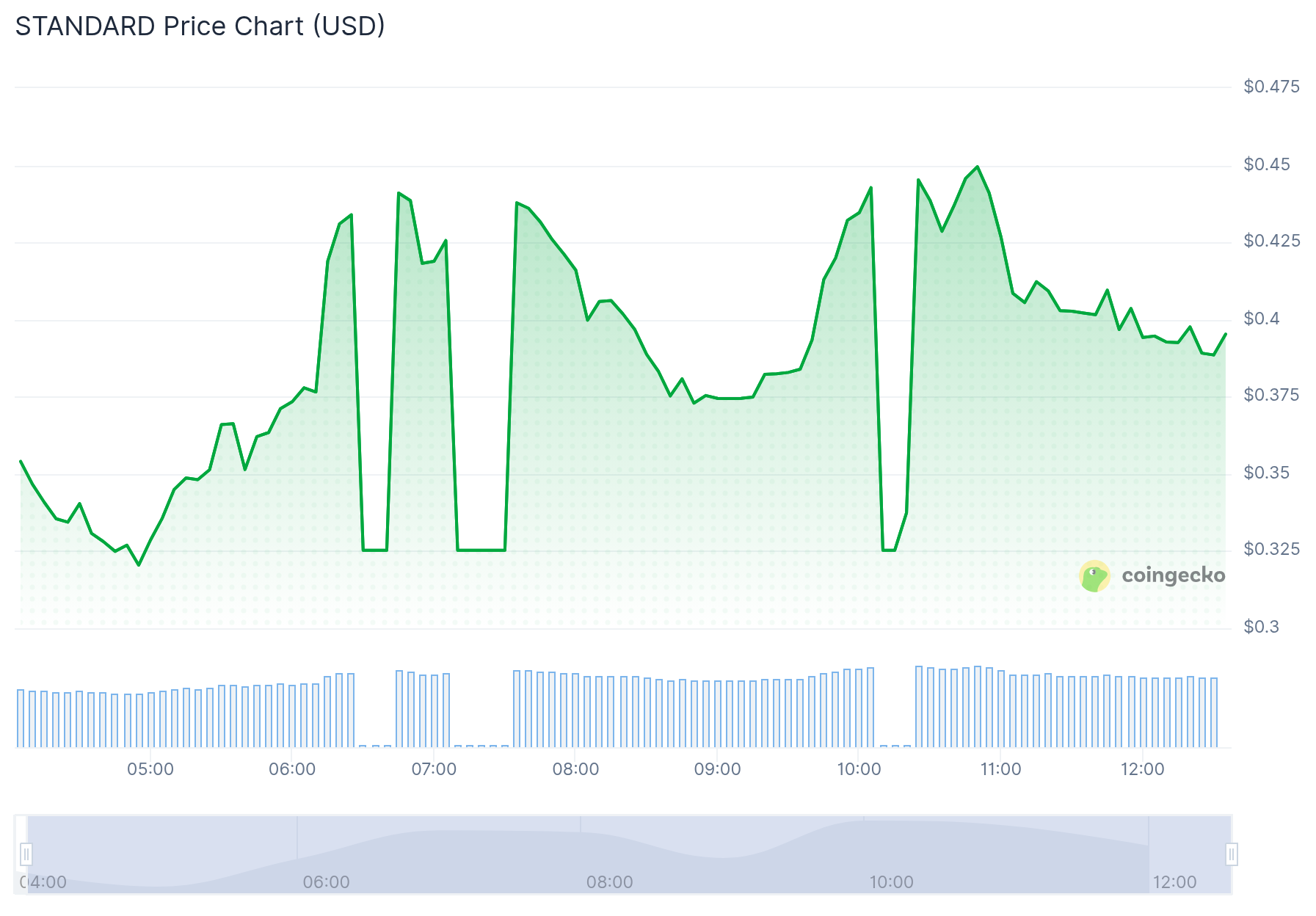
The STANDARD chart on DexScreener shows a steep climb followed by a modest retreat, the classic pattern that rewards those who act fast and leave even faster.
While such moves look spectacular, they rarely last long once broader selling pressure arrives.
What Risks Come With Chasing Similar Trades?
For such an execution to take place, scalability, and speed is of high essence.
The same low liquidity that allows big percentage gains also allows big percentage losses.
A delayed sell or a sudden shift in sentiment can erase profits in minutes.
New tokens also carry smart-contract risk, potential insider activity, and the simple reality that most early pumps eventually cool.
Anyone watching the STANDARD trade should remember that 0x6910 succeeded because the wallet entered and exited with discipline.
Copying the same move after the fact usually means buying someone else’s exit liquidity.
Could This Kind of Activity Boost or Hurt STANDARD Long-Term?
Short-term flips generate volume and visibility. Higher trading activity can improve liquidity and draw more attention to the underlying protocol.
Yet, repeated large exits can also pressure the price and create a reputation for “pump-and-dump” behaviour.
The Standard Reserve’s design tries to counter pure speculation through its coded monetary policy and charter system.
Whether that structure can convert fleeting trading interest into lasting participation remains the real test.
For now, the 100 percent flip by wallet 0x6910 stands as a clear example of how quickly capital can move in and out of a new token.
Traders who study these on-chain prints carefully gain an edge. They see not only the profit number but the exact timing, size, and exit strategy that produced it.
In the fast lane of new token markets, that level of detail often matters more than any headline.
