

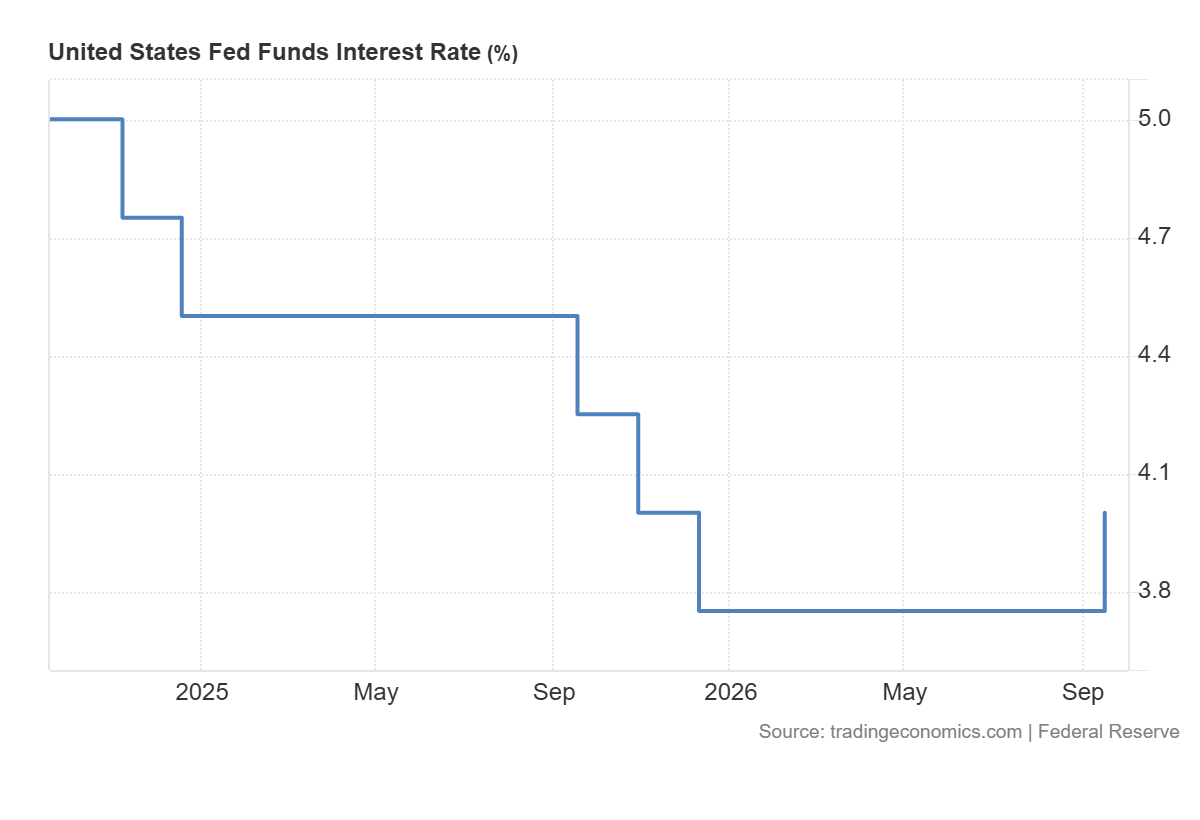
The Federal Reserve delivered its first interest-rate increase since July 2023 on September 16, lifting the target range by 25 basis points to 3.75%–4.00% and this is conflicting by what has been termed as the Fed Rate Hike Bitcoin impact.
Markets had already priced the move at more than 90% probability, yet the Fed Rate Hike Bitcoin Impact continues to ripple through trader positioning and capital allocation.
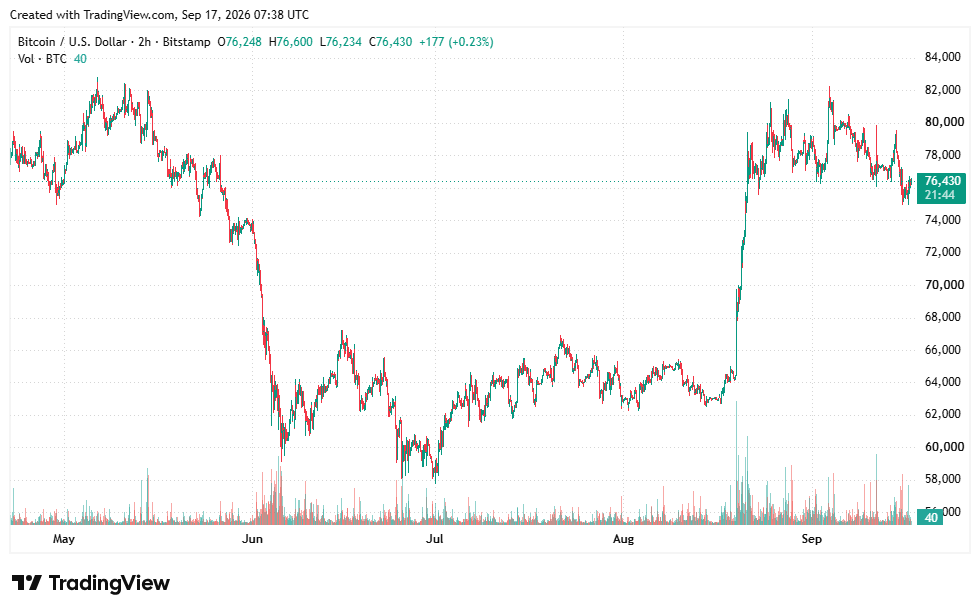
Bitcoin entered the decision near the mid-$75,000 area after a prior regulatory setback, then swung between roughly $75,000 and $76,500 before settling close to pre-announcement levels.
That muted headline reaction hides deeper shifts in sentiment and liquidity expectations.
The Immediate Market Response
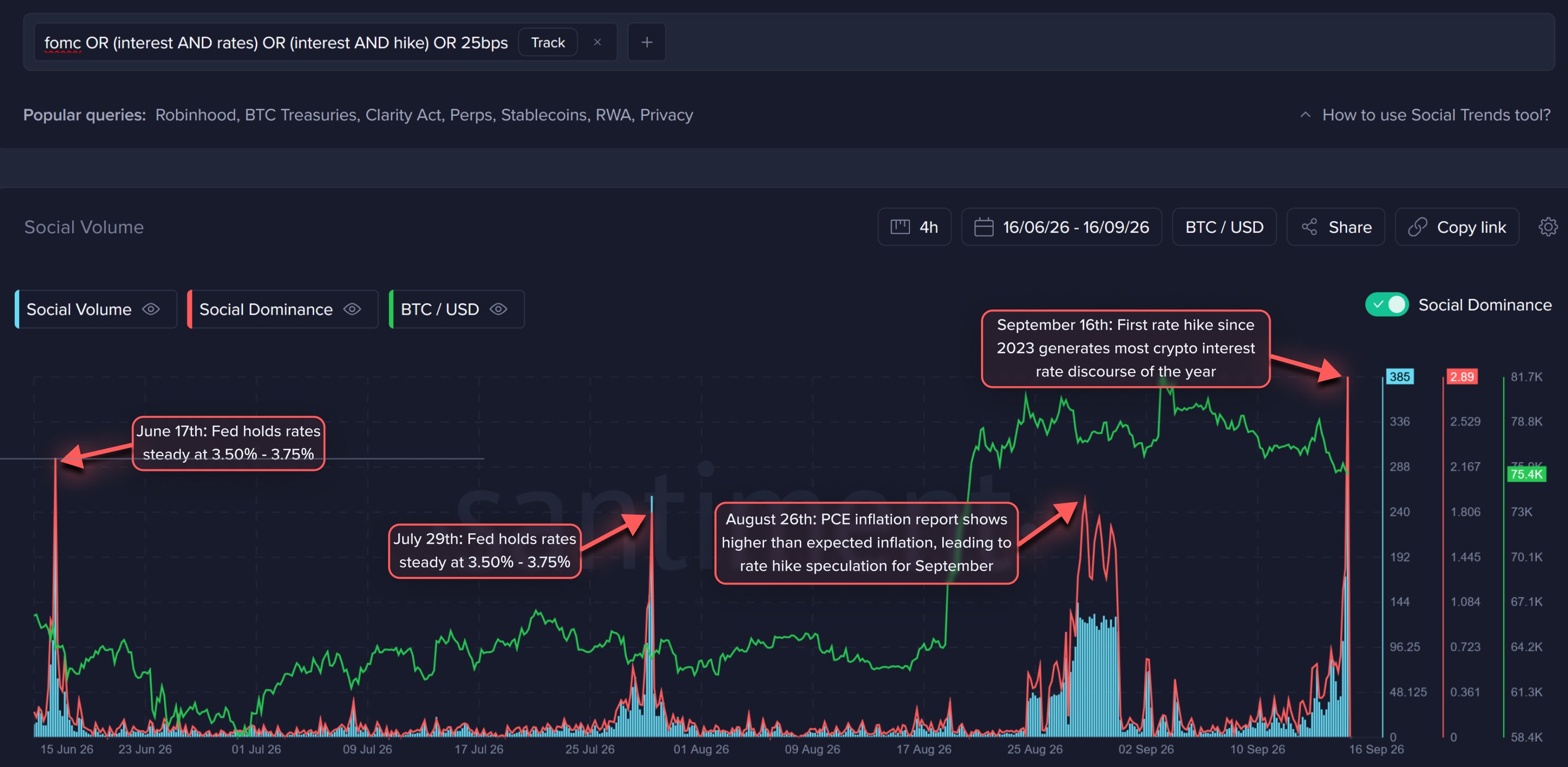
Social conversation around the Federal Open Market Committee (FOMC), rate hikes and 25-basis-point moves surged in the days leading into the decision.
At the same time, Bitcoin slipped lower, reflecting a market that had already begun adjusting to tighter policy.
Once the statement landed, price action remained contained. Spot buying absorbed part of the derivatives selling pressure, allowing Bitcoin to hold above key short-term levels even while perpetual futures recorded net outflows.
The limited immediate move suggests much of the Fed Rate Hike Bitcoin Impact had already been absorbed in the preceding sessions.
Liquidity Takes Centre Stage
Higher policy rates raise the opportunity cost of holding non-yielding assets.
Cash and short-term government debt become relatively more attractive, while financing costs for leveraged positions increase.
Crypto traders now confront a clearer tightening path. Sixteen of the eighteen policymakers who submitted forecasts expect at least one additional increase before year-end, pointing toward a median target range near 4.00%–4.25%.
That forward guidance shapes capital flows more than the single 25-basis-point step itself.
Fed Rate Hike Bitcoin Impact: Sentiment Shifts and Positioning
Crowd psychology flipped rapidly around the event. Optimism had previously clustered around higher prices after Bitcoin briefly cleared $80,000 earlier in the month.
Following the regulatory disappointment and the rate decision, discussion of lower prices reached its highest point of September.
Such extremes often act as contrarian markers rather than precise timing signals. Elevated fear after an actual sell-off can set the stage for stabilisation once the initial shock fades, while late-stage fear of missing out (FOMO) has repeatedly preceded short-term peaks.
Monitoring these behavioural swings helps map the evolving Fed Rate Hike Bitcoin Impact on retail and institutional participants alike.
Frequently Asked Questions About the Fed Rate Hike Bitcoin Impact
Why did Bitcoin not crash after the hike?
Markets had assigned a very high probability to the move well in advance. Most of the adjustment therefore occurred before the announcement, leaving limited room for a large surprise reaction on the day itself.
Does a higher policy rate automatically hurt Bitcoin?
Tighter policy reduces excess liquidity and raises the relative appeal of yield-bearing assets. The strength of that pressure depends on the full path of rates, the speed of further tightening, and concurrent developments in exchange-traded fund (ETF) flows and regulatory clarity.
How important are future rate projections?
The median expectation of another increase later in 2026 currently carries more weight than the single step already delivered.
Traders continuously reprice the entire forward curve, which influences leverage, risk appetite and capital allocation across crypto markets.
What role does liquidity play right now?
Higher rates compete with Bitcoin for capital and increase the cost of leverage. Spot demand has so far absorbed some of the derivatives selling, yet sustained outflows from ETFs or further yield spikes could amplify downward pressure.
Can trader sentiment reverse quickly?
Yes, behavioural data show that extreme fear after a sell-off has previously marked local stabilisation points, while one-sided optimism has often preceded pullbacks. Sentiment remains a useful complementary signal alongside on-chain and macro indicators.
Fed Rate Hike Bitcoin Impact: Looking Beyond the Headline Decision
The first rate hike in three years formally returns monetary tightening to the table. Yet, the lasting Fed Rate Hike Bitcoin Impact will depend less on the 25-basis-point move and more on how quickly liquidity conditions tighten further and how traders continue to adjust expectations.
Capital flows into and out of spot ETFs, the evolution of social sentiment extremes, and the path of real yields will provide clearer guidance in the coming weeks.
For now, the market has absorbed the initial step with relative calm, while remaining highly sensitive to any shift in the projected rate trajectory.
