


A major Bitcoin Wallet Exploit has shaken the self-custody community to the core. Once hailed as the best way to hold digital currencies, cyber criminals have found modern and new sophisticated ways to siphon funds from crypto wallets.
Attackers drained approximately 594 BTC, worth around $38 million, from roughly 500 wallets in a rapid 25-minute window.
Moreover, the incident highlights persistent risks that even hardware wallet users face.
Therefore, understanding the details and the broader lessons becomes essential for anyone holding significant bitcoin.
The exploit targeted single-signature wallets and unfolded with unusual speed. Furthermore, early reports linked the thefts to a randomness issue affecting certain Coldcard hardware wallet seed-generation processes, particularly on older firmware versions.
As a result, what many considered highly secure setups proved vulnerable under specific conditions.
Meanwhile, discussions continue regarding the exact technical root cause and the scope of affected devices.
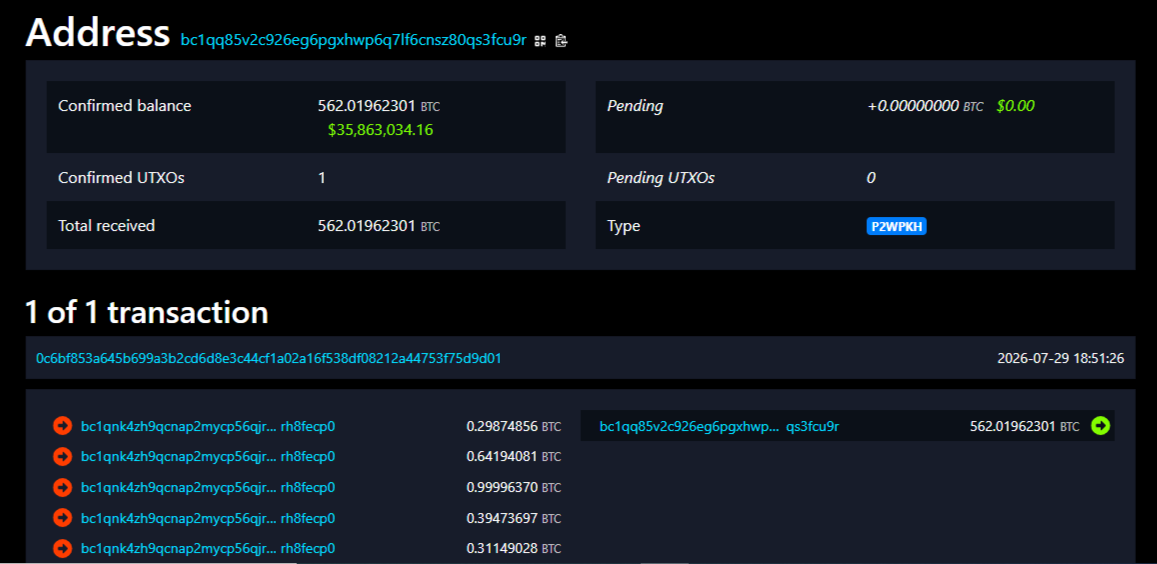
How the Bitcoin Wallet Exploit Unfolded
The attacker identified wallets with predictable or weakened seed characteristics. Next, the exploiter generated the corresponding private keys offline.
Subsequently, the attacker swept funds from hundreds of addresses in a coordinated burst.
In addition, many of the targeted wallets held relatively modest individual balances, yet the cumulative total reached a substantial figure.
Thus, the operation demonstrated both technical precision and careful target selection.
Moreover, the speed of the transfers limited reaction time for victims. Meanwhile, blockchain observers quickly noticed the unusual clustering of movements.
Therefore, the event rapidly drew attention across security researchers and the wider Bitcoin community.
In contrast to slow, opportunistic thefts, this incident resembled a systematic harvest of vulnerable keys.
Why Hardware Wallets Are Not Automatic Protection
Many users treat hardware wallets as complete security solutions. However, the Bitcoin Wallet Exploit shows that implementation details still matter greatly.
Furthermore, seed generation quality, firmware integrity, and operational practices all influence real-world safety.
As a result, even reputable devices require careful handling and regular updates.
In addition, single-signature setups concentrate risk. Meanwhile, multi-signature arrangements and proper operational security can reduce exposure.
Therefore, reliance on any single device or method creates potential single points of failure.
Similarly, importing seeds or using outdated firmware can introduce weaknesses that attackers later exploit.
Key Lessons for Bitcoin Holders
The incident offers several practical takeaways. Users should verify firmware versions and apply official updates promptly so that they do not fall victim to such Bitcoin Wallet Exploit.
What’s more, they should avoid reusing or importing seeds across multiple devices without strong justification.
Additionally, spreading holdings across different security setups lowers concentration risk.
Moreover, education remains critical. Many victims may not have realised their specific configuration carried elevated risk.
Meanwhile, clear communication from manufacturers and researchers helps the broader community respond faster.
As a result, transparency after incidents strengthens overall ecosystem resilience.
Furthermore, the event reinforces the value of defence-in-depth. Hardware wallets provide strong protection against remote attacks and malware. However, they do not eliminate every possible threat vector.
Therefore, combining hardware security with careful operational habits delivers better outcomes than any single tool alone.
Practical Steps Users Can Take Now
BTC holders can reduce Bitcoin Wallet Exploit through deliberate actions. Check the firmware status of any hardware wallet currently in use.
Next, consider multi-signature setups for larger balances. In addition, maintain offline backups of seeds in secure, geographically separated locations.
Meanwhile, stay informed about security advisories from reputable sources.
Moreover, avoid rushing into new devices or software without verification. Similarly, test recovery processes periodically so that backups actually work when needed.
As a result of these habits, users improve both prevention and recovery capabilities.

Bitcoin Wallet Exploit: Broader Implications for Self-Custody
The Bitcoin Wallet Exploit does not invalidate self-custody. Instead, it shows the responsibility that comes with direct control of private keys.
Furthermore, continuous improvement in both technology and user practices remains necessary.
Therefore, the community benefits when researchers, manufacturers, and users share information openly after such events.
In summary, the recent Bitcoin Wallet Exploit allowed attackers to extract roughly $38 million in a short timeframe by targeting specific weaknesses in seed generation and wallet configurations.
The incident delivers a clear reminder that security requires ongoing attention.
Moreover, proactive users who update devices, diversify protections, and maintain strong operational habits stand in a stronger position.
By treating security as an active process rather than a one-time setup, Bitcoin holders can better protect their funds against evolving threats.
