
Euro stablecoin market cap continues expanding across selected networks.
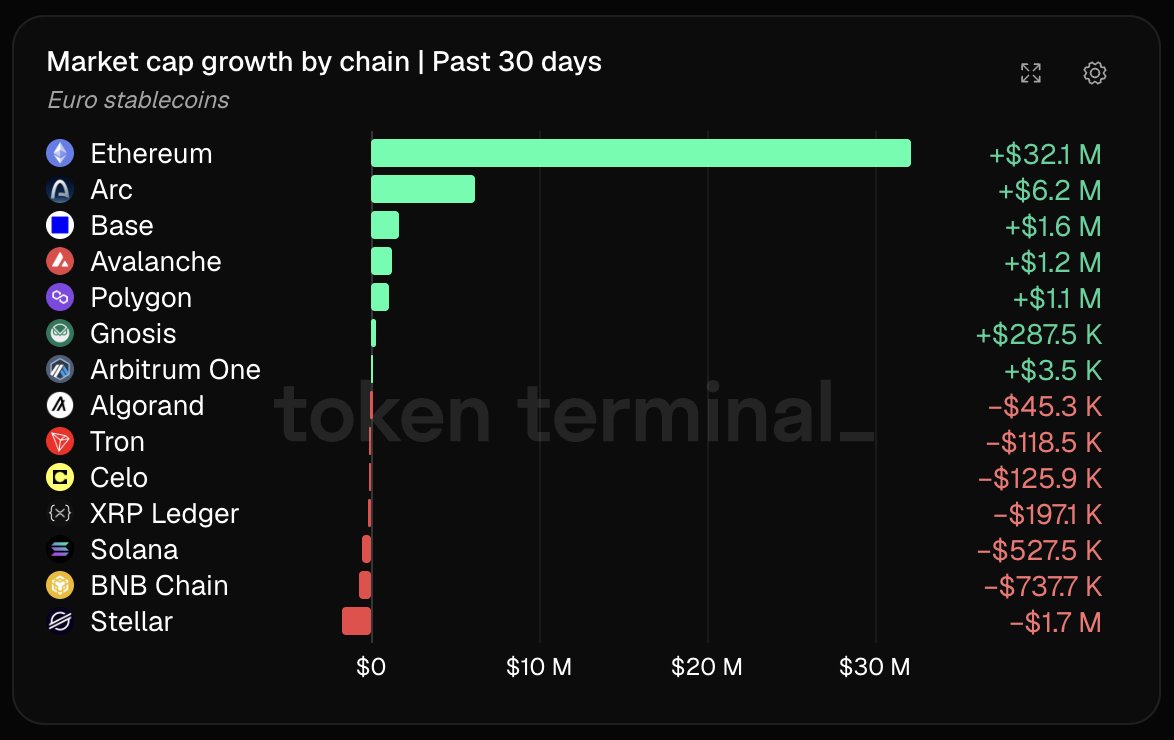
Fresh data from Token Terminal on September 21, 2026 shows Ethereum, Arc, and Base leading the growth over the past 30 days.
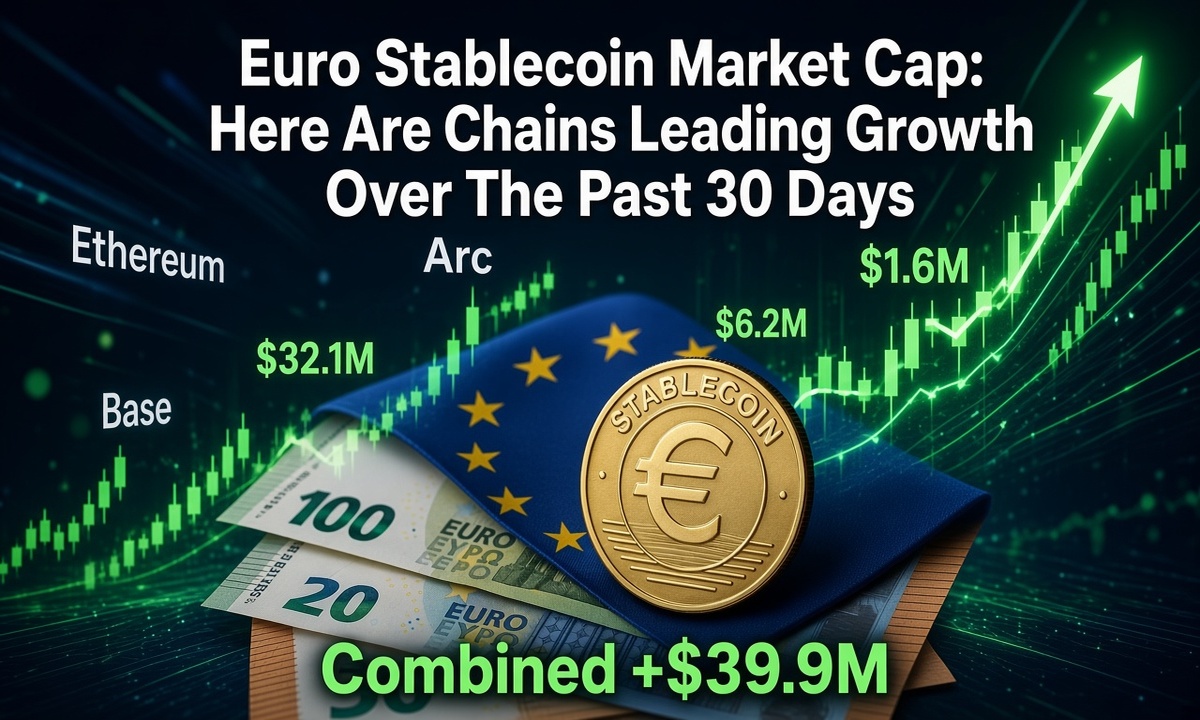
Ethereum added $32.1 million, Arc contributed $6.2 million, and Base brought in $1.6 million. Together these three chains delivered a combined increase of $39.9 million.
This movement stands out because euro-denominated stablecoins still represent only a tiny fraction of the overall stablecoin landscape.
Dollar-pegged tokens dominate by a wide margin, yet euro versions keep attracting steady inflows as European users and institutions seek on-chain alternatives denominated in their home currency.
Which Chains Currently Lead Euro Stablecoin Market Cap Growth?
Ethereum remains the clear frontrunner as it has in decentralised finance (DeFi) and non-fungible tokens (NFTs).
The network added $32.1 million in euro stablecoin market cap during the latest 30-day window, far outpacing every other chain.
Arc, Circle’s purpose-built layer-1 focused on stablecoin finance, secured the second spot with a $6.2 million rise.
Base, Coinbase’s Ethereum Layer-2, rounded out the top three with a more modest yet still positive $1.6 million gain.
In particular, the ranking highlights how both established infrastructure and newer specialised chains are capturing fresh euro-denominated capital at the same time.
What Exactly Counts as a Euro Stablecoin?
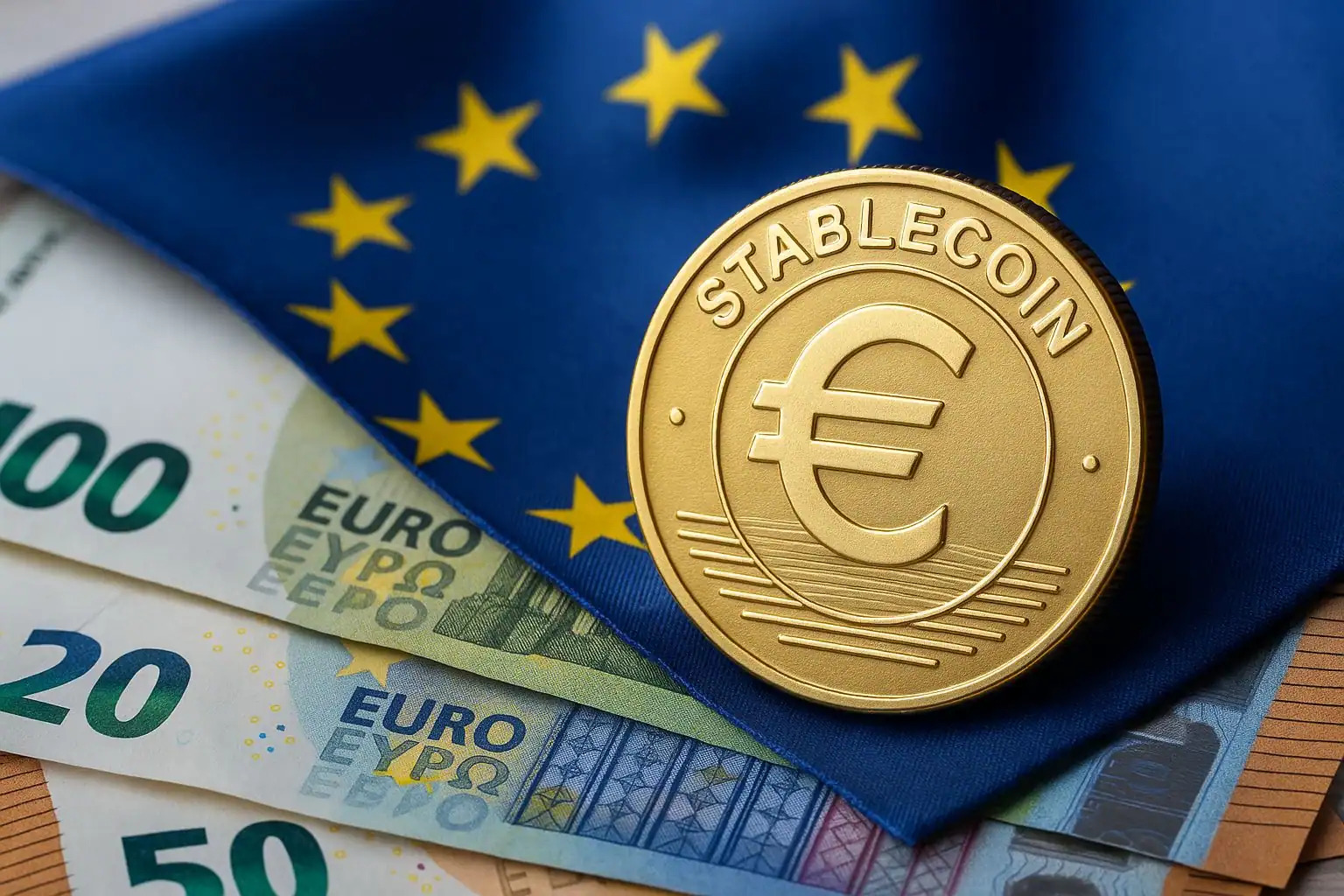
Euro stablecoins are digital tokens designed to maintain a 1:1 peg with the euro.
Issuers hold matching euro reserves in regulated accounts so holders can redeem the tokens for the underlying currency.
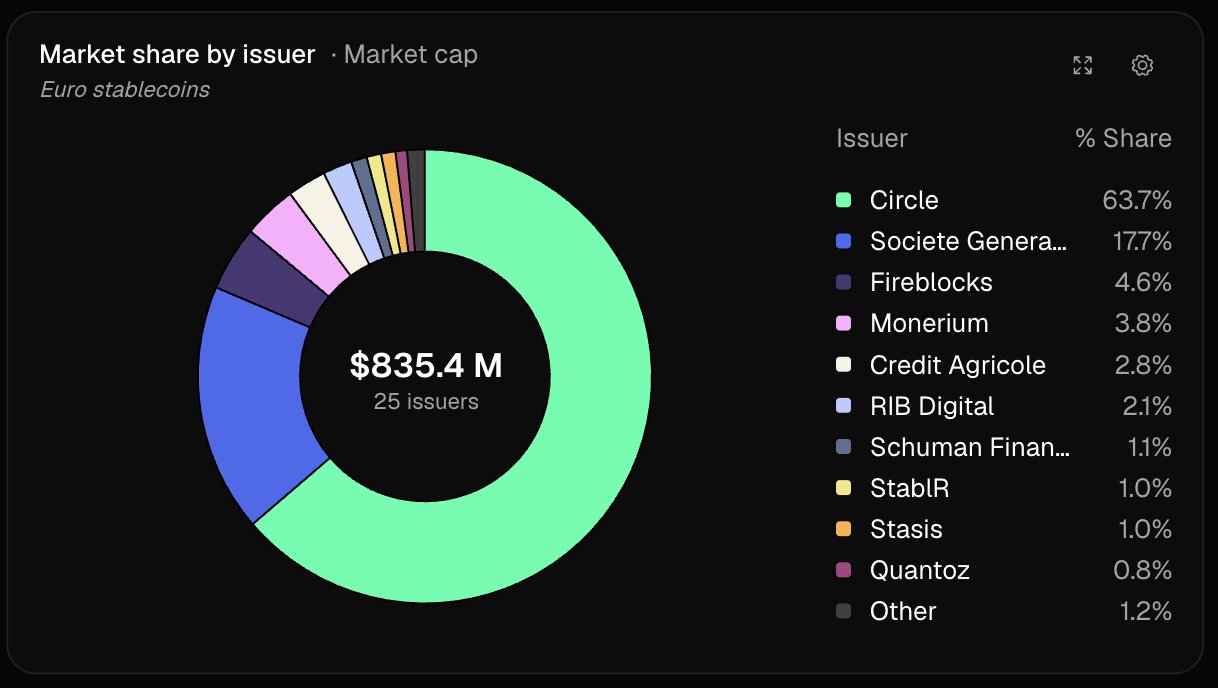
Circle’s EURC currently ranks among the largest examples, while other issuers such as Société Générale (EURCV) and smaller projects also contribute supply.
Beyond the basic peg mechanism, these tokens enable payments, settlements, and DeFi activity without converting into dollars first.
At the same time, regulatory frameworks such as MiCA in the European Union have encouraged more transparent, fully reserved products to enter circulation.
Why Is Ethereum Still Dominating Euro Stablecoin Growth?
Ethereum continues to host the majority of euro stablecoin supply because of its deep liquidity, extensive DeFi ecosystem, and long track record.
Many institutional and retail users already hold assets and run applications on the network, so expanding euro exposure there feels natural.
Further, Ethereum’s mature tooling and wallet support reduce friction for new issuers and users alike.
Even as newer chains gain ground, the bulk of euro stablecoin market cap still settles on Ethereum, and the latest $32.1 million increase reinforces that pattern.
How Is Arc Suddenly Capturing Meaningful Share?
Arc entered the picture as Circle’s dedicated layer-1 built specifically for stablecoin-native activity.
The network uses stablecoins for gas fees, offers sub-second deterministic finality, and includes built-in foreign-exchange features.
These design choices appeal to businesses that want predictable costs and fast settlement when moving euro-denominated value.
In parallel, Arc’s recent mainnet progress and integration with Circle’s broader suite of products (including EURC) have encouraged early capital to flow onto the chain.
The $6.2 million rise over 30 days marks one of the stronger showings among newer networks in this niche.
What Role Does Base Play in the Current Expansion?
Base benefits from Coinbase’s large user base and its position as a low-cost Ethereum Layer-2.
Many retail users already interact with Base through Coinbase products, making it a convenient venue for euro stablecoin activity.
Meanwhile, the network’s growing DeFi ecosystem and seamless bridging options from Ethereum help it attract incremental euro supply.
The $1.6 million increase looks smaller than the leaders, yet it still places Base among the top three growth contributors in the latest period.
How Large Is the Overall Euro Stablecoin Market Cap Today?
Earlier token terminal readings placed the total euro stablecoin market cap in the $800 million to roughly $1 billion range across more than a dozen chains.
Ethereum has consistently held the largest share—often around 65–70%—while Solana, Base, and now Arc continue to expand their slices.
Even with the recent growth, the on-chain euro market remains tiny compared with both the multi-hundred-billion-dollar dollar stablecoin sector and the multi-trillion-euro traditional money supply in the euro area.
That gap leaves substantial room for further expansion if demand continues.
What Factors Are Driving the Current Growth in Euro Stablecoin Market Cap?
Several forces appear to be working together. Regulatory clarity under MiCA has boosted confidence in compliant euro products.
European users and businesses increasingly prefer settling in euros rather than converting everything into dollars.
Newer chains such as Arc offer specialised features that traditional networks did not prioritise for stablecoin use cases.
At the same time, broader interest in real-world assets (RWA) and on-chain finance continues to pull capital toward non-dollar denominations.
Token Terminal’s standardised tracking makes these shifts visible in near real time, allowing market participants to monitor which chains capture the most new supply.
What Should Investors and Builders Watch Next?
Continued monthly growth figures will reveal whether the current momentum sustains or slows.
Any acceleration on Arc could signal stronger institutional adoption of Circle’s specialised infrastructure.
Additional issuer activity or new DeFi integrations on Base and Ethereum may further redistribute or expand the total euro stablecoin market cap.
Beyond pure market-cap numbers, observers will also track transaction volumes, DeFi utilisation rates, and the geographic distribution of holders.
These metrics together paint a clearer picture of whether euro stablecoins are moving from experimental niche toward more mainstream on-chain utility.
The latest 30-day data already shows clear leadership: Ethereum still sets the pace, while Arc and Base demonstrate that specialised and user-friendly environments can attract meaningful new euro capital.
Token Terminal’s transparent tracking remains one of the most reliable sources for following this evolving segment of the stablecoin market.
