

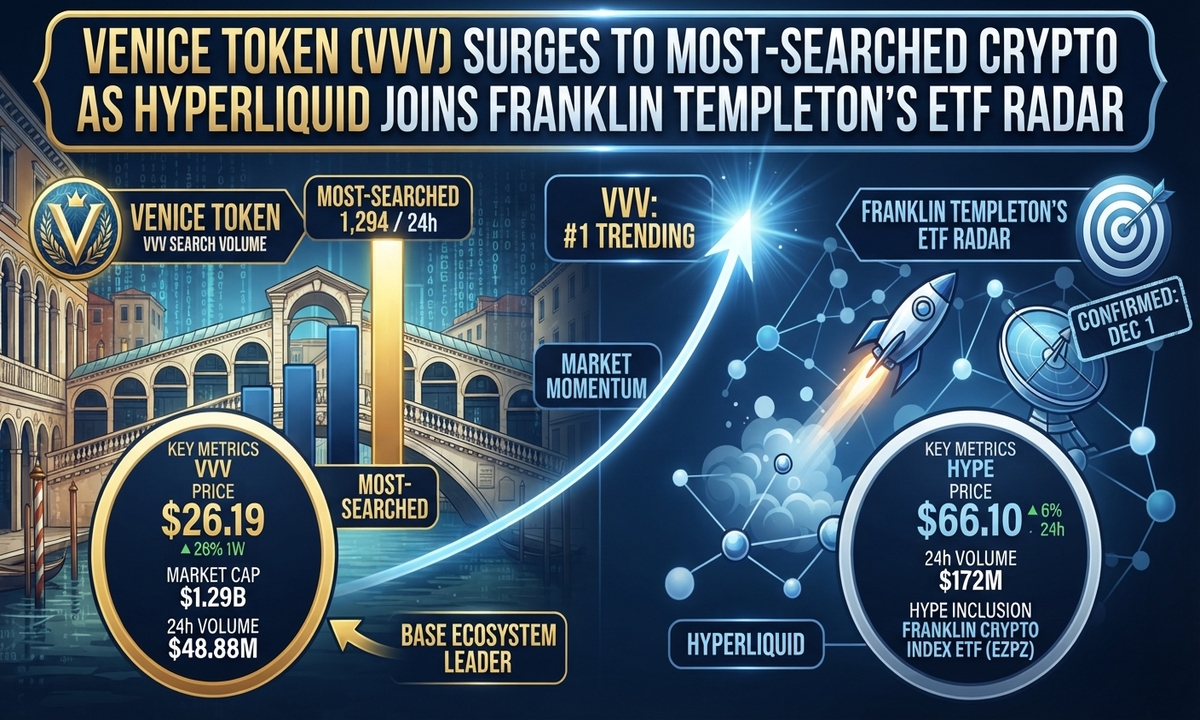
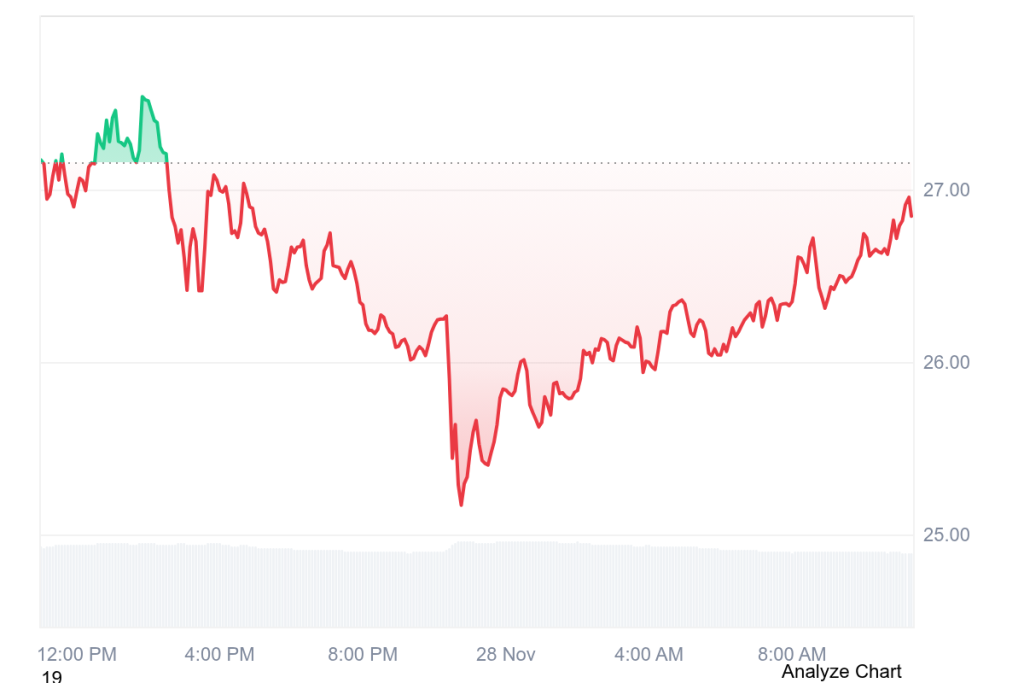
Venice Token has climbed into the spotlight this week, topping search charts on major trackers while trading near $26–$27 with a market cap around $1.3 billion.
At the same time, Hyperliquid’s HYPE token is set to enter Franklin Templeton’s Crypto Index ETF (EZPZ) around December 1, expanding the fund’s basket alongside Bitcoin, Ether, XRP, Solana and others.
The institutional step for Hyperliquid has drawn fresh eyes across crypto markets, and Venice Token has captured a large share of that attention through its own momentum.
What exactly is Venice Token and how does it work?
Venice Token powers Venice AI, the privacy-focused platform founded by Erik Voorhees.
Users stake VVV on Base to earn emissions, unlock Pro features, and lock positions to mint DIEM, a separate token that delivers roughly $1 of daily AI compute credit.
Platform revenue funds ongoing buybacks and burns, tying token demand more directly to actual usage than pure speculation.
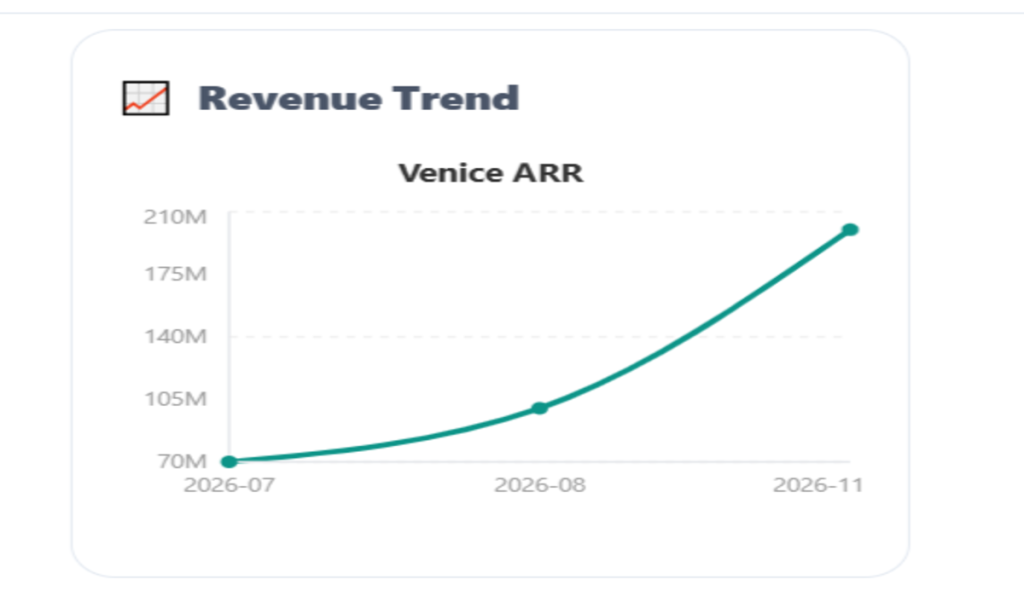
Founder updates place annualised revenue near $200 million after earlier marks of $100 million, though these remain self-reported run rates rather than audited figures.
Why has Venice Token become one of the most-searched cryptos right now?
Search interest spiked as privacy concerns around mainstream AI (artificial intelligence) tools gained traction and Venice reported strong usage growth.
Emissions have dropped sharply from early highs of 14 million tokens per year down to about 2 million, while burns continue to remove supply.
These mechanics, paired with the dual utility of staking-plus-compute credits, have kept VVV active in trader conversations even as broader markets move sideways.
Meanwhile. the Hyperliquid ETF news has lifted overall risk appetite for liquid mid-cap tokens, giving Venice Token extra visibility.

Does Hyperliquid’s ETF addition directly drive Venice Token price action?
No direct mechanical link exists between the two. Hyperliquid operates a high-throughput perpetual futures venue, while Venice focuses on private AI inference.
Still, both tokens sit in the broader narrative of real product usage meeting institutional rails.
When a major asset manager adds a newer protocol token to a regulated product, capital often rotates toward other names that already show revenue, reduced inflation and clear utility.
Venice Token has benefited from that rotation this week.

What risks should anyone watching VVV keep in mind?
Token emissions continue, albeit at lower levels, and price remains well below its September peak near $34.50.
Revenue figures come from the company itself, and VVV holders receive no equity claim on Venice AI.
Privacy claims have also drawn scrutiny in recent days, prompting clarifications from the team about model hosting arrangements.
Volatility stays high for any mid-cap AI-related token, so position sizing and independent verification of on-chain data matter more than headlines.

How do the tokenomics support longer-term interest?
Genesis supply started at 100 million, with substantial early burns of unclaimed airdrop tokens reducing the total.
Circulating supply sits near 49–50 million. Staking converts VVV into productive capital that generates both yield and compute access, while revenue-linked burns create a recurring demand sink.
These features give the token a clearer economic loop than many pure narrative plays, even if the loop depends on continued platform growth.
Looking ahead, the combination of shrinking emissions, real product revenue and elevated search interest keeps Venice Token firmly on watch lists.
The Hyperliquid inclusion in Franklin Templeton’s product simply shows that traditional finance continues expanding its crypto footprint.
Whether that backdrop sustains further gains for VVV will depend on usage metrics and broader market conditions in the weeks ahead.
