

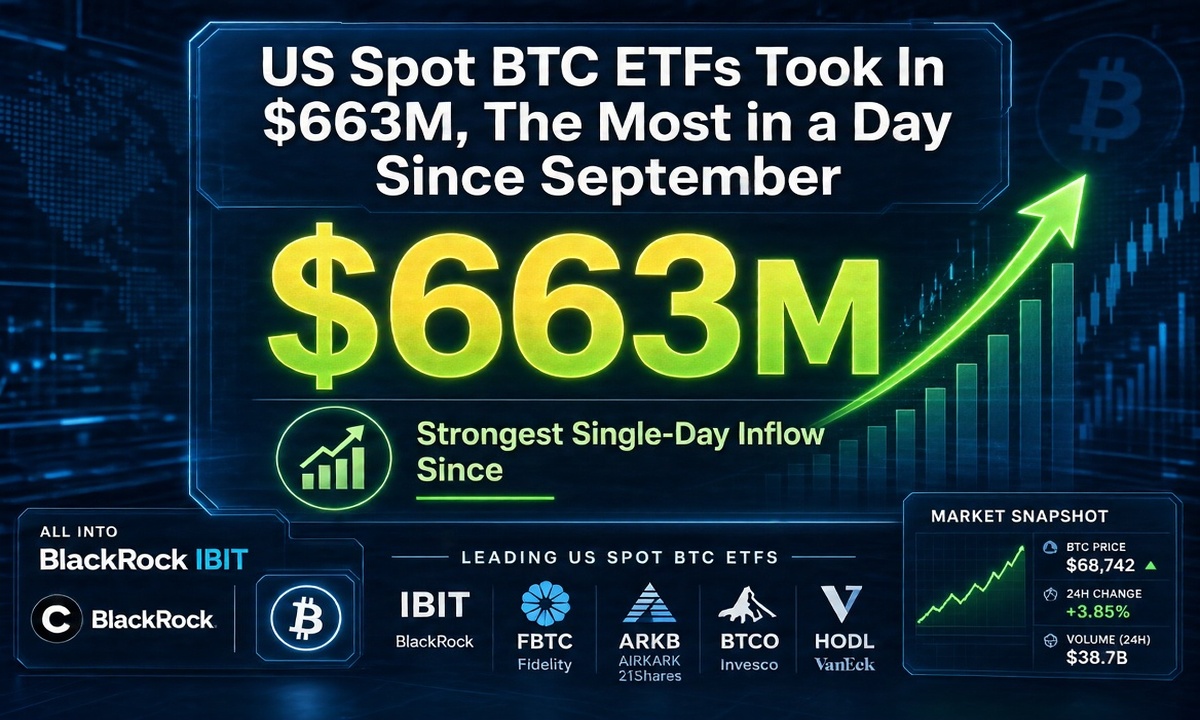
US spot BTC ETFs (exchange-traded funds) staged a sharp rebound on Monday, October 19, 2026 when buyers poured roughly $663–665 million into the products, the strongest single-day haul since late September.
Nearly every dollar landed in BlackRock’s IBIT, while rival funds posted outflows that left the group with a still-solid net gain near $527 million.
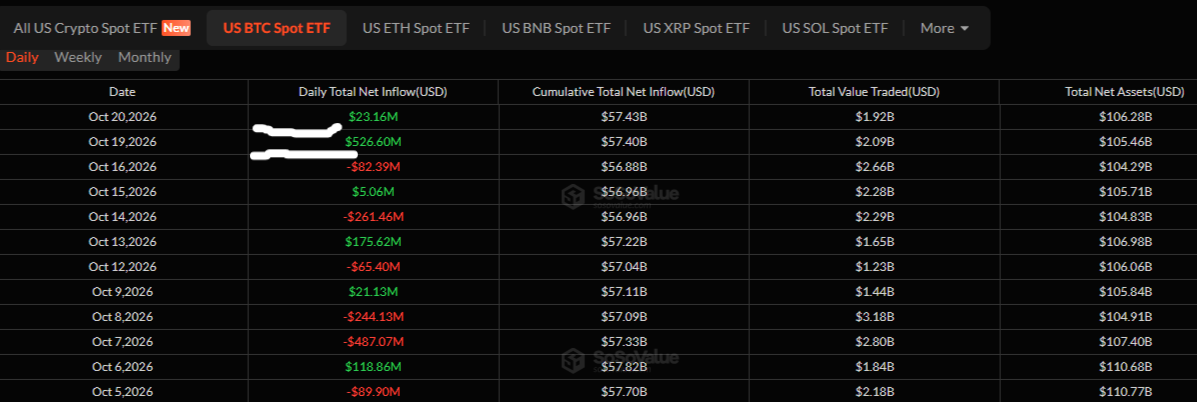
That one session wiped out most of October’s earlier red ink and put the spotlight firmly back on institutional appetite for BTC.
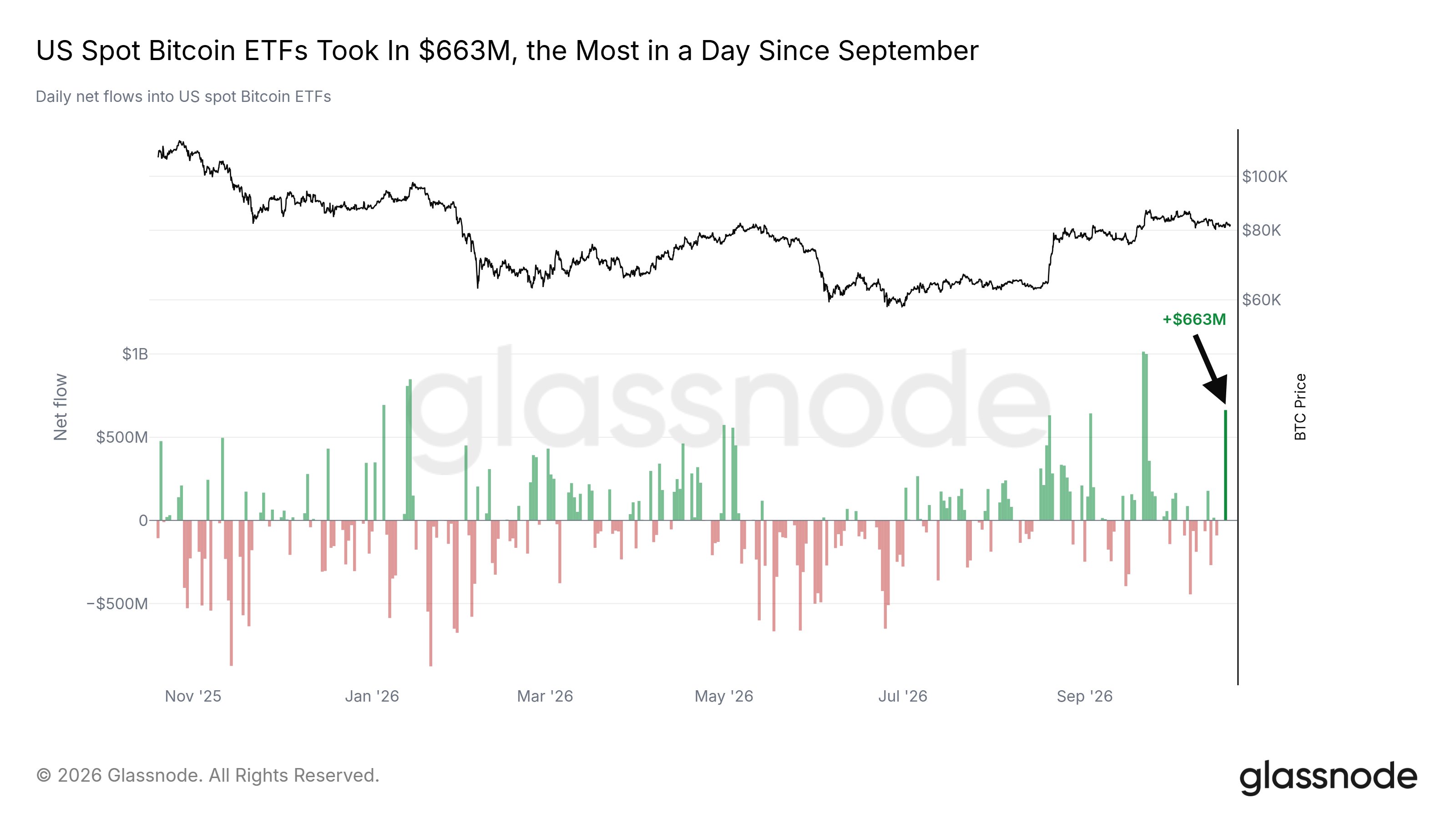
Glassnode first flagged the $663 million figure and noted that the entire amount went into IBIT, erasing the month’s cumulative outflows in a single trading day.
Independent trackers such as Farside Investors and SoSoValue later refined the picture: IBIT alone absorbed about $665 million, Fidelity’s FBTC lost $83.6 million, and Grayscale’s GBTC shed another $54.9 million. The net result still ranked as the best day for the complex since the $715 million session on September 22, 2026.
Why Did US Spot BTC ETFs Suddenly Attract So Much Capital?
Investors appear to have treated the recent soft patch in BTC price action as a buying opportunity rather than a reason to exit.
BTC had spent weeks consolidating below $84,000 amid higher treasury yields and broader risk-off sentiment.
The sudden concentration of buying inside the most liquid vehicle—IBIT—suggests large allocators moved decisively once they saw an attractive entry.
Meanwhile, spot Ethereum ETFs continued to bleed, losing more than $100 million the same day, which shows that capital is currently favouring BTC over other crypto products.
What Does BlackRock’s Dominance Mean for the BTC Market?
IBIT now towers over the rest of the field with more than $66 billion in assets. When one fund can absorb two-thirds of a billion dollars while competitors see redemptions, it reveals how much institutional flow has concentrated in the lowest-cost, highest-liquidity wrapper.
This dynamic strengthens BTC’s position as the clear institutional favourite and can create a self-reinforcing loop: deeper liquidity attracts still more capital, which in turn supports tighter spreads and greater confidence among professional buyers.

Will the Inflows Continue and Confirm a Demand Rebound?
A single strong session does not guarantee sustained buying, yet it does reset the narrative.
October had been sliding deeper into negative territory after heavy outflows earlier in the month, including a roughly $485 million day on Wednesday, October 7, 2026.
The latest metric flipped that story and brought the month’s net figure close to flat.
The next trading sessions throughout the last 10 days of October will decide whether the demand shift is temporary or marks the start of a more durable accumulation phase for BTC.
Looking ahead, traders and analysts must monitor whether other issuers begin to share in the inflows or whether IBIT continues to capture the bulk of new capital.
Either outcome keeps the focus on BTC as the primary vehicle for large-scale crypto exposure.
The data from Glassnode, Farside, and SoSoValue already show that when institutions decide to buy, they still reach for BTC first.
