

Tokenized stocks defi keep finding fresh ways to move beyond simple wallet holdings.
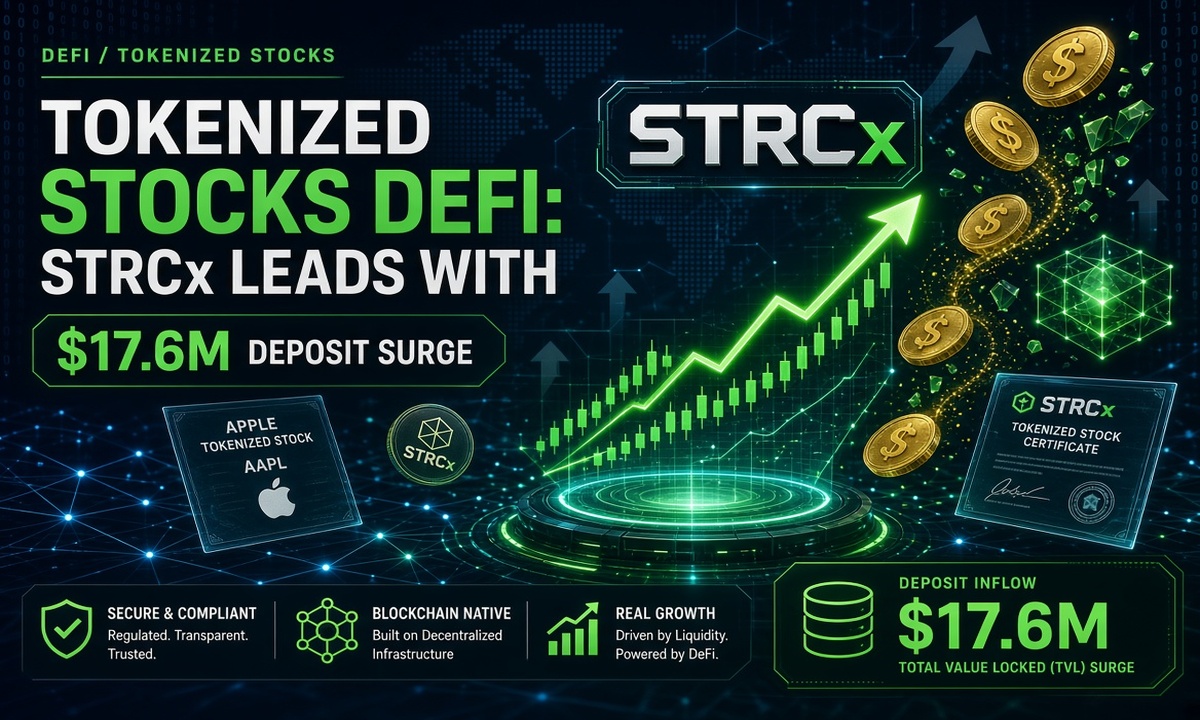
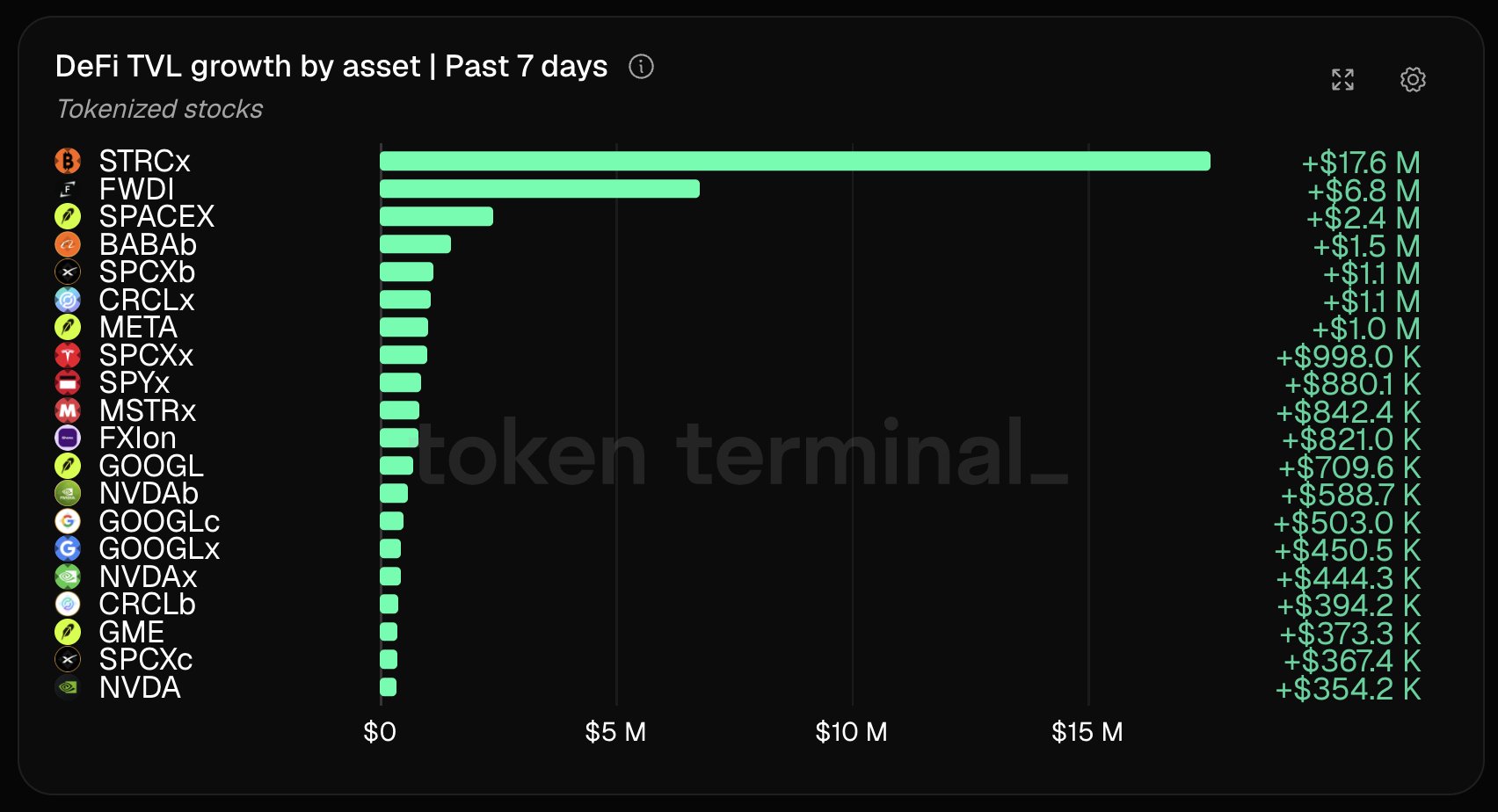
Over the past seven days up to the time of this publication, STRCx deposited in decentralised finance (DeFi) protocols climbed $17.6 million, the biggest single-asset jump among all tokenized stocks tracked.
That figure alone outpaced the combined growth of the next three names—FWDI at $6.8 million, SPACEX at $2.4 million and BABAb at $1.5 million.
What exactly is STRCx and why does it matter in tokenized stocks DeFi?
STRCx represents Strategy Inc.’s variable-rate perpetual preferred stock, known on Nasdaq as Stretch or STRC.
Issued through the xStocks framework by Backed, each token is designed to stay fully backed one-to-one by the underlying shares held in regulated custody.
Holders receive economic exposure to the preferred’s roughly 11.5–12% annual dividend, which compounds automatically via a rebasing mechanism rather than cash payouts.
Strategy uses proceeds from these preferred shares to expand its Bitcoin treasury, so the instrument sits at the intersection of traditional equity yield and on-chain Bitcoin-linked credit.

How are users putting tokenized stocks to work in DeFi right now?
Liquidity pools and lending markets absorb most of the activity. Pendle hosts principal-token and yield-token markets that let depositors lock in fixed rates or speculate on the dividend stream.
Kamino on Solana runs an isolated lending market where users supply STRCx for the native yield or borrow against it at up to 67% LTV.
Uniswap and Raydium pools generate trading fees on top of the underlying dividend.
Across the broader tokenized-stock category, total DeFi TVL has grown more than nineteen-fold over the past year to roughly $248 million, with liquidity provision and lending accounting for the bulk of that capital.
Why is STRCx pulling ahead of other tokenized stocks?
Concentration around a single high-yield, Bitcoin-adjacent preferred share creates a clear collateral preference.
Traders and yield farmers appear to favour instruments that combine predictable income with composability across multiple chains and protocols.
Pendle alone holds the majority of current STRCx DeFi exposure, while Kamino and various AMM pools capture the remainder.
The pattern suggests market participants are selecting for both yield reliability and the ability to loop or hedge positions rather than simply parking tokens.
What risks should participants watch in this DeFi wave?
Rapid deposit growth can reverse just as quickly if secondary-market liquidity thins or if Strategy’s preferred dividend faces adjustment.
Because STRCx inherits the credit profile of the underlying preferred, any stress on Strategy’s funding model or Bitcoin treasury can transmit directly on-chain.
Pool depth remains uneven across venues, and leveraged positions amplify both upside and liquidation risk.
Healthy growth would ideally pair continued inflows with deeper order books and more diversified protocol usage.
The latest numbers show tokenized stocks moving from experimental listings into active collateral and yield engines.
STRCx’s $17.6 million weekly lead illustrates how quickly capital can concentrate once an instrument offers both traditional income characteristics and full DeFi composability.
Participants who track utilisation rates, oracle reliability and secondary liquidity alongside headline deposits will navigate the space with clearer eyes.
