

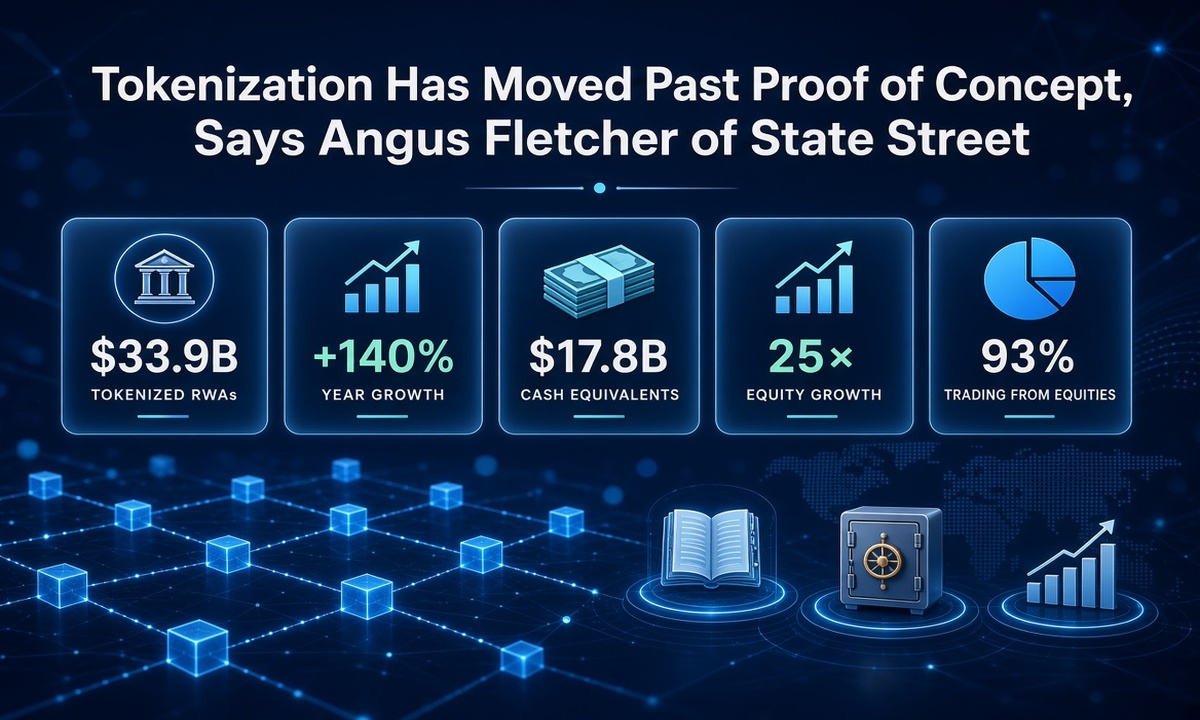
Tokenization has left the pilot stage behind. Angus Fletcher, Global Head of Digital Asset Solutions at State Street, makes that assessment in Dune’s latest RWA report, “After Issuance: Reading the Onchain RWA Market.”
The remark carries weight because it comes from one of the world’s largest custodians, a firm already building production infrastructure for digital and traditional assets under one roof.
Dune’s data shows the market itself has grown large enough to support the claim.
Tokenized real-world assets (RWAs) across the main classes reached roughly $33.9 billion by the end of August 2026, more than 140% higher than a year earlier.
Cash equivalents still form the bulk of supply, yet the story after issuance reveals clear differences in how each asset class behaves once it lives onchain.

What Does “Past Proof of Concept” Actually Mean for Tokenization?
Fletcher’s point is practical rather than promotional. Institutions no longer treat tokenization as an experiment to test feasibility.
They now focus on infrastructure, operations, regulation and risk.
State Street itself has launched a Digital Asset Platform and plans tokenized fund servicing from Luxembourg, designed so digital and traditional vehicles can share the same governance, risk and client interface.
That shift from demonstration projects to production systems is what “past proof of concept” looks like on the ground.

How Is Onchain Behaviour Different from Traditional Markets?
In particular, the data highlights divergence. Tokenized cash and short-dated treasuries make up nearly half the market yet barely trade; only a tiny fraction of that supply changed hands in August.
Equities, the smallest class by value, generated the vast majority of spot trading volume.
Credit stands out for a different reason: roughly one-fifth of tokenized credit sits inside lending protocols as collateral, a usage pattern far more common onchain than the traditional preference for government bills.
Meanwhile, commodities show another split. Tokenized gold has grown mainly through increased holdings rather than pure price appreciation, while oil exposure lives almost entirely in perpetual futures.
These patterns tell us that once assets move onchain, investors and protocols use them in ways the offchain market does not always mirror.
Why Does State Street’s View Matter for the Broader Market?
State Street sits at the centre of institutional plumbing. When its head of digital asset solutions states that tokenization has moved past proof of concept, the message reaches every bank still running limited pilots.
Fletcher has repeatedly noted that clients now spend less time debating the technology and more time asking how to integrate it responsibly at scale.
In this context, the conversation has shifted from “can we tokenize?” to “how do we operate tokenized products alongside existing funds without creating parallel operational silos?”
Beyond that, the report itself supplies the evidence institutions need. Dune tracks more than 2,600 products across 21 chains, covering supply, holders, trading, lending deposits and lifecycle events.
Good onchain data lets firms verify claims about usage rather than relying on issuance headlines alone.
What Comes Next for Tokenization at Institutional Scale?
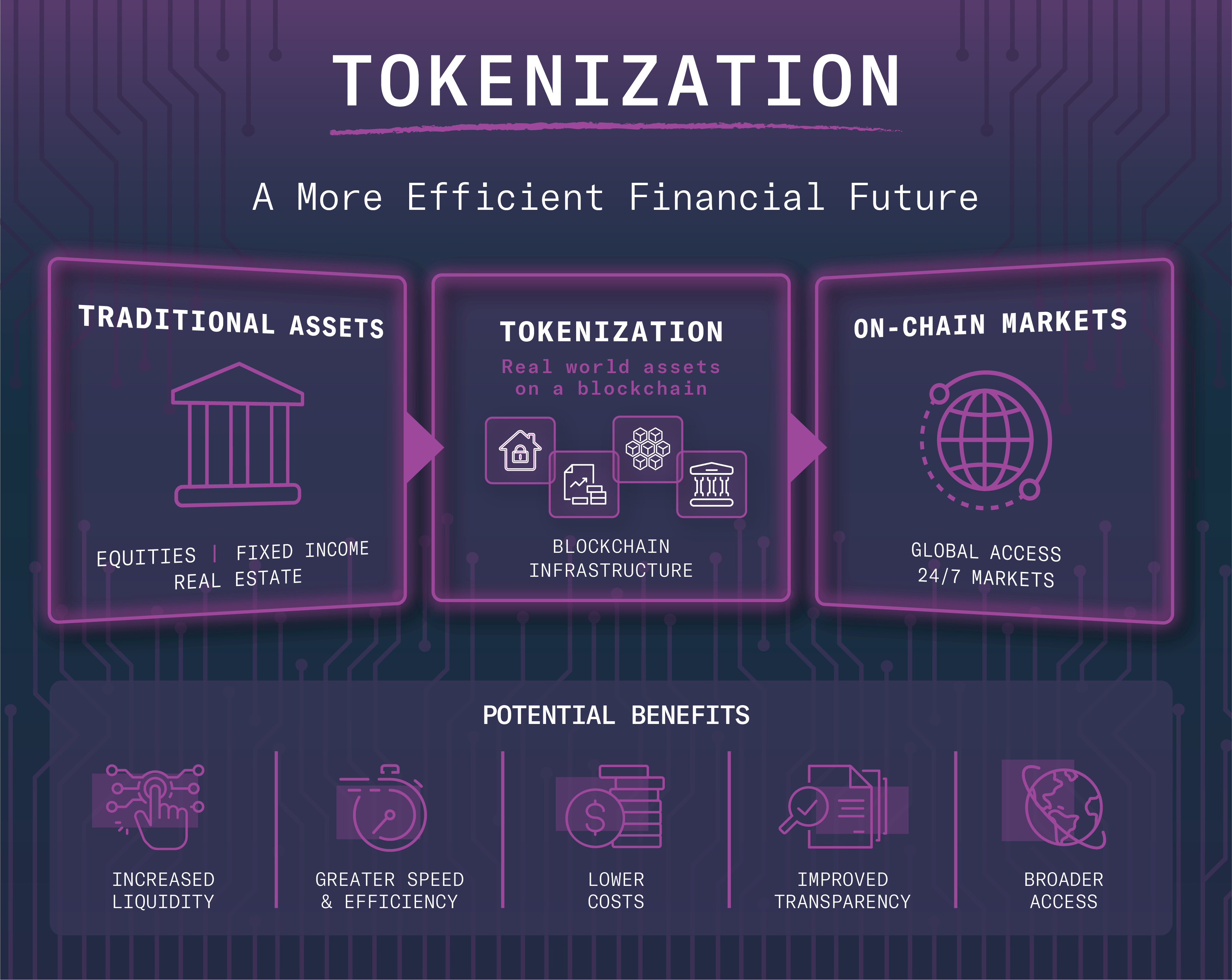
Looking ahead, the next test is collateral mobility, secondary liquidity and genuine multi-asset composability.
Tokenized money-market funds and short-duration instruments already sit on the balance sheets of major platforms.
Credit is finding its way into lending protocols. Equities, though still small, dominate activity.
At the same time, custodians like State Street are building the rails that let these assets move under the same risk and compliance frameworks that govern traditional holdings.
Tokenization has therefore entered a new phase. Issuance numbers continue to climb, yet the more interesting signal is behavioural: assets are being held, posted as collateral and traded in patterns that reflect the strengths of public and permissioned chains.
Angus Fletcher’s assessment simply names what the data already shows.
The market has moved on from proof of concept and into the early stages of scaled, practical adoption.
