

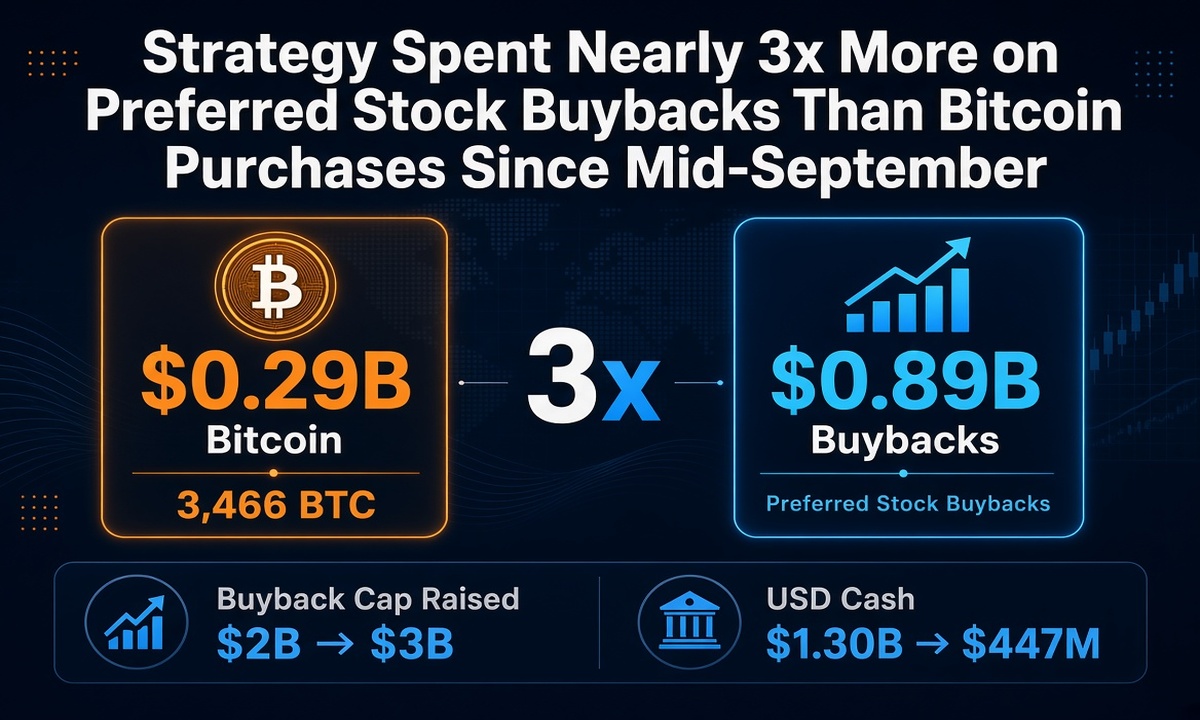
Strategy directed most of its recent capital toward preferred-stock buybacks rather than new Bitcoin acquisitions.
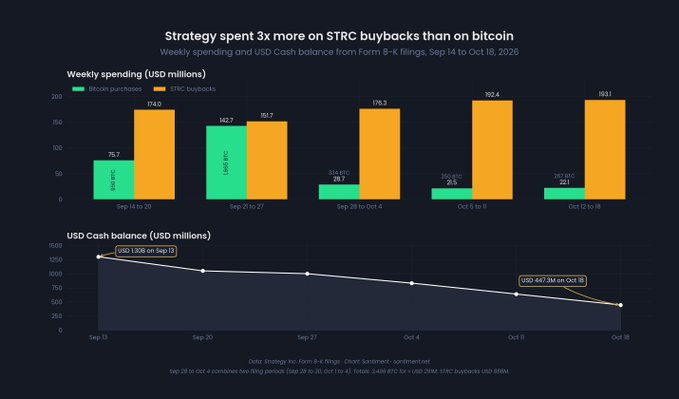
Between September 14 and October 18, 2026, the company spent roughly $0.89 billion retiring preferred shares while allocating only about $0.29 billion to buy 3,466 BTC.
That buyback total sits nearly three times higher than the Bitcoin outlay over the same five-week window.
How Much Did Strategy Actually Spend on Each Side?
The firm purchased 3,466 Bitcoin at a combined cost near $290 million. In parallel, it returned approximately $890 million to preferred shareholders through its Digital Credit Securities Repurchase Program.
On Monday, October 19, the board lifted the program’s authorisation from $2 billion to $3 billion, leaving more than $1 billion of remaining capacity.
Meanwhile, USD Cash balances dropped from $1.30 billion on September 13 to $447.3 million by October 18 as the company funded the majority of those buybacks from existing cash.
Why Is Strategy Prioritising Preferred Stock Buybacks Right Now?
Preferred shares such as STRC carry ongoing dividend obligations. Retiring them reduces future cash outflows and can improve the company’s capital structure.
In particular, the larger repurchase authorisation signals management’s willingness to deploy substantial liquidity toward balance-sheet optimisation even while Bitcoin accumulation continues at a slower pace.
Beyond pure cost savings, the move also demonstrates that Strategy can return capital without relying solely on new equity issuance.
Does This Shift Mean Strategy Has Slowed Its Bitcoin Strategy?
Bitcoin purchases have not stopped. The company still added thousands of coins during the period and continues to rank as the largest public corporate holder.
Still, the relative scale of the preferred buybacks shows a clear near-term emphasis on capital management.
Going forward into the future, stakeholders must keenly monitor whether future weeks reverse the ratio or whether the expanded $3 billion program continues to absorb the larger share of available cash.
On top of that, large-wallet accumulation across the broader market has come mostly from buyers other than Strategy itself.

What Does the Cash Decline Signal for Future Flexibility?
USD Cash falling below $450 million leaves less dry powder for opportunistic Bitcoin buys or additional buybacks without tapping other funding sources.
At the same time, Strategy maintains a much larger USD Reserve balance and an active at-the-market equity program.
Looking ahead, the combination of reduced cash, an expanded repurchase authorisation, and ongoing modest Bitcoin purchases creates a more nuanced capital-allocation picture than the pure accumulation narrative of earlier years.
Strategy’s decision to spend nearly three times more on preferred-stock buybacks than on Bitcoin since mid-September marks a noticeable shift in emphasis.
The company still accumulates BTC, yet the heavier focus on retiring preferred shares and the newly raised $3 billion cap underline a broader effort to manage its capital stack while preserving long-term Bitcoin exposure.
