
Starknet (STRK) has delivered one of the sharpest moves in the mid-cap space this weekend.
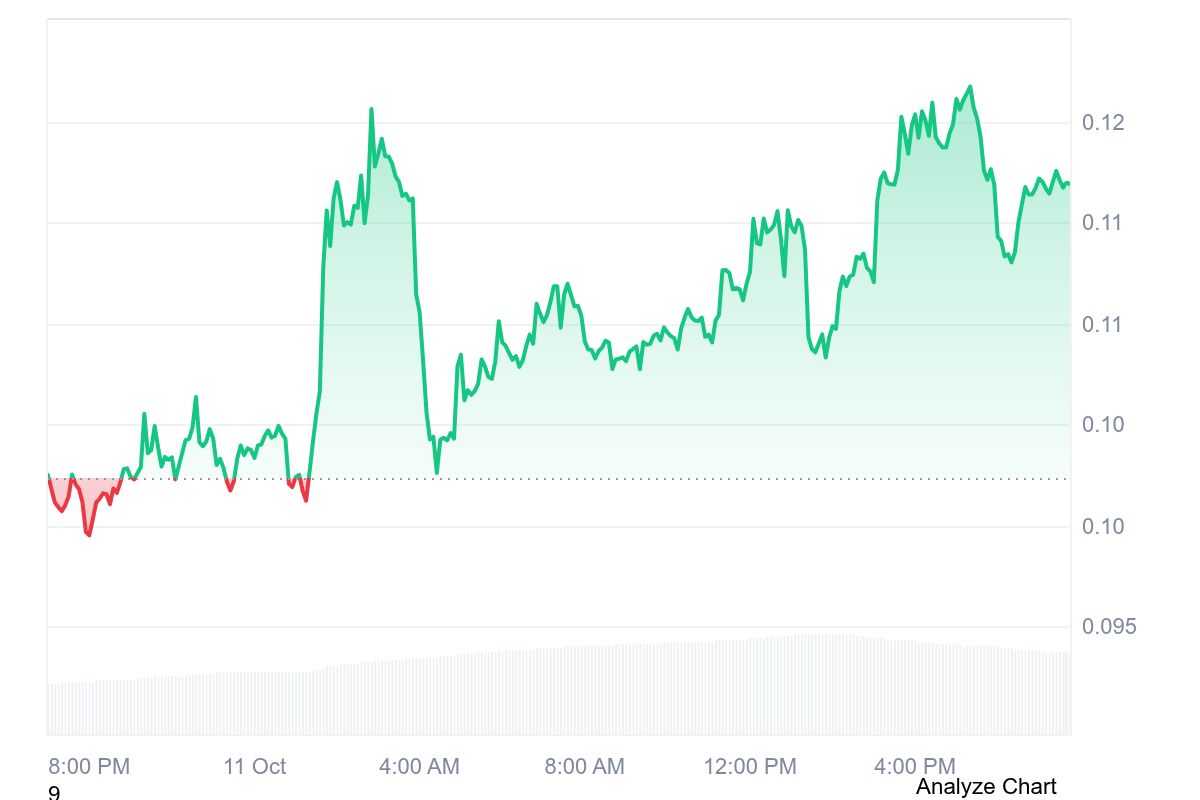
The token climbed from roughly $0.07278 to levels near $0.1166, marking a gain of more than 60% across a 36-hour window.
At the time of writing, it trades around $0.117 with a market capitalisation near $870 million and elevated 24-hour volume.
Meanwhile, trading activity expanded across major exchanges, and open interest in derivatives rose noticeably.
Still, the broader market remained relatively calm, with Bitcoin hovering near $83,000.
In addition, the rally pushed Starknet higher in the rankings and drew fresh attention to the Layer-2 project.
What is driving the latest Starknet price surge?
Traders are reacting to discussions about Starknet’s possible evolution beyond its current role as an Ethereum Layer-2 network.
Specifically, comments from StarkWare leadership have explored the idea of an independent Layer-1 path that could incorporate stronger quantum-resistant features by 2027.
Beyond that, on-chain metrics showed rising fees and decentralised exchange (DEX) volume in the days leading into the move.
At the same time, net outflows from centralised exchanges (CEXs) suggested some holders shifted tokens into self-custody.
How significant is this move for STRK holders?
The percentage gain stands out against the quieter performance of most large-cap assets over the same period.
Next, the volume spike indicates genuine short-term interest rather than thin liquidity alone.
Yet, the token remains well below its all-time highs from earlier cycles.
Importantly, an upcoming unlock of approximately 127 million STRK tokens is scheduled for Thursday, October 15, a factor many market participants are watching closely.
Looking further, the surge highlights how narrative shifts around scaling solutions can quickly reprice tokens even when the overall crypto market trades sideways.
Likewise, the combination of technical momentum and fundamental discussion has created a busy trading environment.
For now, Starknet continues to attract both speculative flow and longer-term scrutiny of its roadmap.
