

Lava Network continues to operate as a specialised infrastructure protocol focused on reliable blockchain data access.
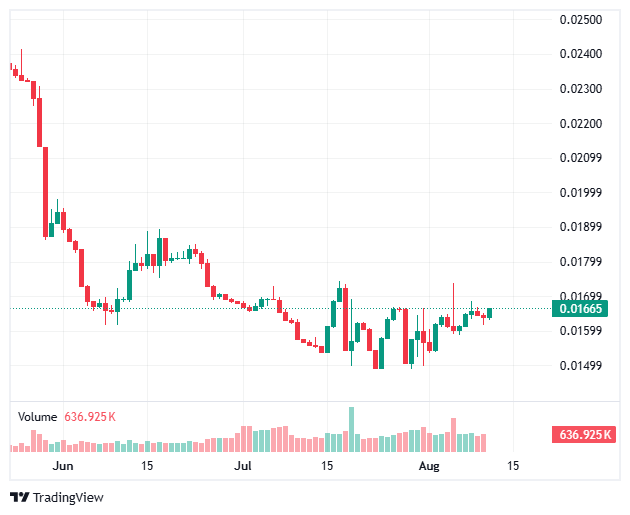
Meanwhile, its token LAVA trades at modest valuations after a significant decline from earlier highs.
As a result, investors evaluating opportunities in the second half of 2026 are asking whether the project’s fundamentals justify consideration.
In the sections that follow, we examine the protocol, its current market position, and the practical questions surrounding any potential allocation.
What Is Lava Network?
Lava Network is a decentralised protocol designed to coordinate RPC traffic from applications, wallets, and AI agents across multiple blockchains.
Moreover, the system aggregates independent data providers and routes requests according to speed and reliability metrics.
In addition, the protocol aims to deliver consistent up-time and reduce dependence on any single centralised infrastructure provider.
Furthermore, Lava supports a growing list of chains and reports meaningful daily usage alongside on-chain revenue distributed to stakers and providers.
At the same time, the native token LAVA serves multiple roles, including staking by providers and validators, restaking to direct traffic, governance participation, and payment for infrastructure subscriptions.
Current market data places LAVA near $0.0165, with a market capitalisation of approximately $4.4 million and a fully diluted valuation near $16 million.
Why Has Lava Network’s Price Moved This Way?
Several forces have shaped recent price action. The broader market environment for mid- and small-cap infrastructure tokens has remained selective.
In addition, LAVA has already experienced a substantial drawdown from its all-time high near $0.25, reflecting both profit-taking and shifting sector attention.
Therefore, the token currently trades closer to recent lows than to previous peaks.
Furthermore, progress in network usage and provider participation continues in the background even while price action stays relatively muted.
Meanwhile, the modest daily volume relative to market capitalisation indicates limited short-term speculative intensity.
As a result, LAVA’s performance in H2 2026 will likely depend more on sustained infrastructure demand and ecosystem growth than on sudden narrative-driven spikes.
Should I Buy Lava Network Right Now?
The decision depends on investment horizon and risk tolerance. The protocol addresses a genuine need for resilient, multi-chain RPC access, particularly as AI agents and applications require reliable blockchain connectivity.
On the other hand, the token remains a small-cap asset with limited liquidity and a history of sharp declines from higher levels.
Therefore, any consideration of an entry should treat LAVA as a speculative infrastructure position rather than a core holding.
In addition, careful position sizing and clear monitoring of network metrics become essential.
Waiting for clearer evidence of expanding paid usage or stronger market-wide interest in decentralised RPC solutions often improves the risk-reward balance.
What Is the Price Prediction for the Network Token?
Reliable long-term forecasts remain challenging for specialised infrastructure tokens.
Moreover, future performance will hinge on continued growth in RPC demand, successful expansion of supported chains, and the ability of the incentive model to retain high-quality providers.
In addition, broader market conditions for blockchain infrastructure assets will exert significant influence.
Thus, any numerical targets should stay flexible and scenario-based.
Short-term scenarios currently revolve around consolidation near recent ranges, with potential upside if network revenue and usage metrics accelerate.
Furthermore, the gap between circulating supply and fully diluted valuation highlights the importance of monitoring unlock schedules.
As a result, disciplined observation of on-chain activity and provider participation remains more valuable than fixed price projections.
How and Where Can I Buy Lava Network?
LAVA currently trades on a selection of centralised and decentralised venues.
Moreover, investors can access the token through platforms that list the asset and through compatible wallets supporting the relevant networks.
In addition, traders should always verify the official contract address before interacting with any liquidity pool.
Therefore, the most practical approach involves selecting venues with adequate depth while exercising caution around slippage.
Furthermore, given the relatively modest daily volume, smaller position sizes and careful transaction settings help manage execution risk.
Is the Network’s Token A Good Investment?
Lava Network offers a focused solution to a real infrastructure challenge—reliable, decentralised access to blockchain data for applications and AI agents.
At the same time, the token’s current valuation reflects both earlier declines and the selective nature of investor attention toward mid-tier infrastructure projects.
Therefore, investors who prioritise capital preservation may prefer to monitor progress in network usage and revenue before committing capital.
Meanwhile, those comfortable with higher-risk infrastructure speculation may view the modest market capitalisation as an opportunity, provided they size positions appropriately.
In either case, continuous review of protocol metrics, provider health, and broader market conditions remains essential.
Always verify the latest data from official sources and never allocate more capital than you can afford to risk fully.