

Bitway (BTW) has attracted intense market interest after delivering one of the strongest performances among mid-cap tokens.
The project combines a Bitcoin-focused narrative with yield products and a native Layer 1.
Investors now ask a practical question: does BTW deserve capital allocation, or does the recent price action primarily reflect short-term speculation?
A careful review of fundamentals, risks, and market structure helps answer that question.
Is Bitway (BTW) A Good Investment In 2026?
Bitway presents a clear use case centred on Bitcoin capital efficiency. The project develops a Bitcoin-compatible Proof-of-Stake Layer 1 and offers products such as Bitway Earn and native BTC-oriented lending.
These features give the token a functional role beyond pure trading.
Moreover, the presence of staking incentives and exchange campaigns has driven measurable demand.
At the same time, the token remains relatively early in its life cycle, with a large portion of the total supply still locked.
Investors who value Bitcoin-related infrastructure may find the thesis compelling, yet they must weigh that potential against elevated volatility and ongoing dilution risk.

Should I Buy Bitway Token After the Recent Price Surge?
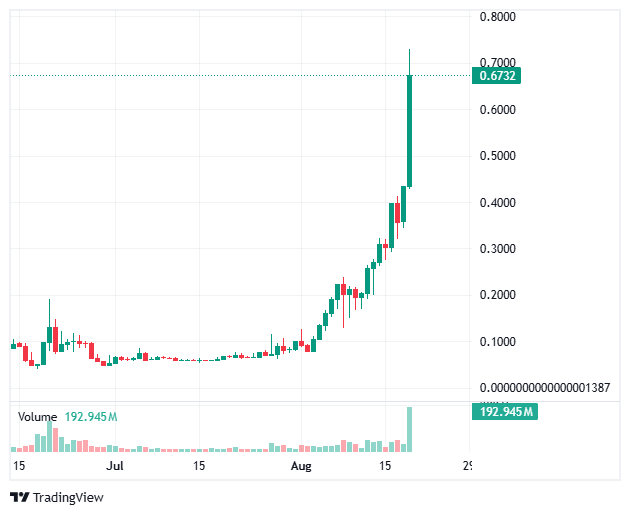
Buying after a rapid advance requires extra caution. BTW climbed more than 70% in a single day and extended its weekly gain beyond 200% at the peak of the move.
Such percentage gains often leave the token in overbought territory on shorter time frames.
In addition, late entrants face higher risk of sharp pullbacks when early holders begin taking profits.
Investors who still want exposure usually consider smaller position sizes and clearer invalidation levels rather than chasing the full extension of the rally.
Is BTW A Safe Long-Term Investment Or Just A Short-Term Pump?
BTW currently sits between both categories. The project offers real products and a coherent Bitcoin-focused narrative, which supports a longer-term case.
Staking utility, governance rights, and yield platform participation give the token ongoing demand drivers.
Meanwhile, the speed of the recent advance and the still-high fully diluted valuation introduce short-term speculative characteristics.
A large share of the 10 billion maximum supply remains unissued, so future unlocks could pressure price if organic demand fails to absorb new tokens.
Long-term success depends on sustained growth in Bitway Earn deposits, lending activity, and network usage rather than campaign-driven spikes alone.
What are the risks of investing in Bitway right now?
Several material risks deserve attention. First and foremost, the token has already delivered parabolic gains, which increases the probability of a meaningful correction.
Secondly, circulating supply represents only a fraction of the total 10 billion tokens, creating potential dilution as vesting schedules progress.
Furthermore, competition within the Bitcoin Layer 1 and BTCFi sectors continues to intensify. Execution risk also remains relevant—any delay in product adoption or decline in yield attractiveness could reduce demand for BTW.
High volatility and possible liquidity swings during profit-taking phases add further short-term uncertainty.
Can Bitway still go higher after rising over 200% in a week?
Further upside remains possible if the project continues delivering measurable traction.
Strong inflows into Bitway Earn, expanding lending volume, or additional high-visibility partnerships could support another leg higher.
On the other hand, the market has already priced in a significant amount of positive news.
Without fresh catalysts or sustained usage growth, the token may enter a consolidation or retracement phase.
Price action after such rapid advances often becomes more selective, rewarding projects that convert short-term attention into lasting activity.
So, Is BTW A Buy?
Bitway combines a focused Bitcoin narrative with working yield products and active incentive programs.
These elements give the token a stronger foundation than many pure momentum plays.
At the same time, the magnitude of the recent rally, the large unlocked supply overhang, and intense sector competition introduce clear risks.
Investors who treat BTW as a high-volatility position, size accordingly, and monitor real usage metrics stand in a better position than those who enter solely on the basis of recent percentage gains.
Continuous evaluation of product traction and supply dynamics remains essential.
