


Hyperliquid just flipped the switch on a major new feature that traders had been watching closely.
On September 18, 2026, the platform opened manual borrows through its HyperCore infrastructure.
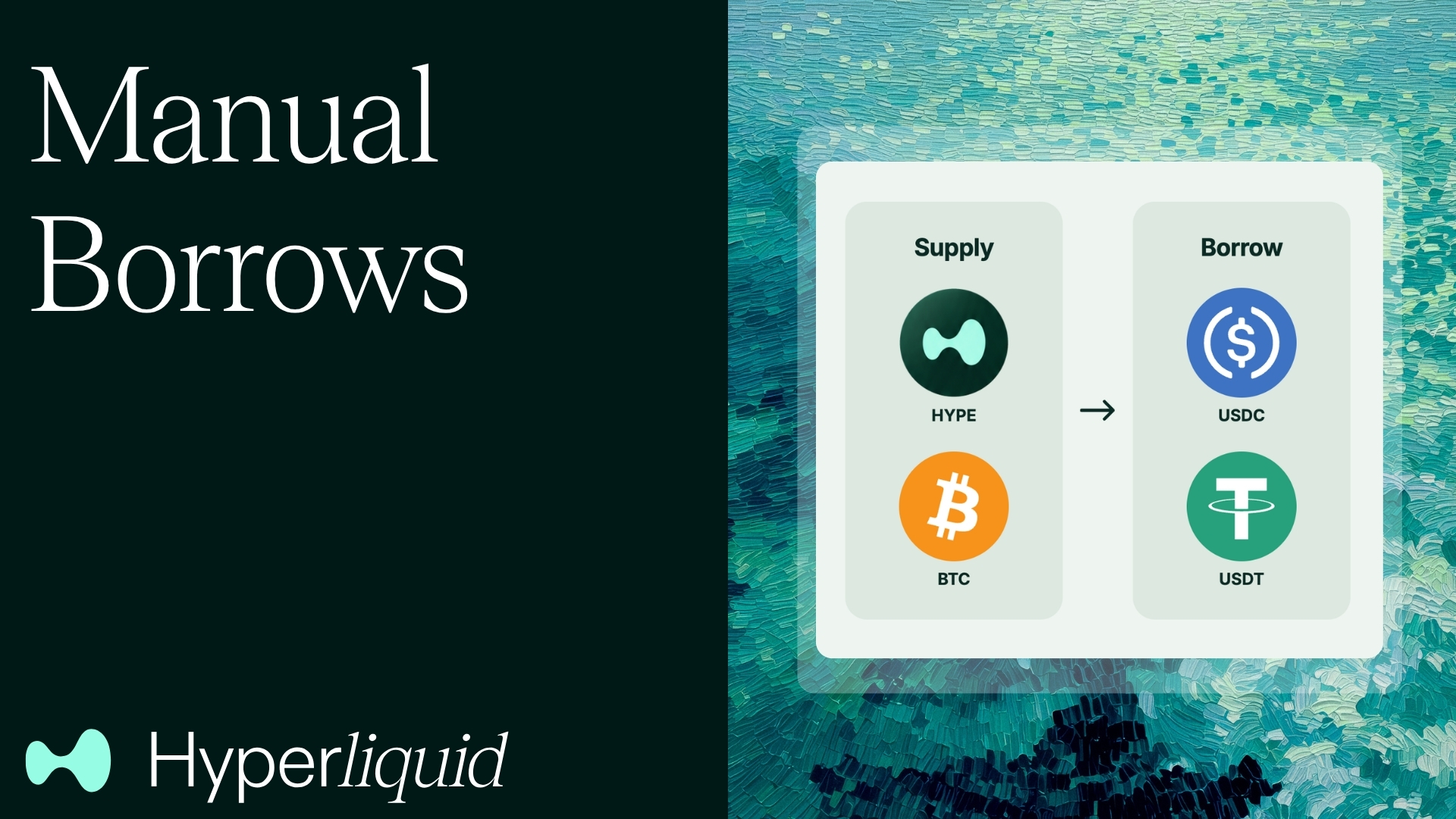
Users can now supply HYPE or Bitcoin as collateral and pull stablecoins from Circle (USDC) or Tether (USDT).
In the crypto world, the numbers moved fast as within hours, the system showed roughly $269 million already borrowed.
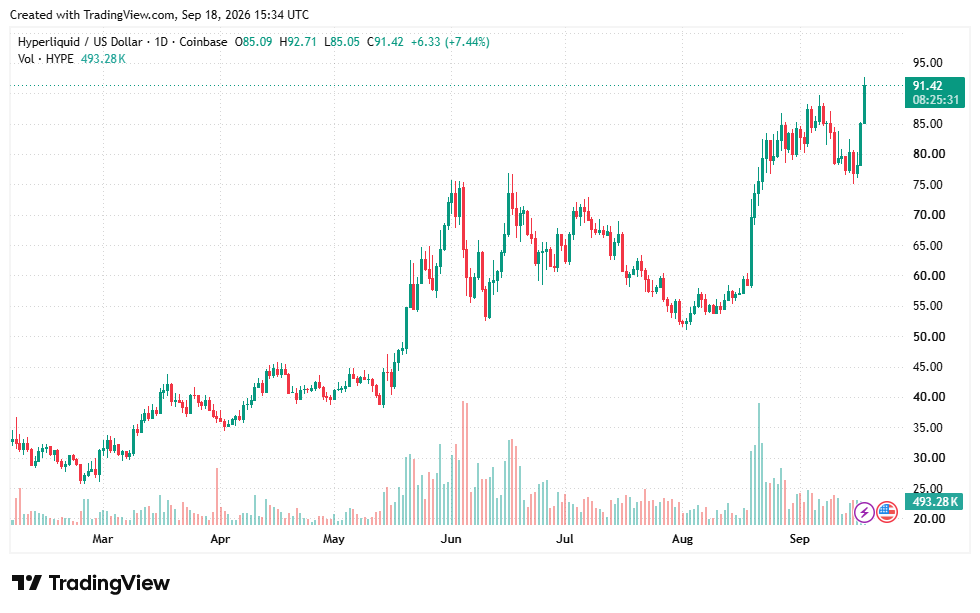
At the same time, HYPE climbed to a fresh all-time high near $90, with some data points touching just above $90.90.
This move expands Hyperliquid beyond pure trading into a more complete on-chain credit layer.
Traders who already use the exchange for perpetual futures now gain another way to put their HYPE and BTC to work without leaving the platform.
What Exactly Are Manual Borrows on Hyperliquid?
Manual borrows let account holders deposit HYPE or BTC and then borrow stablecoins against that collateral.
The feature runs on the same HyperCore engine that powers portfolio margin, yet it gives users direct control over when and how much they borrow.
Supported collateral sits at clear loan-to-value ratios: 65% for HYPE and 50% for BTC.
Liquidation thresholds sit higher—82.5% for HYPE and 75% for BTC—so positions have a buffer before forced sales kick in. Supplied HYPE and BTC do not earn interest.
In contrast, any USDC or USDT that users supply to the pools does earn yield based on utilisation. Borrowers pay variable rates that adjust hourly.
Hyperliquid’s own documentation spells out the math cleanly. Borrow capacity equals the supplied amount multiplied by the oracle price multiplied by the loan-to-value ratio (LTV).
Multiple collateral assets simply add their capacities together. Portfolio-margin accounts already borrow automatically, so the manual option stays disabled for them.
Standard and unified accounts get the new button.

How the Day-One Numbers Tell a Bigger Story
The $269 million figure arrived almost immediately. That volume shows real demand rather than idle curiosity.
Co-founder Jeff Yan pointed out that every borrowed dollar comes from an actual supplier on the network, not from platform-level accounting tricks.
The same pools that already supported portfolio-margin activity supplied more than $400 million of available liquidity at launch.
Meanwhile HYPE responded with strength. The token pushed through its previous September 6 high near $89.66 and printed a new peak above $90.
Price action on the day showed roughly a 13% gain in some windows. Traders appear to have priced in the new utility: HYPE now serves as both a trading token and productive collateral inside the exchange itself.
Why HYPE Reached an All-Time High at This Exact Moment
Several threads came together. First and foremost, the borrowing launch gave HYPE a concrete use case that increases demand for the token as collateral.
Secondly, the broader market had already shown resilience after recent rate hikes and regulatory headlines.
Moreover, Hyperliquid continues to post heavy trading volume across its perpetual markets, keeping the ecosystem active.
Looking closer, the design choices matter. Because rates float with utilisation, suppliers of stablecoins can earn when borrowing demand runs high.
That feedback loop can attract more liquidity over time. At the same time, the global supply caps—10 million HYPE and 2,000 BTC—limit how much collateral can flood the system at once.
These guardrails help keep the market orderly even when excitement runs high.

How Hyperliquid Manual Borrows Differ from Portfolio Margin
Portfolio margin already lets advanced traders borrow automatically against their entire book.
Manual borrows give a simpler, more deliberate path.
Users decide the size and timing of each loan.
Both systems share the same underlying HyperCore code, which keeps capital efficiency high and avoids the need for a completely separate lending market.
In practice, a trader might keep a long-term HYPE position, lock some of it as collateral, borrow USDC, and then deploy that USDC into another perpetual trade—all without bridging assets elsewhere.
That kind of capital recirculation is rare on most decentralised venues.

Hyperliquid: What Risks Should Users Keep in View?
Price swings in HYPE or BTC directly change borrowing power and liquidation risk.
A sharp drop in collateral value can push a position toward the liquidation threshold quickly.
Variable interest rates can also climb if utilisation spikes. Hyperliquid retains 10% of interest paid by borrowers as a reserve for future liquidations, which adds a small protocol-level buffer, yet users still carry the primary market risk.
Anyone considering the feature should check their own risk tolerance, monitor oracle prices, and understand the exact LTV and liquidation parameters before depositing size.

What Does This Mean for Hyperliquid’s Longer Trajectory?
Hyperliquid already stands out for its on-chain order book that processes hundreds of thousands of orders per second with sub-second finality.
Adding a native credit layer turns the platform into something closer to a full financial stack.
Traders can execute, collateralise, and borrow inside one environment.
Beyond that, the move strengthens HYPE’s role inside the ecosystem.
Token holders gain another reason to keep HYPE on the network rather than moving it elsewhere.
Liquidity providers of stablecoins gain a new yield source tied directly to trading activity.
Over time, these loops can deepen the market and attract more sophisticated strategies.
Early data already shows the feature found product-market fit on day one.
Whether the $269 million figure grows or stabilises will depend on how traders use the capital and how rates evolve.
For now, the launch marks a clear step from pure exchange to broader on-chain finance.
Hyperliquid’s team has kept the product focused and technical. The documentation, the transparent LTV numbers, and the rapid uptake all point to careful design.
HYPE has shown resilience from its all-time low price of $3.20 in November 2024 and deserves this latest bull ride.
