


A high-leverage trader just absorbed a sharp ETH liquidation while keeping a massive Bitcoin position intact.
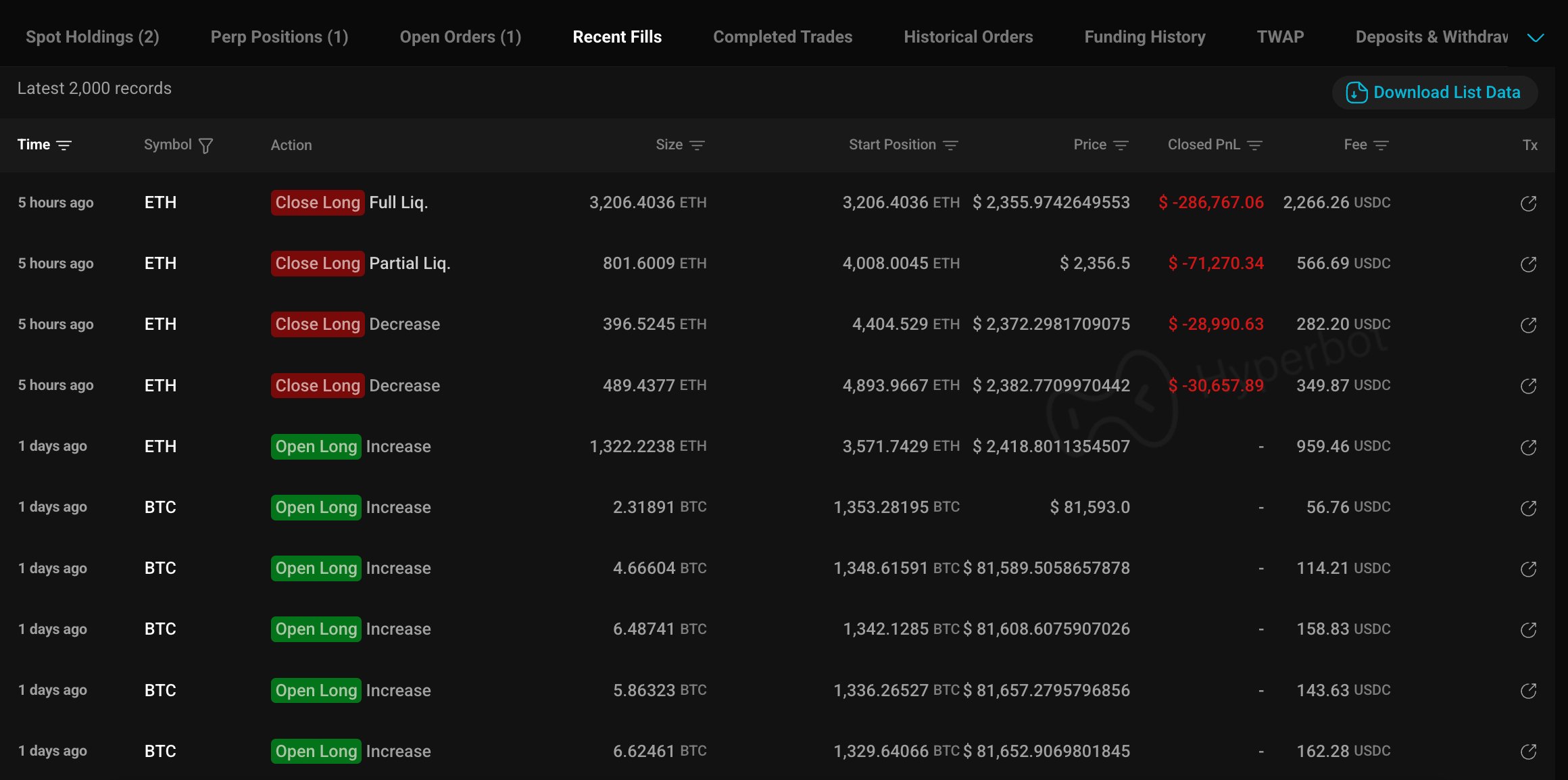
On-chain data tracked by Lookonchain shows the wallet lost its entire ETH long five hours before the latest update, booking a $1.08 million realised loss.
What Happened to the High-Leverage Trader’s ETH Position?
The trader had previously held 15,270 ETH valued near $37 million at peak exposure, paired with a large BTC long.
Liquidation price sat at roughly $2,406. Once price action moved against the position, the exchange fully closed the ETH side. That single event erased $1.08 million in margin.

How Much ETH Exposure Disappeared in the Liquidation?
The full 15,270 ETH long vanished. No partial fill remained. High leverage amplified every percentage move in ETH, turning a moderate price swing into a complete wipeout of that leg of the portfolio.
Traders watching the same wallet had already noted the aggressive sizing days earlier when total notional exposure across BTC and ETH approached $187 million.
Does the Trader Still Hold a Significant BTC Long After the ETH Hit?
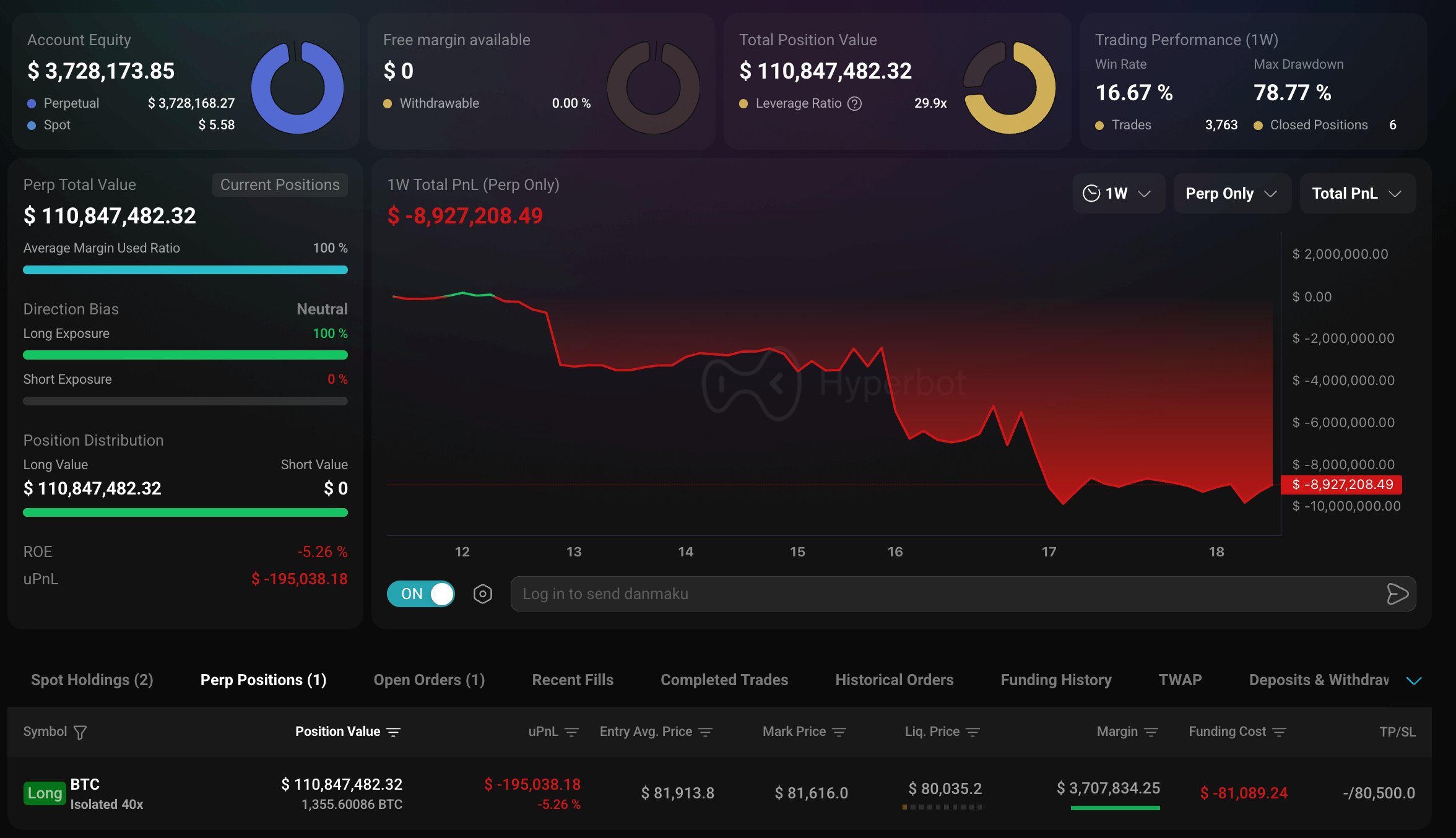
Yes, the same address continues to control 1,355.6 BTC, currently valued above $110 million.
Liquidation price for the remaining Bitcoin long sits near $80,035. The trader also placed a stop-loss order at $80,500, only a few hundred dollars above the liquidation threshold.
What Risks Come With High-Leverage Crypto Trading on Ethereum and Bitcoin?
Leverage multiplies gains when markets move favourably, yet it equally multiplies losses.
A few percent adverse move in ETH proved enough to erase the entire position.
The remaining BTC long still carries extreme sensitivity: roughly $3.7 million of margin supports over $110 million of exposure.
Quiet afternoon volatility in Bitcoin has historically produced larger swings than the distance between current price and that stop-loss level.
Why Do Some Traders Keep Adding Size Despite Recent Liquidations?
Certain market participants view forced liquidations as temporary noise rather than a signal to exit.
After the Ethereum loss, this wallet chose to defend the Bitcoin side with a tight stop rather than close everything.
The decision keeps upside exposure while capping further downside at a predetermined level. Whether that stop holds or triggers remains the next data point the market will watch.
High-leverage activity of this scale continues to appear regularly on major perpetual venues.
Ethereum remains the more volatile of the two assets in recent sessions, which helps explain why the Ethereum leg liquidated first while the BTC position survived.
Traders and analysts tracking whale wallets must now focus on whether the stop at $80,500 activates or whether the position can ride out the next volatility spike.
