


South African bank FNB has opened crypto trading to its nearly nine (9) million retail customers.
The new service lets clients buy and sell Bitcoin, Ethereum, XRP, Solana and USDT directly through the bank’s existing investment platform.
FNB built the offering with local exchange VALR and rolled it out on Tuesday, 6th October, 2026.
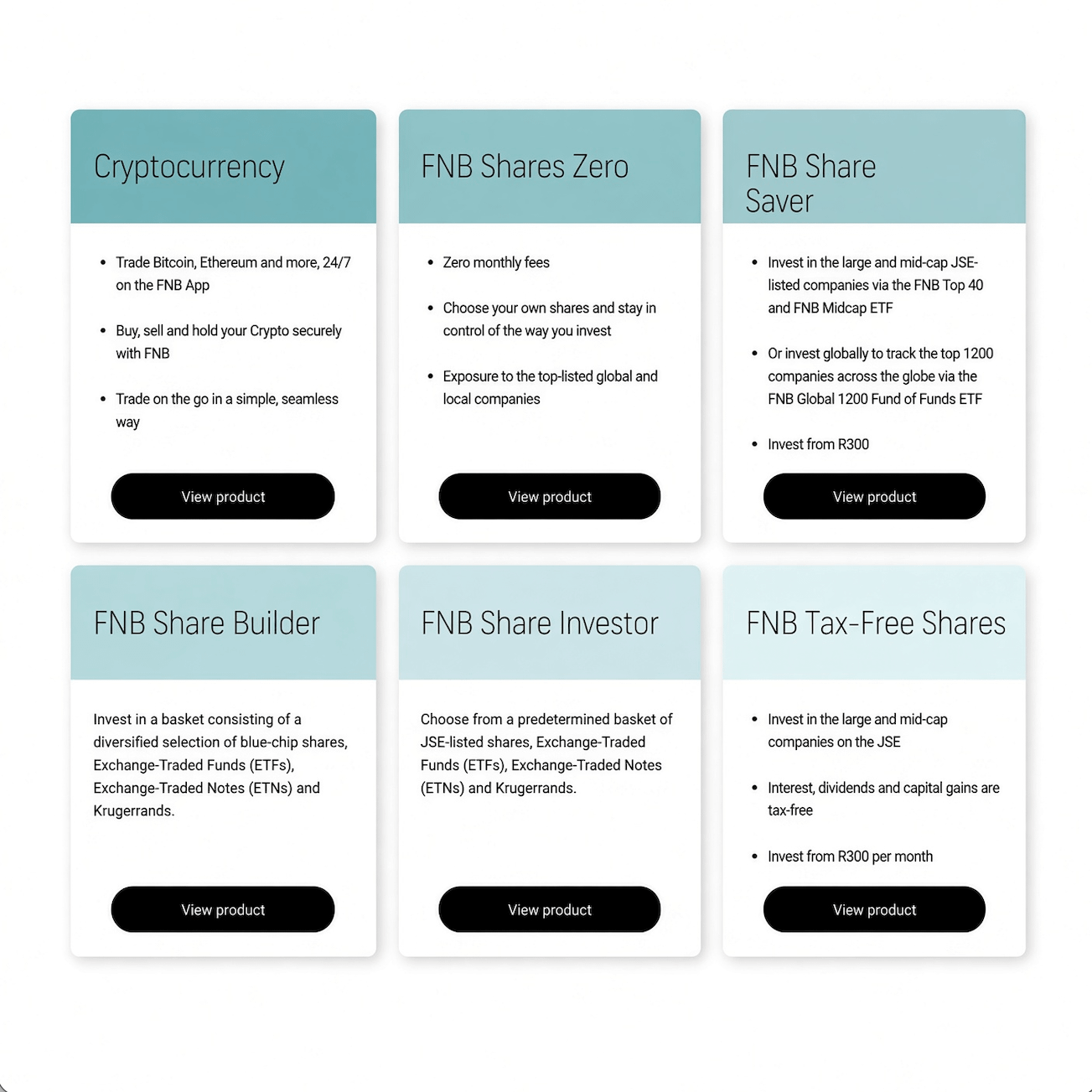
Customers access the five assets inside Share Saver, Share Builder, Share Investor and Share Zero products.
Trades start at just 10 South African Rands (about 60 cents) and run around the clock, seven days a week.
Clients fund purchases straight from their FNB accounts, so they never leave the banking app.

How Does FNB Crypto Trading Work for Everyday Customers?
The bank keeps the entire process inside its own ecosystem. Clients open positions with ZAR held in their FNB accounts and hold the digital assets on the platform.
At the same time, the coins cannot move to external wallets or other exchanges. FNB chose this ring-fenced design to tighten security controls and meet exchange-control rules more carefully.
Beyond the convenience, the setup removes the need for a separate crypto-exchange login or wallet management.
Sizwe Nxedlana, CEO of FNB and RMB Private Banking and Wealth Management, noted that the bank wanted to answer rising client demand for alternative investments while keeping the experience familiar.
Bheki Mkhize, CEO of FNB Wealth and Asset Management, added that customer interest in digital assets has grown steadily.
Why Did FNB Partner with VALR Instead of Building Alone?
VALR already holds a South African crypto-asset service-provider licence and operates local market infrastructure.
By working with the exchange, FNB gained ready pricing, liquidity and operational plumbing without creating a full trading engine from scratch.
In turn, VALR reaches a large established retail base that already trusts the bank for everyday banking.
Looking at the broader picture, several South African lenders have begun testing crypto access.
Discovery Bank earlier linked its app to Luno. FNB’s approach differs by keeping everything inside its share-trading products rather than routing clients to an external account.
The limited asset list and transfer restrictions further set the offering apart.
What Limits Should Customers Expect with FNB Crypto Trading?
The no-transfer rule stands out as the main constraint. Holdings stay inside the FNB platform, so clients cannot withdraw coins to self-custody or send them elsewhere.
Fees sit at 1.5% per buy or sell before VAT, according to product guides. The bank plans to widen the coin selection over time and add educational material on risks.
Meanwhile, the service still gives first-time users a low-friction entry point. Starting at 10 ZAR and operating 24/7 matches how crypto markets themselves function.
For many customers who already bank with FNB, the ability to add Bitcoin or Ethereum exposure next to traditional shares removes a previous barrier.
Will FNB Expand Crypto Trading Beyond These Five Assets?
FNB has signalled plans to add more digital assets and supporting education. The current selection covers the two largest cryptocurrencies by market value, two additional high-profile tokens and a dollar-pegged stablecoin. Future growth will depend on client uptake, regulatory clarity and the bank’s risk appetite.
In the near term, the launch places FNB among the larger banks in South Africa offering direct crypto access through a mainstream banking channel.
The combination of familiar investment products, a trusted partner and deliberate compliance controls creates a conservative, yet accessible route into digital assets for millions of existing clients.
