

What Led to Do Kwon’s Sentencing?
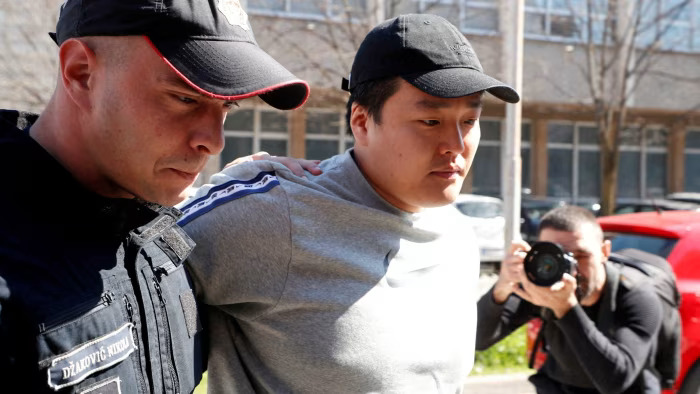
On December 11, 2025, U.S. District Judge Paul A. Engelmayer delivered a resounding verdict in a Manhattan federal courtroom centered on Do Kwon.
Do Kwon, the charismatic co-founder of Terraform Labs, received a 15-year prison sentence for orchestrating a massive fraud that obliterated $40 billion in investor money.
Thus, this ruling capped a three-year international manhunt, extradition saga, and legal battle that captivated the crypto world.
Kwon, once hailed as a Stanford-educated innovator, pleaded guilty in August 2025 to conspiracy and wire fraud charges.
As a result, he must forfeit millions of dollars, and he faces additional prosecution in South Korea, where the authorities seek up to 40 years for similar offences.
Moreover, the judge sharply criticised Kwon’s actions as an epic fraud on a generational scale.
Prosecutors had requested 12 years, while Kwon’s defence pushed for just five, citing hubris over greed.
However, Engelmayer deemed the prosecution’s request “unreasonably lenient” and the defense’s plea “wildly unreasonable.”
Therefore, this harsher penalty shows a judicial intolerance for deception that shattered thousands of lives.
Victims, numbering over 15,000, submitted more than 300 impact statements. Many crypto lovers read aloud during the hearing—detailing suicides, bankruptcies, and shattered retirements.
Why This Sentencing Resonates Deeply in the Crypto Community
First and foremost, Do Kwon’s downfall symbolises accountability in an industry often criticised for its Wild West ethos.
Terra’s collapse in May 2022 wasn’t merely a market blip; it ignited the broader crypto winter. This unfortunate incident, led by the crash of its algorithmic stablecoin, wiped out $50 billion across ecosystems and eroded global trust.
Thus, everyday investors—many retail enthusiasts chasing high yields—lost life savings, while institutions faced cascading liquidations.
For instance, one victim’s letter described contemplating suicide after his father’s retirement vanished into the void.
Furthermore, this case highlights the perils of unchecked innovation. Kwon marketed TerraUSD (UST) as a revolutionary “algorithmic stablecoin”, promising algorithmic stability without traditional reserves.
However, hidden manipulations—like secret infusions from Jump Trading—propped up its $1 peg, misleading users about inherent risks.
As a result, the community now demands better due diligence, transparent audits, and ethical leadership.
Developers actively pivot toward hybrid models, blending algorithms with collateral to mitigate depegging threats.
In essence, Kwon’s sentencing fosters a cultural shift: innovation thrives, but only when paired with integrity.
Comparing Sentencing: Do Kwon vs. Sam Bankman-Fried’s Stiffer Penalty
Next, let’s juxtapose Kwon’s 15 years with Sam Bankman-Fried’s (SBF) 25-year term from March 2024.
Both cases exposed fraud’s devastating ripple effects, yet stark differences emerge in scale, intent, and judicial response.
SBF, FTX’s wunderkind founder, stole $8 billion in customer funds, diverting them to Alameda Research for risky bets, political donations, and luxuries.
Prosecutors sought 40–50 years, citing his “brazen” perjury and witness tampering; Judge Lewis Kaplan settled on 25, ordering $11 billion in forfeiture.
In contrast, Kwon’s fraud focused on deception about UST’s mechanics, not outright theft, leading to $40 billion in losses—five times SBF’s direct misappropriation.
However, SBF’s sentence doubled Kwon’s because his scheme involved deliberate commingling of funds and a web of lies under oath, amplifying perceived malice.
Moreover, FTX’s collapse followed Terra’s, positioning SBF as a “second domino” that deepened the 2022 crisis.
Thus, while both sentences deter white-collar crime, SBF’s stiffer penalty reflects a trial conviction versus Kwon’s plea deal, which shaved years off potential exposure (up to 110 for SBF and 25 for Kwon).
Additionally, community reactions diverge. X (formerly Twitter) posts buzz with speculation on LUNA’s post-sentencing pump (up 40% initially), viewing Kwon’s closure as a “buy the dip” signal.
SBF’s saga, however, lingers as a cautionary tale of hubris, with less token revival hype.
The Lingering Shadow on Terra: Rebuilding Amid the Ruins
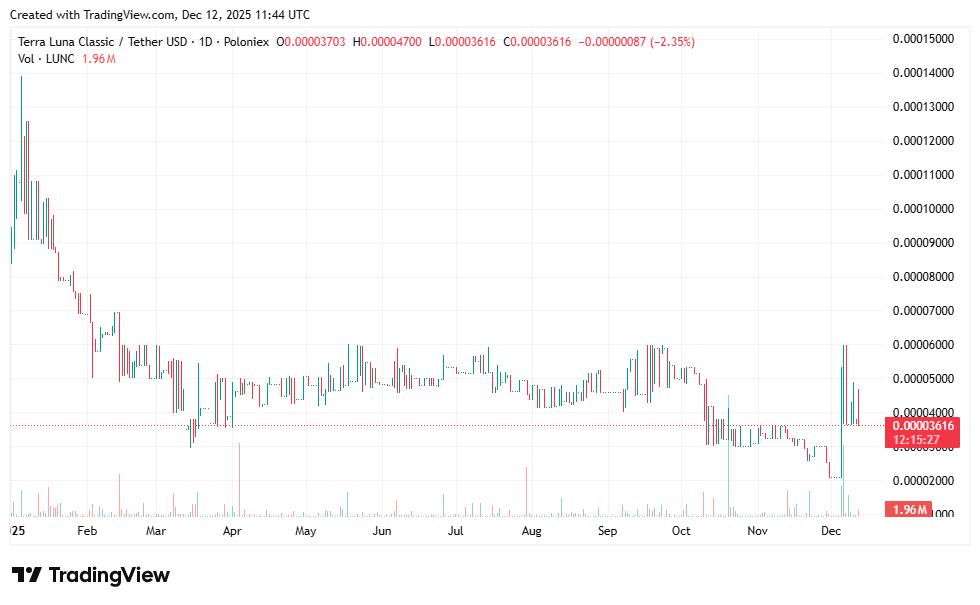
Beyond the courtroom, Kwon’s fate dooms Terra’s remnants. LUNA (now LUNC) and USTC trade as relics, with prices cratering 99% from peaks.
Yet, paradoxically, sentencing news sparked a 300% surge in LUNA, fuelled by speculators betting on “closure rallies” or potential pardons—though experts dismiss the latter as fantasy.
Community sentiment sours; forums echo frustration over unrecovered losses and stalled revivals like Terra 2.0.
Nevertheless, positives emerge. The ecosystem birthed Cosmos SDK innovations, influencing chains like Osmosis.
Developers now focus on governance reforms, burning tokens to stabilise supply.
However, investor wariness persists—Terra’s brand evokes volatility, deterring new capital.
In short, while the protocol endures technically, its reputational scars demand years of redemption efforts.
Future Implications: How Do Kwon Sentencing Reshapes Algorithmic Stablecoins
Finally, Kwon’s sentencing accelerates scrutiny on algorithmic stablecoins, those code-driven pegs lacking fiat backing.
UST’s implosion exposed fatal flaws: during stress, arbitrage incentives fail, spiralling into death loops, where LUNA hyperinflates to mint more UST.
Thus, regulators worldwide impose bans or mandates. The EU’s Markets-In Crypto Assets (MiCA) framework classifies them as high-risk, requiring over-collateralisation.
U.S. bills like the Clarity for Payment Stablecoins Act demand audits and reserves, sidelining pure algorithms.
Moreover, innovators adapt swiftly. Projects like Frax Finance hybridise with partial collateral (e.g., USDC), achieving sub-1% depegs.
Upcoming launches, such as Angle Protocol’s agEUR, embed circuit breakers and oracle redundancies.
However, this shift raises yields—algorithmic models offered 20% APYs, now tempered to 5–10% for safety.
For the community, it means empowered risk assessment: tools like DeFiLlama now flag “algo-risk” scores.
In addition, global enforcement strengthens. Post-Terra, cross-border probes (U.S.-Korea-Montenegro) set precedents, pressuring exchanges to delist risky assets.
Thus, while innovation slows, stability surges—paving a safer path for DeFi’s $100 billion stablecoin market.
Key Lessons and Actionable Steps for Crypto Enthusiasts
To wrap up, Do Kwon’s saga teaches resilience: diversify beyond hype, verify whitepapers rigorously, and advocate for regulations.
Audit your portfolio—swap pure algos for backed stables like USDT.
Engage communities via decentralised autonomous organisations (DAOs) for oversight.
Ultimately, this sentencing doesn’t end crypto’s promise; it refines it, ensuring fraud’s architects face justice while builders forge ahead.
As markets rebound—Bitcoin at $92K amid holiday optimism—remember: accountability elevates us all.
Always remember that crypto operates in a highly volatile environment. Therefore, monitor the amount of liquidity (trading volume) flowing into your holdings on a weekly basis.
This will save you the headache of seeing some of your crypto holdings go bust or in flames like Terra LUNA and other digital assets over the years.