

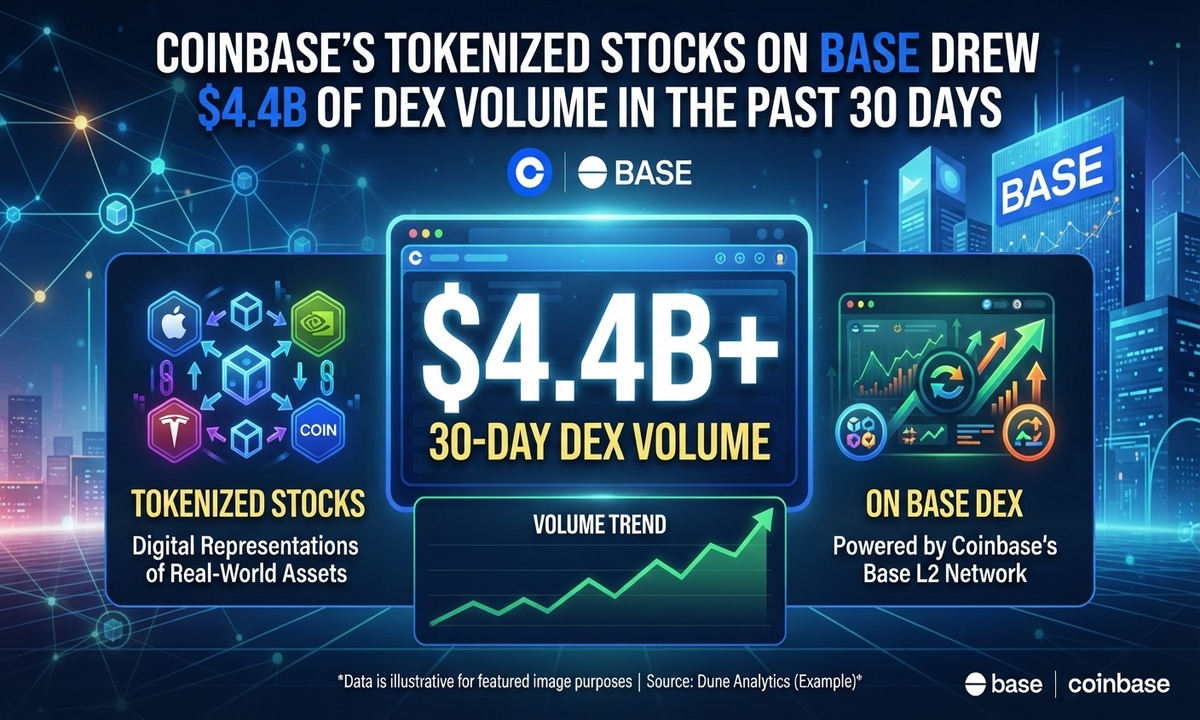
Coinbase tokenized stocks trading on Base just delivered a striking performance.
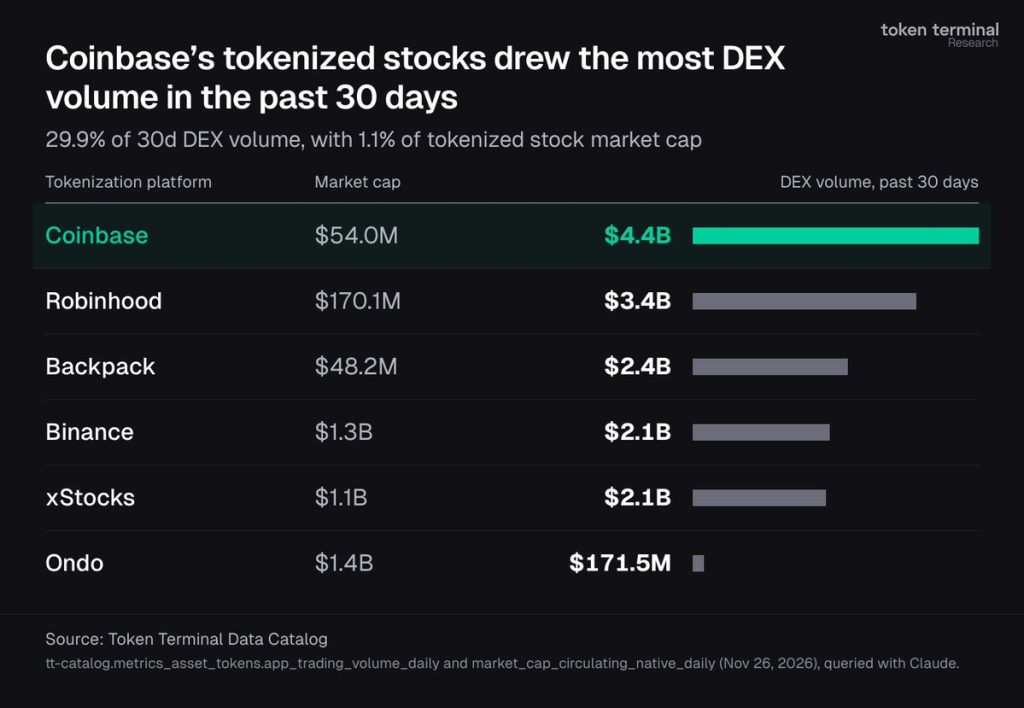
According to fresh data from Token Terminal, these assets generated $4.4 billion in decentralised exchange (DEX) volume over the past 30 days.
That figure tops every other tokenized asset issuer in the same window.
Interestingly, Coinbase-issued stocks captured 29.9% of total 30-day DEX volume across the category even though they represent only 1.1% of the overall tokenized stock market capitalisation.
This combination of high turnover and relatively modest market share points to intense trading activity rather than simply large holdings sitting idle.
What Are Coinbase Tokenized Stocks and How Do They Work?
Coinbase launched its tokenized U.S. stocks on Base, its Ethereum layer-2 network, in late August 2026.
Each token follows the B20 standard and is backed 1:1 by actual shares held in regulated custody.
In practice, holding the on-chain token gives the owner a beneficial claim on the underlying equity.
These products remain available only to eligible users outside the United States.
They trade around the clock on Base-native venues, chiefly Aerodrome, and can move into DeFi applications for lending or liquidity provision.
The design aims to combine familiar equity exposure with blockchain-native features such as continuous markets and composability.
Why Did Coinbase Capture Nearly 30% of DEX Volume With Just 1.1% Market Cap?
High volume relative to market capitalisation usually signals strong secondary-market demand and active market-making.
In this case, the disparity is especially pronounced. Coinbase’s tokens appear to attract frequent trading even though the total value of those tokens remains a small slice of the broader tokenized equity market.
Several factors help explain the pattern. Base offers low fees and fast settlement, which encourages high-frequency activity.
Popular names such as tokenized Nvidia, Meta, and MicroStrategy shares have drawn consistent interest.
Additionally, the ability to trade outside traditional market hours and use the tokens inside DeFi protocols increases utility beyond simple buy-and-hold exposure.
Token Terminal’s data shows that liquidity and turnover, not just static market size, determine an issuer’s influence in the current environment.

What Does This Milestone Signal for On-Chain Equities?
The $4.4 billion 30-day figure arrives only three months after launch and arrives after earlier cumulative milestones already exceeded several billion dollars.
It reinforces that tokenized stocks have moved from experimental status into a meaningful segment of on-chain activity.
At the same time, the concentration of volume among a few issuers, including Coinbase, shows the market is still consolidating around platforms that combine regulatory structure with strong distribution and liquidity.
Base’s role as the settlement layer further ties Coinbase’s exchange brand to the performance of its layer-2 network.
Can This Momentum Continue?
Continued growth will depend on several variables. Expanding the number of listed stocks, deepening DeFi integration, and eventual regulatory clarity in more jurisdictions could sustain or increase activity.
Conversely, shifts in broader market sentiment or competition from other issuers may temper the pace.
For now, the latest Token Terminal numbers show Coinbase has established a clear lead in recent DEX volume among tokenized asset issuers.
The contrast between its volume share and its market-cap share remains one of the more revealing data points in the emerging on-chain equities space.
