


A long-silent Bitcoin (BTC) address just stirred emotions across the crypto whale market.
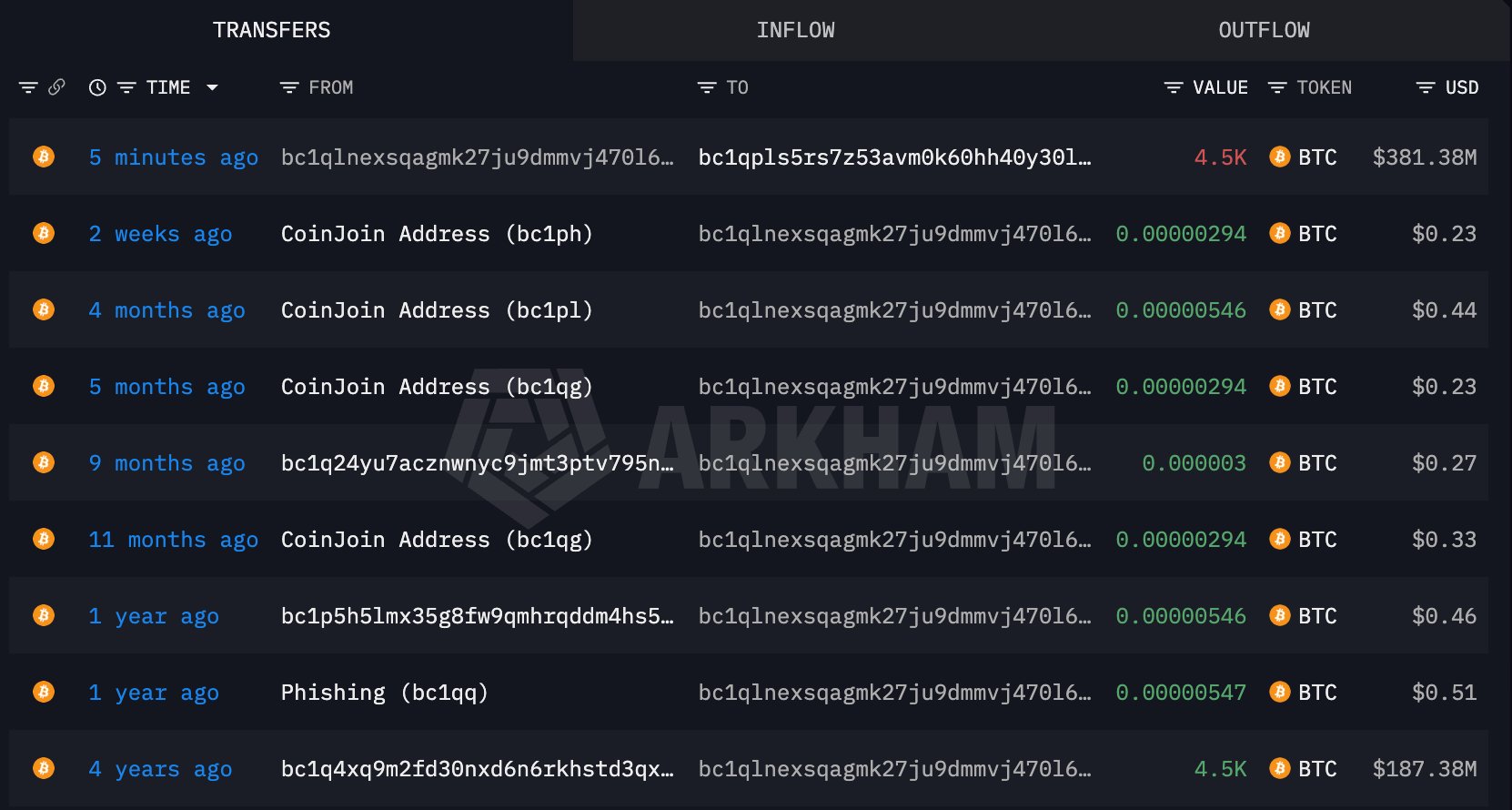
On September 25, 2026, the wallet (bc1qlnexsqagmk27ju9dmmvj470l6jsl4j6t4lm34x) transferred roughly 4,500 BTC—valued near $381 million at the time—after sitting untouched for more than four years.
Lookonchain first flagged the move, and Whale Alert later confirmed the bulk of the coins, about 4,499 BTC, shifted from one unknown address to another.
The timing stands out because BTC has spent recent weeks trading in the mid-$80,000 range, and large dormant holdings rarely wake without drawing eyes.
What Does This BTC Movement Mean for the Market?
Large transfers from quiet wallets often hint at portfolio shifts rather than immediate dumps.
In this case, the coins moved between unknown addresses, so they have not yet appeared on any major exchange deposit.
At the same time, the size equals roughly 1.2% of a typical daily BTC trading volume, enough to matter if the holder later chooses to sell.
Further still, similar awakenings in past cycles sometimes preceded short bursts of volatility, yet they just as often reflected cold-storage housekeeping or estate planning.
Stakeholders of BTCs price patterns should track the receiving address closely in the coming days as the market enters the final quarter of 2026.
Why Do Dormant BTC Wallets Suddenly Activate?
Keys that stay offline for years, usually belong to early holders who accumulated when prices sat far lower.
Once those keys come online again, the owner may be consolidating holdings, preparing for a tax event, or simply testing that the private keys still work.
Beyond that, rising BTC prices over the last cycle have turned many old positions into multi-hundred-million-dollar fortunes.
The pressure to act—whether to rebalance or secure the coins under fresher custody—grows with every new all-time high.
In parallel, on-chain analysts note that older-cohort mobility has edged higher this month, a pattern some read as gradual distribution rather than fresh accumulation.
How Does This Compare to Other Recent Bitcoin Whale Activity?
Earlier in September 2026, several decade-old wallets moved smaller but still sizeable sums, including a 600 BTC transfer that had slept since 2012.
Those moves totalled under $200 million across multiple addresses. The latest transfer dwarfs them both in size and in the length of its silence.
Looking closer, most of those earlier coins also stayed off exchanges at first. The pattern suggests holders prefer internal rearrangements before any public sale.
What’s more, the current move arrives while miner flows and exchange reserves remain under steady scrutiny, adding another data point to the broader picture of BTC supply dynamics.

Could This BTC Transfer Signal Selling Pressure?
Coins sitting in a new unknown wallet still require an extra step before they can hit the market.
If the next hop lands on Binance, Coinbase or a similar venue, the odds of near-term supply rise.
Until that happens, the transfer remains a reallocation, not a sale.
Along similar lines, historical data shows many multi-thousand-BTC dormancy exits never produced sustained price pressure. The market digested them within days.
Still, the sheer dollar value keeps the address on every whale-tracking dashboard for now.
Early holders who sat through multiple cycles rarely move lightly. This particular BTC transfer reminds the market that coins once written off as permanently lost can return at any moment—and when they do, the rest of the network pays attention.
It also fits in with our suggestion that “having time in the highly volatile crypto market is far better than trying to time the market”.
