

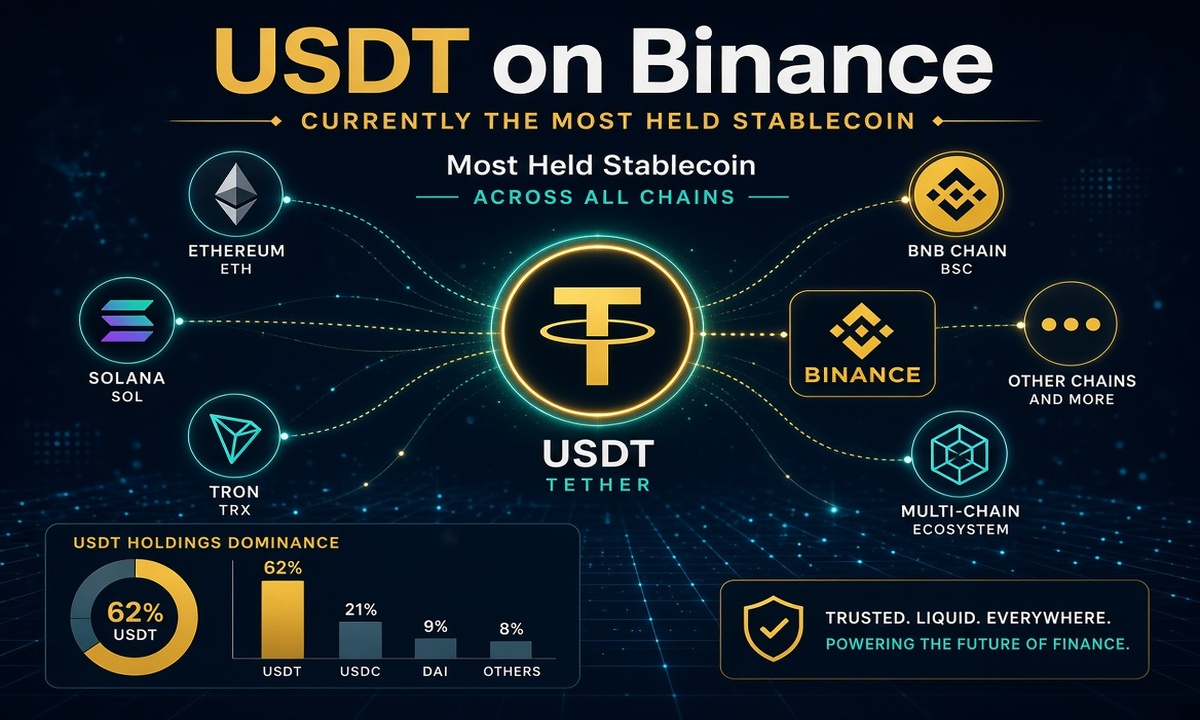
Messari just highlighted a quiet but important shift regarding the stablecoin, USDT on Binance.
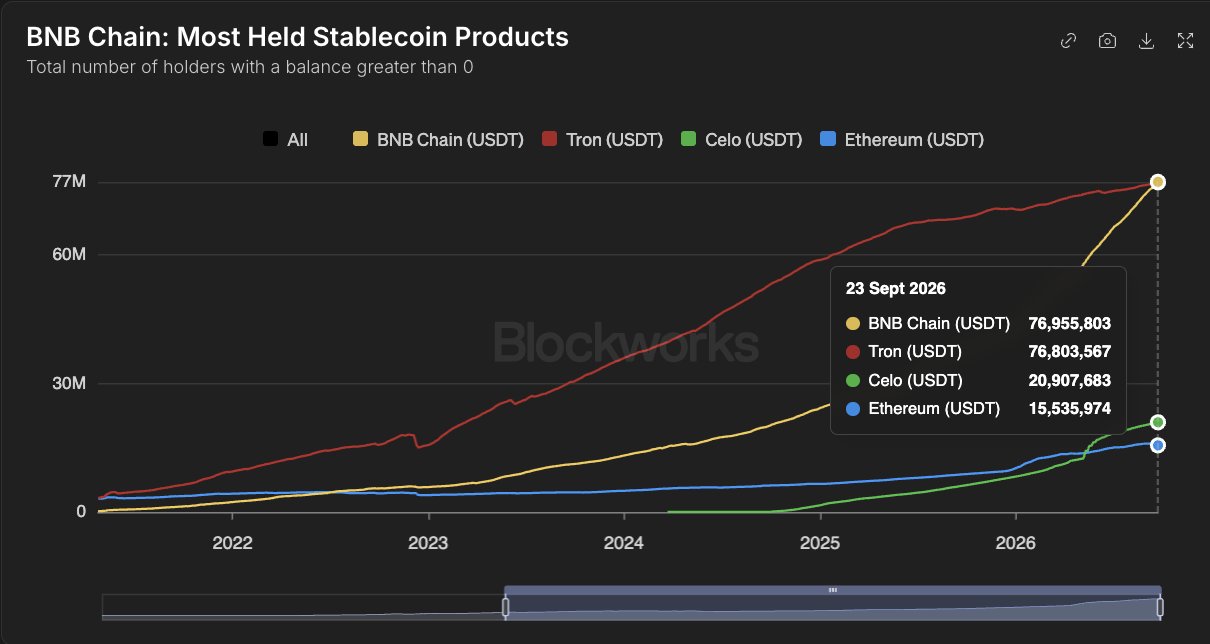
Tether (USDT) sitting on BNB Chain—the network closely tied to Binance—now ranks as the single most-held stablecoin across every major chain.
The claim focuses on the number of holders rather than total supply, and it marks a notable change in how everyday users keep their dollars on-chain.
Why Does USDT On Binance Lead in Holder Count Right Now?
BNB Chain has quietly built a massive base of small and medium wallets that prefer low fees and fast settlement.
Over the past six months, those USDT-holding addresses climbed sharply while Tron’s holder count stayed almost flat.
In the same period, everyday traders and remittance users moved more activity onto the cheaper network.
What’s more, the zero-fee or near-zero-fee environment on BNB Chain encourages people to leave smaller balances sitting rather than bridging them away.

How Does This Compare With Total USDT Supply Across Chains?
TRON still carries the largest dollar amount of USDT by a wide margin, followed by Ethereum. BNB Chain ranks lower in pure supply size.
Yet, the holder ranking tells a different story. Many wallets on BNB Chain hold modest sums, creating a broader distribution of ownership.
At the same time, the network processes a high share of global stablecoin transfer counts even though average transfer sizes stay smaller.
Looking closer, this pattern shows USDT on Binance-related rails serving day-to-day payments and trading more than large institutional custody.
What Does Broader Ownership of USDT On Binance Mean for Users?
Wider holder distribution usually signals deeper retail adoption.
People in regions that rely on USDT for savings or cross-border payments can keep balances ready without paying high gas.
In parallel, the same wallets feed local decentralised finance (DeFi) lending pools and DEX pairs, keeping liquidity circulating inside the ecosystem.
Beyond that, concentration risk shifts: more individual addresses now depend on BNB Chain’s security and uptime for their stablecoin exposure.
Stakeholders must watch whether this holder lead continues to grow or whether large balances eventually migrate back to higher-supply chains.
As of Friday, September 25, 2026, the data shows USDT on Binance-linked network sitting in more hands than any other single stablecoin deployment.
