

BNB delivered a sharp recovery in August 2026 thanks to the bullish patterns of Bitcoin (BTC) and other digital assets.
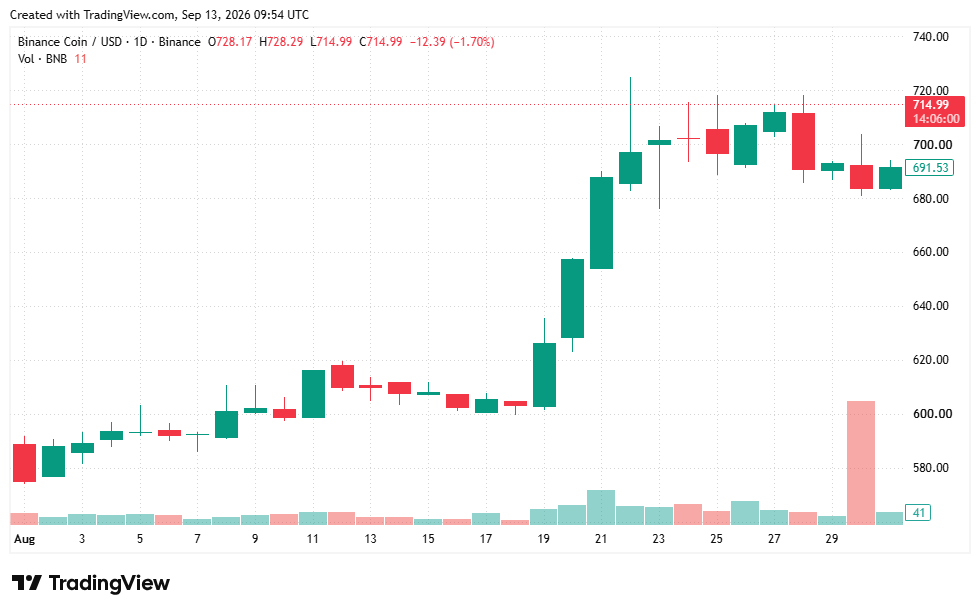
The token climbed roughly 18 percent in a strong late-month stretch, advancing from mid-August levels near $590 toward peaks above $700 and briefly testing the mid-$710s.
Market capitalisation moved back toward the $94 billion area while broader crypto sentiment improved.
Like all investments, many investors are still processing the speed of that price movement.
Meanwhile, the rally arrived alongside stronger activity across the BNB Chain ecosystem and continued progress on the long-running burn program.
Furthermore, the token remains well below its previous all-time high near $1,370, leaving room for debate about the next phase.
In addition, practical questions about utility, scarcity, ownership and risk have intensified.
Beyond pure price charts, the conversation now centres on whether BNB’s multi-utility role and deflationary design can sustain further gains.
What Is BNB and What Is It Actually Used For?
BNB began life as a simple fee-discount token on the Binance exchange. Over time, it evolved into the native gas and utility asset powering an entire multi-chain ecosystem.
Today, users spend BNB for transaction fees on BNB Smart Chain, stake it for network security and governance, and deploy it across Launchpad and Launchpool events.
Beyond exchange benefits, BNB underpins decentralised finance (DeFi) collateral, payments and participation in newer layers such as opBNB and Greenfield storage.
Specifically, the token now functions as the economic backbone for a high-throughput environment that processes millions of daily transactions and hosts growing real-world asset (RWA) and stablecoin activity.
Interestingly, ecosystem metrics show tens of millions of monthly active users and substantial peer-to-peer (P2P) stablecoin volume, giving the token tangible demand beyond pure speculation.
At the same time, BNB continues to offer trading-fee discounts and exclusive product access on Binance itself.
The dual role—exchange utility plus native chain gas—creates a feedback loop: more chain activity burns more BNB while exchange volume reinforces holding incentives.
Official documentation and independent analyses consistently describe this evolution from pure exchange token to multi-utility ecosystem asset.
How Does the BNB Burn Mechanism Work (and Does It Really Drive the Price)?
BNB employs two primary burn channels that work together toward a long-term target of 100 million tokens.
The quarterly Auto-Burn calculates the amount destroyed each quarter using a transparent formula based on average BNB price and the number of blocks produced on BNB Smart Chain.
Lower prices generally produce larger burns while higher prices moderate the quantity.
In addition, the Binance Smart Chain Evolution Proposal (BEP)-95 mechanism burns a fixed portion of gas fees in real time with every block.
Recent quarterly events have removed more than 1.6 million BNB in single operations. The 36th quarterly burn which occurred in July 2026 eliminated roughly $932 million worth of tokens and brought circulating supply near 133 million.
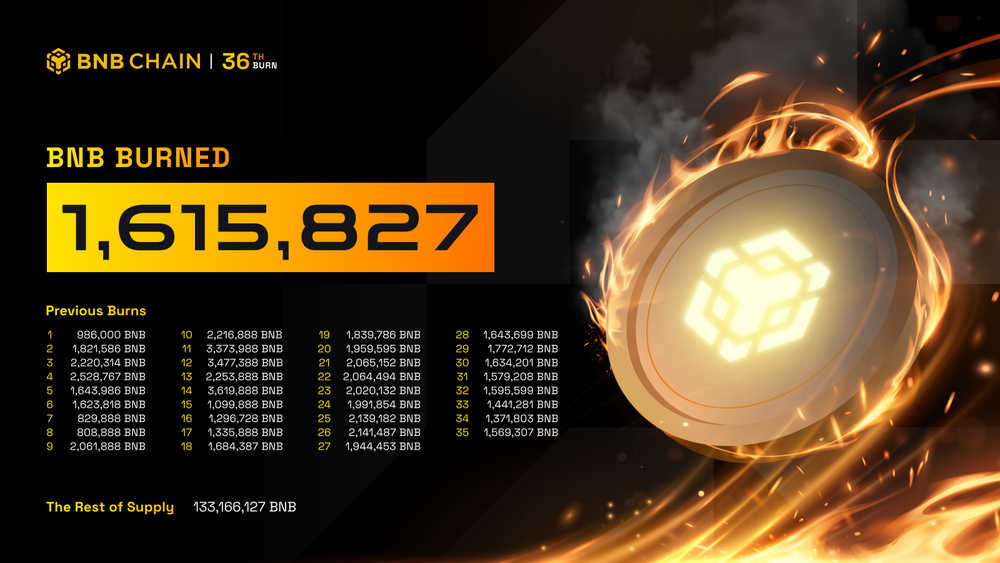
Moreover, the process now executes directly on-chain after the Chain Fusion upgrades, improving transparency.
Does the burn reliably support price? Scarcity increases over time and reduces available supply. Yet, price still responds first to broader market demand, ecosystem growth and macro conditions.
Nevertheless, consistent burns create a structural tailwind that many holders value, especially during periods of rising network usage.
Trackers and official burn reports allow anyone to verify the ongoing reduction.
How (and Where) Can I Buy, Store, and Stake BNB Safely?
Most users acquire BNB on Binance itself or other major centralised exchanges that list the token.
Decentralised options also exist on BNB Smart Chain DEXs.
Crucially, buyers must select the correct network—BEP-20 on BNB Smart Chain is the standard for most current use cases.
Storage options include Trust Wallet, MetaMask configured for BNB Chain, or hardware wallets for larger holdings.
Gas fees on BNB Smart Chain remain low compared with many alternatives. Yet, users still need a small amount of BNB to pay those fees.
For staking, participants can delegate to native validators on the chain or use simpler products such as Binance Simple Earn and Launchpool campaigns.
Common pitfalls include sending tokens on the wrong network or overlooking the need for BNB gas.
Double-checking addresses and starting with small test transfers remains essential. Official wallet guides and exchange help centres provide step-by-step instructions that reduce these risks.
Is Binance Coin a Safe / Good Investment? What Are the Biggest Risks?
BNB offers clear utility, deep liquidity and a working deflationary model.
The ecosystem continues to expand across DeFi, real-world assets and high-volume stablecoin activity, while burns steadily reduce supply.
These factors attract long-term holders who value tangible demand.
Yet, material risks remain. Binance’s central role creates concentration and regulatory exposure that other pure layer-1 tokens largely avoid.
Ownership remains relatively concentrated, competition from Ethereum layer-2 networks and Solana stays intense, and past legal developments around the exchange still influence sentiment.
Volatility also cuts both ways—sharp rallies can reverse quickly.
Balanced assessment therefore weighs ecosystem strength and burns against centralisation and regulatory overhang.
Investors who accept those trade-offs often treat BNB as a core holding; others prefer more decentralised alternatives.
Independent risk reviews and on-chain ownership data help clarify the picture.
What Is the Binance Coin Price Prediction / Outlook for 2026 and Beyond?
After the August advance, short-term technical targets focused on reclaiming and holding levels above $700–$725.
A sustained break higher could open the path toward $780–$900 in optimistic scenarios for the remainder of 2026, while failure risks a return toward the mid-$600s.
Longer-term forecasts diverge widely. Some models project year-end 2026 averages near current levels with upside toward $800–$1,000 under continued ecosystem growth.
Looking further, 2030 estimates range from roughly $1,000 in conservative cases to several thousand dollars in more bullish narratives that assume sustained chain adoption, ongoing burns and broader crypto expansion.
Catalysts frequently cited include further infrastructure upgrades, rising real-world asset activity and potential institutional products.
Nevertheless, all forecasts remain speculative. Network usage, burn pace, competitive dynamics and macro conditions will ultimately determine outcomes.
Multiple independent forecasting platforms publish regularly updated ranges that investors can cross-reference.
BNB’s August 2026 performance highlighted both the strength of its utility narrative and the questions that still surround any major exchange-linked token.
The combination of active burns, expanding chain usage and deep liquidity continues to differentiate it, yet regulatory and concentration risks require ongoing attention.
Stakeholders of Chanpeng Zhao’s innovative crypto project must track official burn data, ecosystem metrics and on-chain activity.
That way, they will stay best positioned to evaluate the next chapter of this vibrant cryptocurrency, and its underlying infrastructure.
