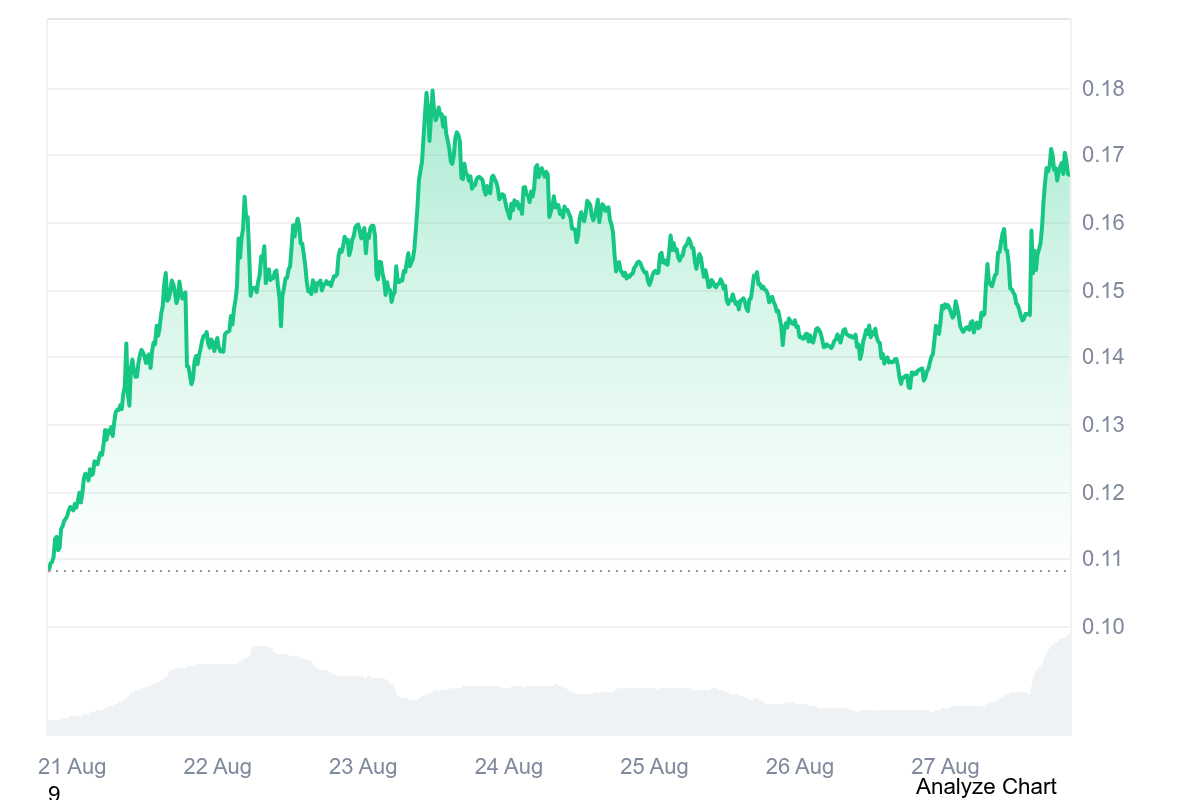

Ethena (ENA) climbed sharply in the final days of August 2026, posting gains that pushed the token roughly 23 percent higher in a single session and nearly doubled its value across a little more than a week.
The move coincided with a broader crypto rally, yet the decisive catalyst arrived on August 27 when the Ethena Foundation published four coordinated updates.
Those announcements directly tackled long-standing concerns about investor unlock pressure and the allocation of protocol value.
This article unpacks the surge and the core questions surrounding Ethena in clear, practical language.
What is Ethena (ENA) and how does it work?
Ethena operates as a decentralised protocol on Ethereum that issues a synthetic dollar called USDe.
The system maintains dollar-like stability through a delta-neutral strategy: it holds spot crypto assets such as ETH or staked ETH while simultaneously opening short perpetual futures positions of matching notional size.
Price movements in the spot holdings are offset by gains or losses in the futures hedge, keeping the combined value close to one dollar.
Users mint USDe by depositing approved collateral; the protocol then executes the corresponding hedge.
This design aims to create a crypto-native stable asset that does not rely on traditional bank reserves.
What is USDe and how does it maintain its peg?
USDe functions as Ethena’s synthetic dollar. Unlike USDC or USDT, which depend on fiat reserves held by centralised issuers in the form of Circle and Tether, USDe draws stability from the continuous delta-hedge described above.
Spot collateral moves in one direction while the short futures position moves in the opposite direction, so the net value stays near the dollar target under normal market conditions.
The protocol also maintains a reserve fund that can absorb temporary shortfalls.
Historical periods of stress have tested the mechanism, and the design continues to evolve with additional custodial and hedging partners.
What is sUSDe and where does the yield come from?
When users stake USDe they receive sUSDe, a liquid receipt token that accrues the protocol’s yield.
The primary sources of that yield are the funding rates paid by long positions in the perpetual futures markets and the staking rewards generated by the underlying collateral such as stETH.
Rewards flow into the staking contract as additional USDe, so the value of each sUSDe unit rises over time without requiring further action from the holder.
Periods of negative funding are typically absorbed by the reserve fund rather than passed through as losses.
What is the ENA token used for?
ENA serves as the governance token of the Ethena ecosystem. Holders vote on protocol parameters, risk frameworks, and major upgrades.
In late August 2026, the token also became the central focus of a new value-accrual proposal that would channel protocol revenue into market buybacks.
This dual role—governance plus potential economic participation—has drawn renewed attention as the Foundation works to align incentives more tightly with token holders.
What are the latest Ethena Foundation updates (August 27, 2026)?
On August 27, the Ethena Foundation announced four linked actions. First and foremost, it completed OTC purchases of all remaining locked tokens from certain major seed investors who had sold ENA during the prior nine months.
Secondly, the Foundation and lead investors agreed to accelerate the remaining original investor unlocks into a single release beginning October 5, eliminating the monthly overhang calendar. Team tokens continue under their existing schedules, leaving roughly 12 percent of supply still locked.
Moreover, the Foundation and Ethena Labs reached an agreement in principle on a Master Framework that assigns intellectual property and protocol value exclusively to the Foundation rather than to Labs equity holders.
Lastly, a governance vote opened on the fee-switch proposal described below.
What is the ENA fee switch / buyback proposal?
The proposal directs 95% of net revenue generated by Ethena-branded businesses toward programmatic open-market purchases of ENA once USDe circulating supply reaches $7.5 billion. The remaining 5% would support growth initiatives.
Buyback intensity would scale further at higher USDe supply thresholds. At the time of the announcement, USDe supply stood near $4.6 billion, so the mechanism remains contingent on future growth. The vote is live on Snapshot following Risk Committee approval.
What is the current ENA tokenomics and unlock schedule?
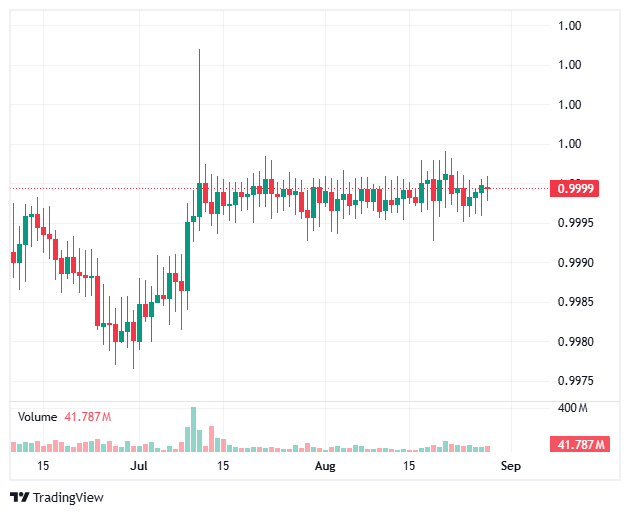
ENA carries a fixed maximum supply of 15 billion tokens. Following the August 27 transactions, the monthly investor unlock schedule ends with a one-time release on October 5.
After that date, no original investor tokens remain subject to lock-up. Team, ecosystem, and Foundation holdings continue under their original vesting timelines and account for the residual locked portion of roughly 12 percent.
Circulating supply figures continue to update as the market digests these changes.
Is USDe safe? What are the main risks of the delta-neutral model?
USDe’s design removes reliance on traditional banking rails, yet it introduces its own set of risks.
Counterparty exposure to the centralised exchanges that host the perpetual futures hedges ranks among the most discussed.
Funding rates can turn negative for extended periods, pressuring the yield and, in extreme cases, the reserve fund.
Smart-contract risk and operational complexity around custody and hedging also remain relevant.
The protocol has survived prior market stress, and ongoing diversification of custodians and hedging venues aims to reduce concentration.
Users should weigh these factors against the transparency of on-chain collateral and hedge positions.
How do I mint, redeem, or stake USDe / sUSDe?
Whitelisted addresses that complete Know Your Client (KYC) / Anti-Money Laundering (AML) checks can mint USDe by depositing approved collateral through the Ethena interface; the protocol simultaneously opens the matching short hedge. Redemption reverses the process.
Staking USDe for sUSDe occurs on the same platform and currently includes a cool down period before unstaked USDe becomes withdrawable.
USDe is also available on additional chains via bridging. Practical guides emphasise verifying contract addresses and starting with small amounts.
Is Ethena (ENA) Still A Good Investment?
Yes, Ethena is among the cryptocurrencies you can consider adding to your investment portfolio due to its relatively smaller price.
The August 27 updates remove a visible source of monthly sell pressure and create a clearer pathway for protocol revenue to support ENA demand once USDe supply expands.
At the same time, the token remains sensitive to broader market sentiment, the pace of USDe growth, and the ultimate outcome of the fee-switch vote.
Readers typically examine position size, time horizon, and personal risk tolerance rather than short-term percentage moves alone.
The late-August surge in ENA therefore reflects more than simple momentum. The Foundation’s coordinated actions address two persistent concerns—unlock overhang and value accrual—while the underlying synthetic-dollar engine continues to operate.
Understanding the mechanics of USDe, the yield path of sUSDe, the revised tokenomics, and the new buyback proposal gives readers a fuller picture of both the opportunity and the remaining uncertainties.
Primary sources from the Ethena Foundation, on-chain data, and independent analyses remain the most reliable anchors for ongoing evaluation.
Like all investments within the decentralised finance world. investing in Ethena comes with risks. As always, invest in ENA an amount of money you can consider as bad risks due to the highly volatile nature of the crypto world.