

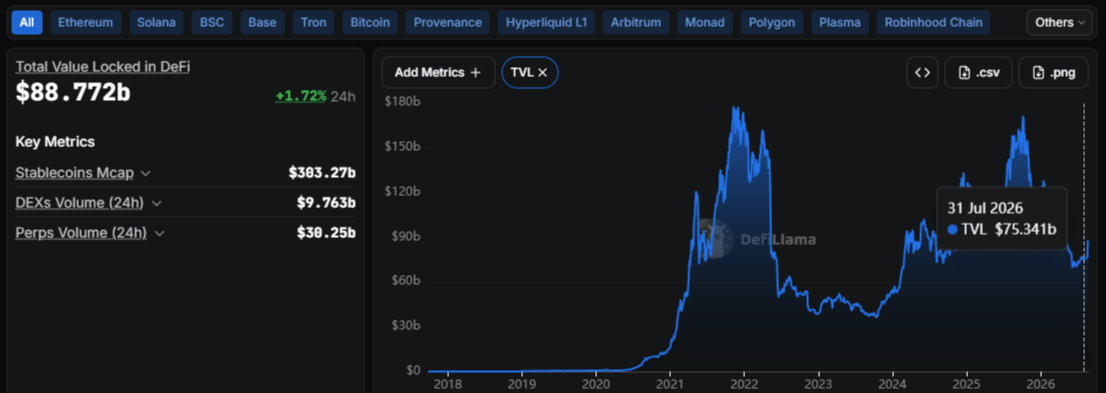
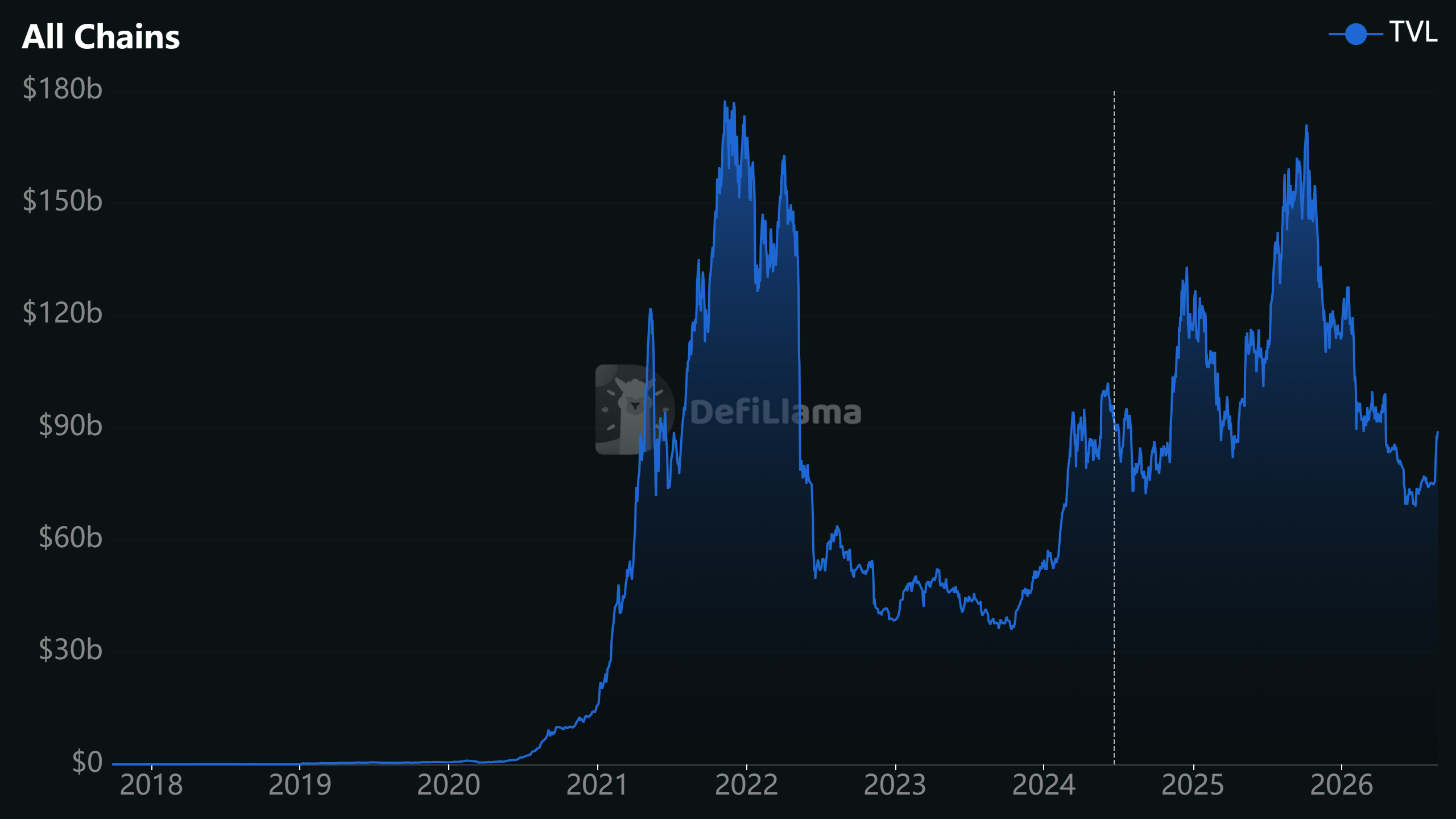
Total DeFi TVL has staged a notable recovery over the past month. From roughly $75 billion on July 31, 2026, the figure has climbed to about $88 billion. That represents a gain of more than $13 billion in just a few weeks.
The rebound follows months of gradual decline earlier in the year and has sparked fresh questions about what is driving the increase and whether it signals genuine strength in decentralised finance (DeFi).
What is Total DeFi TVL right now?
Total DeFi TVL currently sits near $88 billion according to recent aggregator data. The number has moved higher in tandem with the broader crypto market recovery that accelerated in August.
Furthermore, daily and weekly fluctuations remain common. Meanwhile, different tracking platforms sometimes report slightly varying totals depending on their inclusion rules and update timing.
What does TVL mean in DeFi?
TVL stands for Total Value Locked. It measures the combined dollar value of crypto assets currently deposited into DeFi smart contracts.
In addition, those assets can include tokens supplied to lending markets, liquidity provided to decentralised exchanges (DEXs), collateral locked in borrowing protocols, or funds placed in yield strategies.
The metric offers a snapshot of how much capital users have chosen to commit to on-chain financial applications at any given moment.
How is Total Value Locked calculated?
Trackers sum the quantity of every asset held in a protocol’s smart contracts and multiply each by its current market price in USD.
Moreover, reputable aggregators apply filters to reduce double-counting and exclude certain non-circulating or non-DeFi balances.
The final number updates continuously as prices change and as users deposit or withdraw funds.
Which blockchain has the highest DeFi TVL?
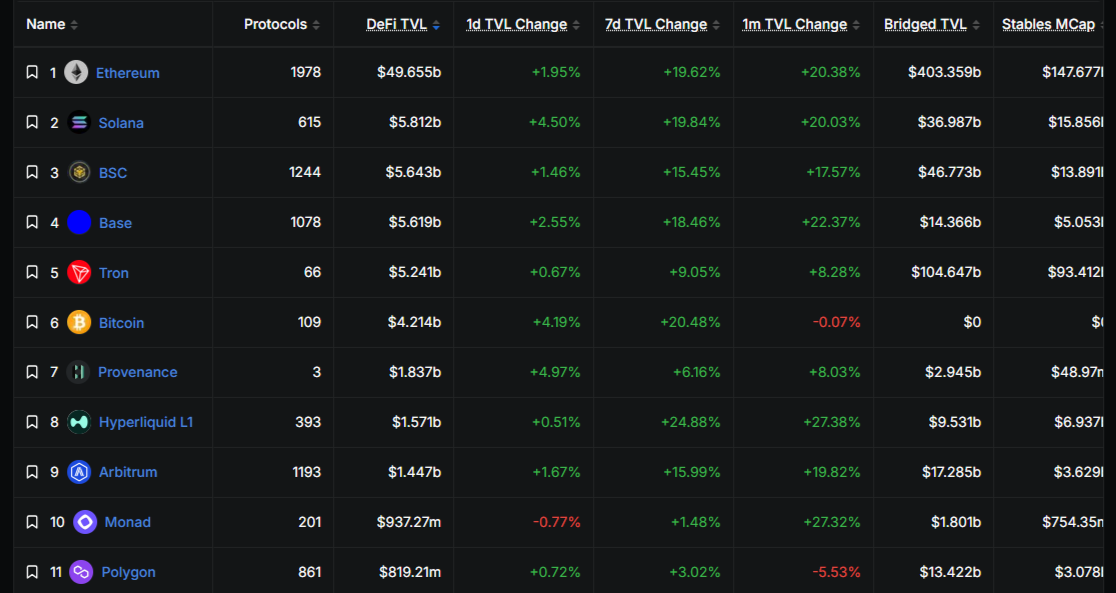
Ethereum continues to hold the largest share of Total DeFi TVL by a wide margin. It typically accounts for more than half of the overall figure.
Likewise, other networks such as Solana, BNB Chain, Tron, and Base follow at a distance.
Ethereum’s lead reflects its long history of protocol development, deep liquidity, and institutional familiarity.
What is the all-time high for DeFi TVL?
The previous cycle peak for Total DeFi TVL reached approximately $177–$180 billion in late 2021.
Meanwhile, the current recovery still sits well below that high-water mark. The gap illustrates how far the sector retreated during the subsequent bear market and the more recent 2026 drawdown.
Why does DeFi TVL go up or down?
Two main forces move the number. Asset prices can rise or fall, automatically changing the dollar value of existing deposits. Users can also deposit new capital or withdraw funds already locked.
Importantly, the recent $13 billion increase appears driven more by rising crypto prices than by a large wave of fresh deposits.
Stablecoin supply, a useful proxy for new capital entering the system, remained relatively stable during the same period.
Is DeFi TVL a good measure of the health of DeFi?
TVL provides a useful high-level view of capital commitment, yet it has clear limitations. Price movements can inflate or deflate the figure without any change in user behaviour.
Furthermore, incentives and temporary farming campaigns can temporarily boost the number.
Experienced observers therefore pair TVL with additional metrics such as active users, fee generation, and real borrowing demand for a fuller picture.
Which protocols have the highest TVL?
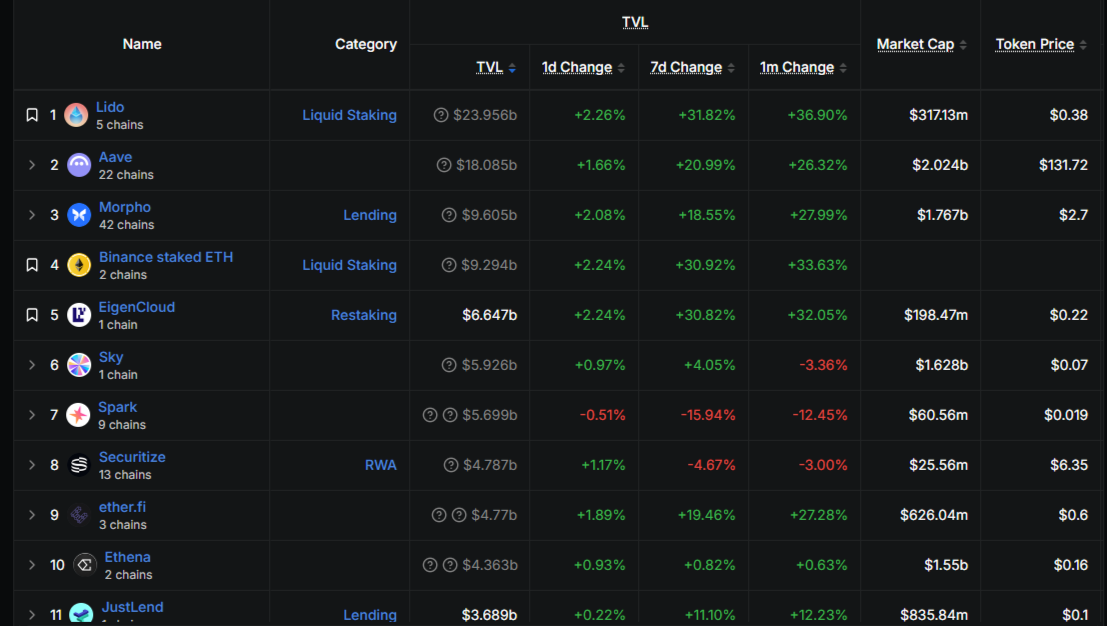
Liquid staking and lending protocols currently dominate the rankings. Lido and Aave frequently appear near the top, followed by other major lending, restaking, and stablecoin-related platforms.
In addition, the concentration of capital in a relatively small group of established protocols remains a defining feature of the current landscape.
How much of DeFi TVL is on Ethereum?
Ethereum typically holds more than 50 percent of Total DeFi TVL. Recent snapshots have shown shares in the mid-to-high 50 percent range.
Simultaneously, the remaining portion is distributed across a growing number of alternative Layer 1 and Layer 2 networks.
Ethereum’s dominance has proven durable even as activity has expanded elsewhere.
What is the difference between TVL and market cap in DeFi?
Market cap measures the total value of a token’s circulating supply at current prices. TVL measures the value of assets actually deposited into protocols.
Moreover, a protocol can have a modest token market cap while locking substantial value, or the reverse.
The two metrics answer different questions and should not be treated as interchangeable.
Does rising TVL mean more people are using DeFi?
Not necessarily. A rising TVL can reflect higher asset prices rather than an increase in the number of active users or new deposits.
Likewise, the recent rebound coincided with a strong recovery in Bitcoin and major altcoins.
On-chain activity metrics and stablecoin flows offer additional clues about whether genuine usage is expanding alongside the dollar value locked.

How accurate is DeFiLlama’s TVL data?
DeFiLlama remains the most widely referenced source for Total DeFi TVL. The platform applies transparent methodology, updates frequently, and covers thousands of protocols across hundreds of chains.
Furthermore, no tracker is perfect. Differences in inclusion rules, oracle pricing, and the treatment of certain assets can produce small variations between sources.
Most market participants treat DeFiLlama figures as the industry standard while remaining aware of these nuances.
The more than $13 billion rise in Total DeFi TVL over the past month marks a clear shift from the earlier 2026 downtrend.
Price appreciation across major crypto assets has played the primary role, lifting the dollar value of existing deposits.
Whether the recovery evolves into sustained new capital inflows will depend on continued market stability, improving risk appetite, and the ability of protocols to attract long-term liquidity.
For now, the rebound has restored some of the sector’s lost ground and reopened the conversation about DeFi’s trajectory through the remainder of 2026.
