


Institutional investors approach digital assets with strict requirements for liquidity, custody, regulatory clarity, and operational reliability.
Market infrastructure has matured significantly by 2026, creating clearer pathways for professional capital.
This article examines the digital assets that currently align best with institutional standards and answers the questions decision-makers ask most frequently.
What Makes A Digital Asset Suitable For Institutional Investors?
Institutions prioritise assets that offer deep liquidity, regulated access vehicles, transparent custody arrangements, and clear legal treatment.
Moreover, they favour instruments that integrate smoothly with existing portfolio management, reporting, and risk systems.
In addition, proven operational resilience and reputable service providers reduce operational friction.
Consequently, assets backed by established market infrastructure attract the majority of professional allocations.
Therefore, suitability depends far more on accessibility and compliance than on pure technological novelty.

Which Digital Assets Currently Offer the Strongest Institutional Access?
Bitcoin and Ethereum lead in institutional accessibility through multiple spot ETFs and mature custody solutions.
Furthermore, regulated tokenised treasury products and major stablecoins provide additional on-chain options with improving compliance frameworks.
In addition, select high-performance networks and infrastructure tokens are beginning to attract exploratory allocations.
As a result, the investable universe for institutions has expanded beyond the two largest assets while remaining relatively concentrated.
Ultimately, access quality continues to determine allocation scale more than narrative strength alone.
How Important Are ETFs For Institutional Adoption of Digital Assets?
Spot ETFs have transformed institutional participation by offering familiar, regulated wrappers that eliminate many operational complexities.
Moreover, these products enable allocations through traditional brokerage and custody channels without requiring direct blockchain interaction.
In addition, transparent pricing, robust market-making, and standardized reporting increase comfort among risk and compliance teams.
Consequently, ETF availability has become one of the strongest catalysts for mainstream institutional inflows.
Therefore, assets with live or pending ETF coverage generally receive priority consideration in professional portfolios.

What Role Do Real-World Assets (RWA) Play for Institutional Investors?
Tokenised real-world assets, particularly short-duration government securities and money-market instruments, offer institutions yield-bearing on-chain exposure with relatively familiar risk profiles.
Furthermore, these products combine traditional credit quality with blockchain settlement efficiency and transparency.
In addition, regulated issuers and third-party custodians help address operational and legal concerns.
As a result, RWA products are emerging as a practical bridge for treasury management and cash-equivalent allocations.
Ultimately, successful RWA adoption depends on sustained regulatory alignment and scalable operational infrastructure.
How Do Compliance And Regulation Influence Institutional Choices?
Regulatory clarity remains a decisive factor in institutional decision-making.
Moreover, assets and platforms that operate under established licensing regimes, provide robust Know Your Customer (KYC) / Anti Money Laundering (AML) processes, and maintain transparent reserve or custody practices reduce perceived legal risk.
In addition, jurisdictions offering clearer digital asset frameworks attract more professional capital.
Consequently, compliance readiness often outweighs pure performance characteristics during allocation decisions.
Therefore, institutions consistently favor assets and service providers that demonstrate strong regulatory engagement.
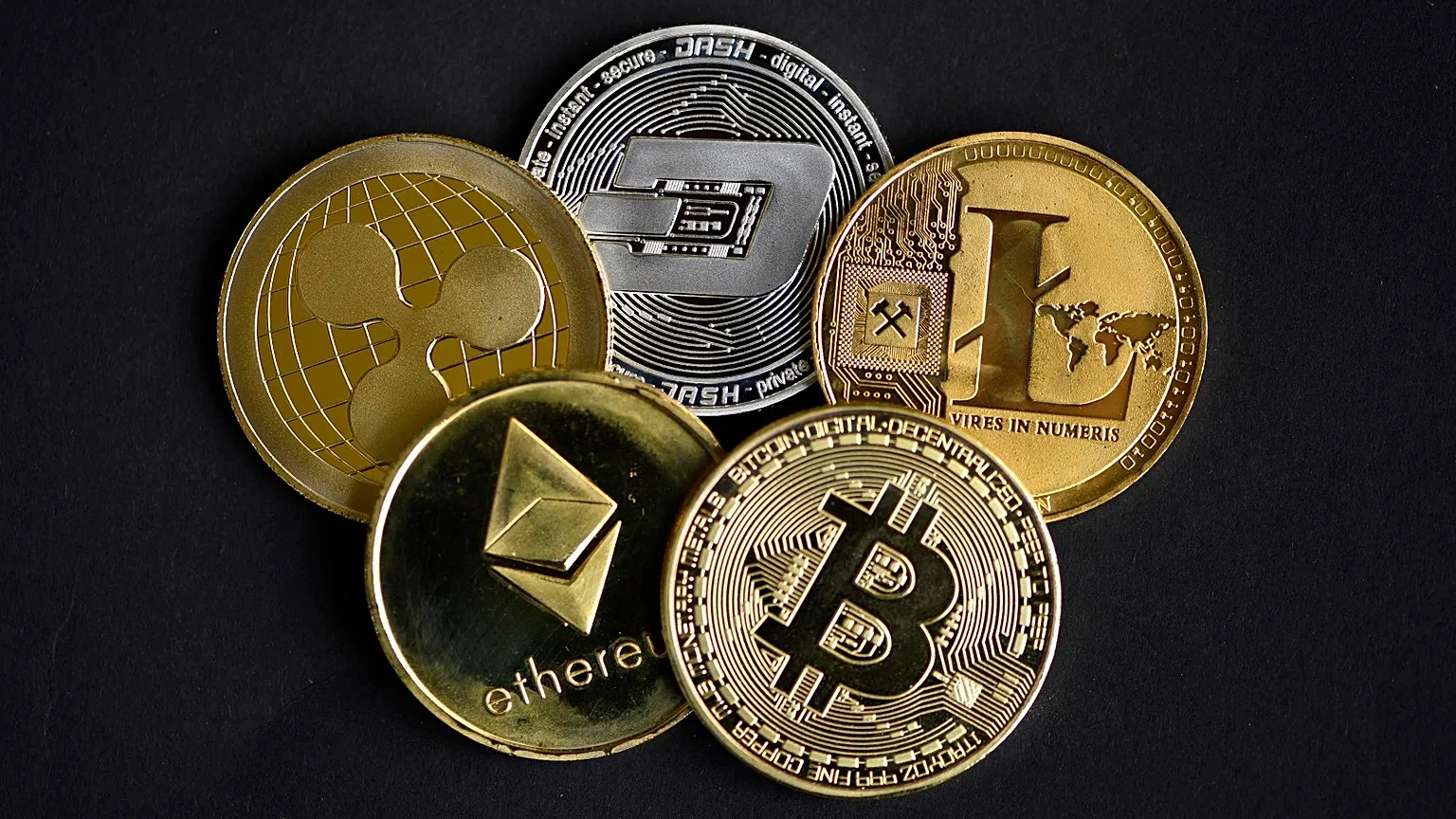
Why Does Bitcoin Continue To Dominate Institutional Portfolios?
Bitcoin benefits from the deepest liquidity, the longest track record, and the broadest set of regulated investment vehicles.
Furthermore, its narrative as a non-sovereign store of value resonates with many institutional mandates focused on diversification and monetary hedge characteristics.
In addition, extensive custody options and ETF availability simplify operational implementation.
As a result, Bitcoin typically receives the largest institutional weight among digital assets. Ultimately, its combination of scale and accessibility keeps it at the center of most professional strategies.
How Does Ethereum Fit Into Institutional Digital Asset Strategies?
Ethereum attracts institutions seeking exposure to smart-contract infrastructure, decentralised finance (DeFi), and the growing tokenised asset ecosystem.
Moreover, the launch of spot Ethereum ETFs has significantly improved accessibility.
In addition, staking capabilities and its role as a settlement layer for many RWA and DeFi applications add fundamental relevance.
Consequently, Ethereum frequently serves as the second core holding after Bitcoin in diversified institutional portfolios.
Therefore, it provides complementary exposure to programmable blockchain utility.

What Other Digital Assets Are Gaining Institutional Attention?
Solana draws interest for its high throughput and expanding application ecosystem, particularly as infrastructure and potential ETF pathways develop.
Meanwhile, regulated stablecoins such as USDC serve as critical settlement and cash-management tools.
In addition, oracle and data infrastructure tokens support the broader tokenized economy.
Furthermore, certain payment-focused and exchange-related assets receive selective allocations where regulatory clarity and utility align.
As a result, the secondary institutional universe continues to broaden gradually beyond the two largest networks.
What Risks Do Institutional Investors Prioritise When Evaluating Digital Assets?
Institutions focus on custody risk, regulatory uncertainty, liquidity gaps during stress periods, operational complexity, and valuation volatility.
Moreover, they closely examine counterparty exposure, smart-contract risk in on-chain products, and potential changes in tax or accounting treatment.
In addition, concentration risk and benchmark suitability receive careful scrutiny. Consequently, robust due diligence processes and conservative position sizing remain standard practice.
Therefore, risk management frameworks often determine final allocation sizes more than return expectations alone.

How Should Institutions Approach Portfolio Construction With Digital Assets In 2026?
Most institutional strategies begin with core allocations to Bitcoin and Ethereum through regulated vehicles, then add selective exposure to RWA products and high-conviction infrastructure assets.
Moreover, clear mandate alignment, liquidity requirements, and risk limits guide every decision.
In addition, ongoing monitoring of regulatory developments and market infrastructure improvements remains essential.
As a result, disciplined, policy-driven approaches tend to outperform opportunistic trading strategies over multi-year horizons.
Ultimately, successful institutional participation depends on treating digital assets as a distinct but integrable component of broader portfolio construction.
Digital assets suitable for institutional investors in 2026 share common traits: regulated access, deep liquidity, transparent operations, and credible compliance frameworks.
Bitcoin and Ethereum currently anchor most professional allocations, while tokenized real-world assets and select infrastructure tokens expand the opportunity set.
Institutions that prioritise operational robustness and regulatory alignment alongside return potential position themselves more effectively in this evolving market.
Continuous evaluation of infrastructure maturity and policy developments remains critical for sustained participation.
