

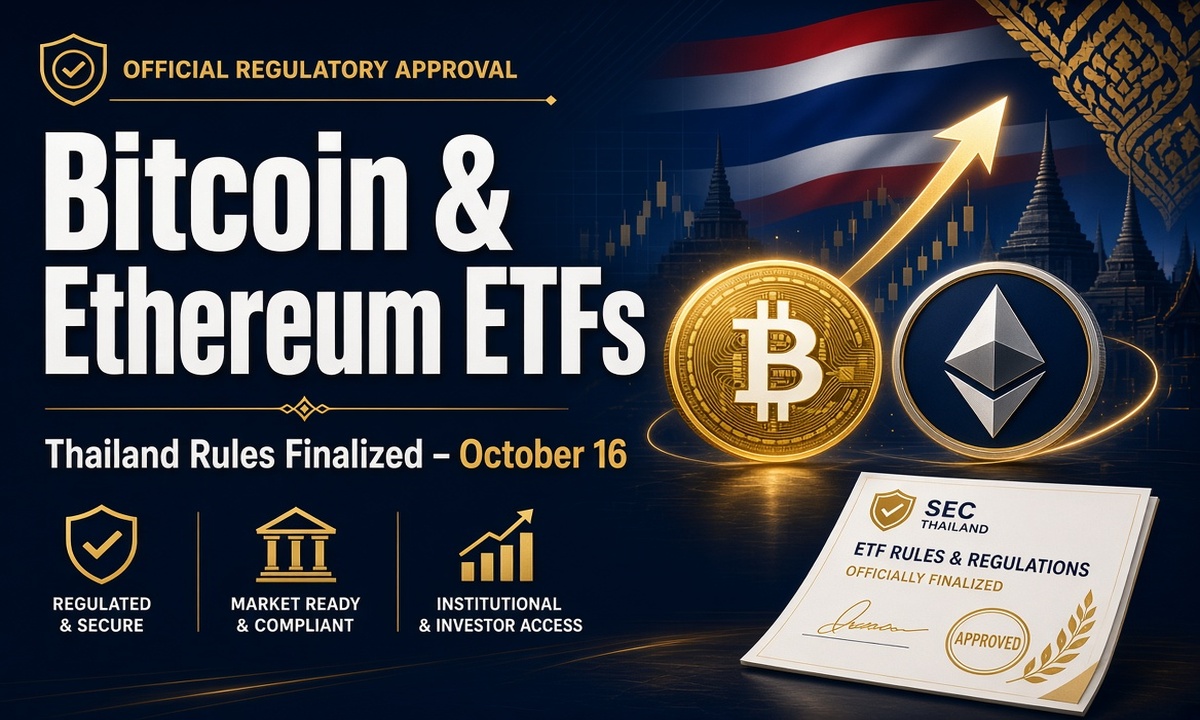
Thailand’s Securities and Exchange Commission (SEC) has finalized 11 regulations for Bitcoin and Ethereum exchange-traded funds (ETFs).
The rules take effect on Friday, October 16, 2026, allowing local funds to list on the Stock Exchange of Thailand (SET).
The SEC announced the framework on Thursday, October 8 after months of consultations. The new rules will let Thai investors buy fund shares linked to Bitcoin or Ethereum without holding the cryptocurrencies themselves.
Each ETF must follow the price of one cryptocurrency. The SEC requires each fund to maintain average net exposure of at least 80% of its net asset value to that cryptocurrency during each accounting year.
For now, Bitcoin and Ethereum are the only eligible assets. The SEC will consider liquidity, market acceptance, blockchain security and investor protection before allowing other cryptocurrencies.
Asset management companies must show they have qualified staff, adequate operating systems and suitable service-provider arrangements. Each fund must use a digital asset custodian licensed and supervised in Thailand.
Fund managers may outsource investment management to companies with the required digital asset fund management licences. Qualified digital asset businesses may also apply to supervise crypto ETFs under Section 121 of Thailand’s Securities and Exchange Act.
Applicants must demonstrate adequate financial resources, qualified personnel and suitable operating systems. Supervisors may appoint sub-custodians, but licensed custodians must handle digital asset custody. The SEC may allow qualified foreign custodians in the future.

Thailand Limits Access to Foreign Crypto ETFs
Thai securities companies cannot facilitate foreign crypto ETF investments for clients outside the institutional and ultra-high-net-worth investor categories. The SEC will also prohibit the initial issuance and offering of products linked to foreign crypto ETFs, including depositary receipts.
However, Thai mutual funds and private funds may invest in domestic crypto ETFs. They must follow the investment limits that already apply to their portfolios.
Before retail customers buy crypto ETFs, brokers must explain each product’s features and risks. Customers must then confirm that they understand those risks.
Securities companies must advise customers on asset allocation and suitable investments. They must also warn customers against excessive exposure to digital assets.
The SEC prohibits securities companies from providing margin loans for crypto ETF purchases. Fund issuers must disclose their investment structures, service providers and custody arrangements.
Thailand Takes Further Steps on Crypto Rules
Thailand’s new ETF rules follow several steps by the securities regulator to expand access to crypto investments. In January, deputy SEC secretary-general Jomkwan Kongsakul said the regulator planned to complete the ETF rules in 2026.
In February, Thailand expanded its rules for crypto derivatives. The changes allowed digital assets such as Bitcoin to serve as the basis for regulated futures and options contracts.
The SEC took another step in August when it proposed rules for retail investors buying certain foreign crypto derivatives through licensed intermediaries. The proposal set conditions for eligible products and clearing arrangements. Public consultation ended on September 30.
