

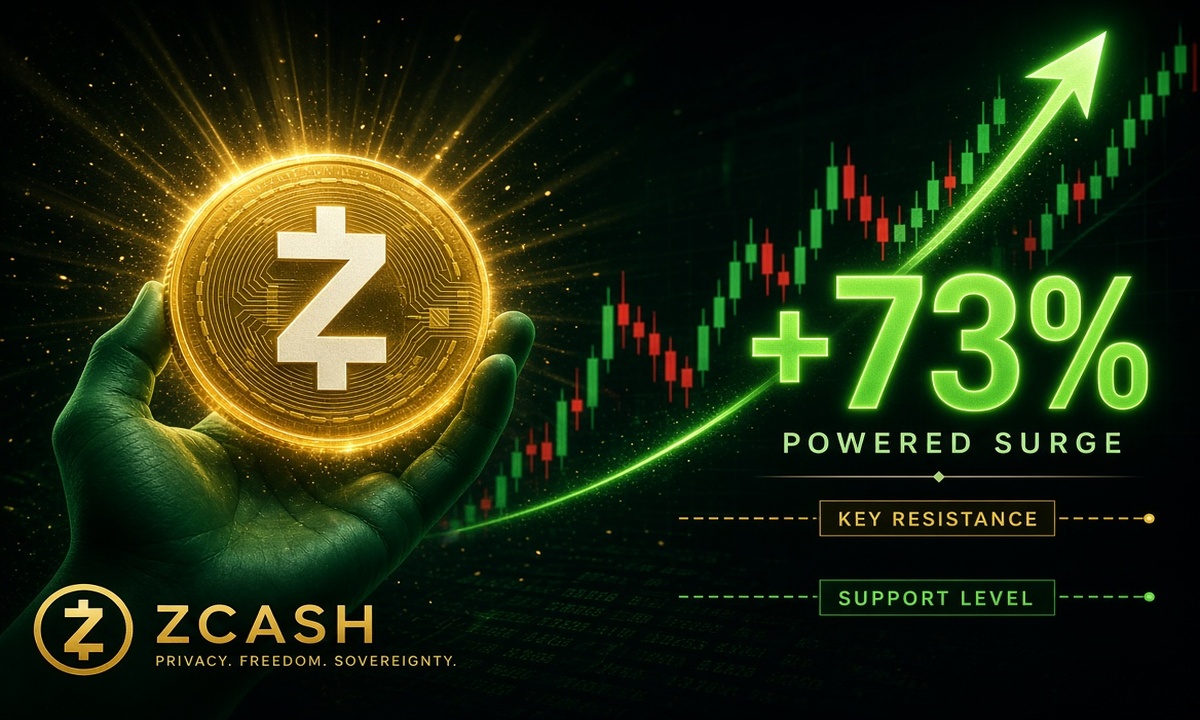
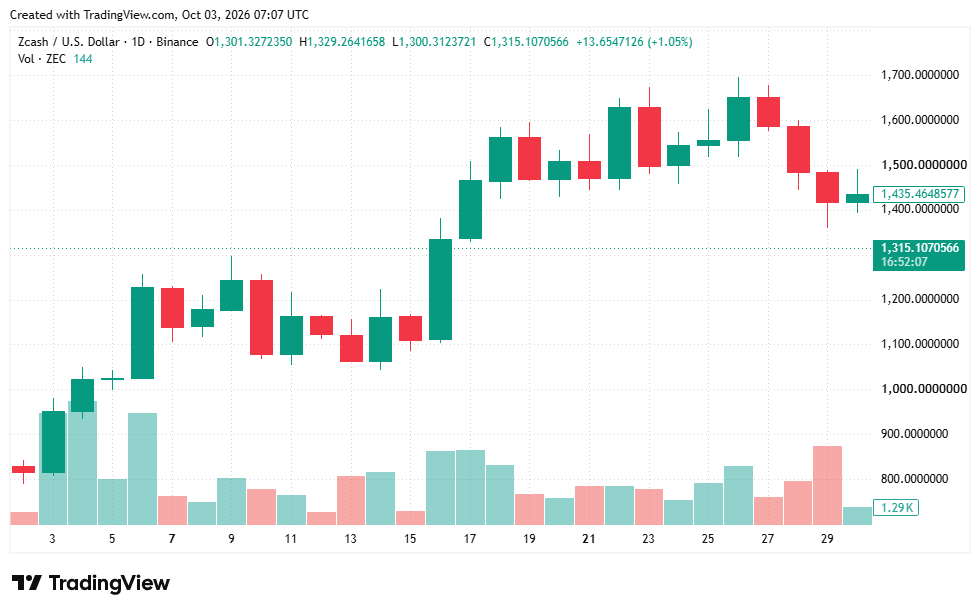
ZCash climbed roughly 73% across September 2026, advancing from the mid-$800s to peaks near $1,600 before settling around $1,318–$1,440 by month-end.
The privacy-focused coin now ranks near the top 10 with a market capitalisation above $22 billion.
Traders are examining the forces behind that move and the levels that matter most as October begins.
What Sparked the Strong ZCash Rally in September?
Several catalysts arrived in close succession to lead ZEC to this enormous ascension.
First and foremost, Grayscale converted its long-running ZCash Trust into the ZCSH spot ETF on NYSE Arca in late August, opening a regulated path for traditional investors.
Secondly, 21Shares listed a physically backed Zcash ETP on Euronext Paris and Amsterdam, expanding European access.
At the same time, Paradigm co-founder Matt Huang publicly highlighted ZCash as a private complement to Bitcoin on September 16, 2026.
“As ZCash grows in acceptance and adoption as a private complement to Bitcoin, we think pure coinvoting governance introduces unpredictability that could limit long-term trust as a monetary asset, and it is better for the project to combine coinvoting with other forms of governance.”
ZCash co-founder Eli Ben-Sasson repeated a longer-term $5,000 call.
Meanwhile, short liquidations and rising open interest amplified the upward pressure once price cleared key resistance.
How Does Privacy Technology Factor into ZCash’s Recent Strength?
ZCash stands out through its optional shielded transactions powered by zero knowledge (zk)-SNARKs.
Users can choose fully private transfers that hide amounts and addresses while still settling on a public blockchain.
Interest in that feature has grown as institutional products arrived and as broader market participants sought assets retaining a stronger cypherpunk character.
In addition, the network’s capped 21-million supply and ongoing development, including discussion of the NU7 upgrade, reinforced the scarcity and technology narrative that supported the September advance.
What Price Levels Should Traders Monitor for ZCash Now?
After the late-September 2026 pullback, the $1,280–$1,300 zone has acted as near-term support, coinciding with moving-average clusters.
On the upside, the $1,450–$1,500 band remains the first meaningful resistance after the recent high near $1,600–$1,680.
A sustained break above that region could open room toward $1,800, while a decisive close below $1,280 would raise the odds of a deeper retracement toward the $1,200 area.
Volume and futures open interest will help confirm any directional move through these levels.
Is the ZCash Move Sustainable Beyond the Initial Surge?
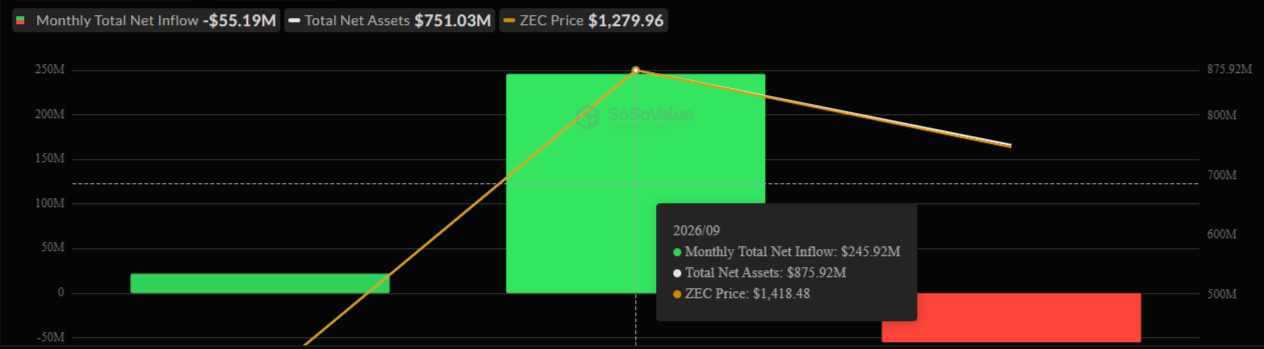
Sustainability depends on continued inflows into the new exchange-traded funds (ETFs) and exchange-traded products (ETP) plus steady demand for the privacy use case.
Grayscale’s fund has already drawn hundreds of millions in assets, and shielded-pool activity has kept a meaningful portion of supply less liquid.
However, sharp rallies often invite profit-taking and leverage flushes, as the early-October 6–8% weekly decline illustrated.
Looking ahead, progress on network upgrades and any further institutional positioning will determine whether the September gains form a durable base or prove temporary.
What Role Do Institutional Products Play for ZEC Going Forward?
The arrival of the first U.S. spot ETF for a privacy coin and complementary European ETPs changed the accessibility profile of ZCash.
These vehicles allow wealth managers and brokerage clients to gain exposure without direct custody, potentially broadening the buyer base.
In parallel, venture interest and mining participation have increased, adding another layer of structural support.
Together, these developments help explain why ZCash outperformed most large-cap peers during the September window and why attention remains elevated as the fourth quarter opens.
ZCash enters October with higher visibility, clearer institutional channels, and a technical structure reshaped by the recent surge.
ZEC stakeholders must watch ETF flows, shielded-pool metrics, and the $1,300–$1,500 range for the next decisive signals.
