

Bitcoin miners revenue reflects the health of the entire mining ecosystem. Miners actively generate income through block rewards and transaction fees.
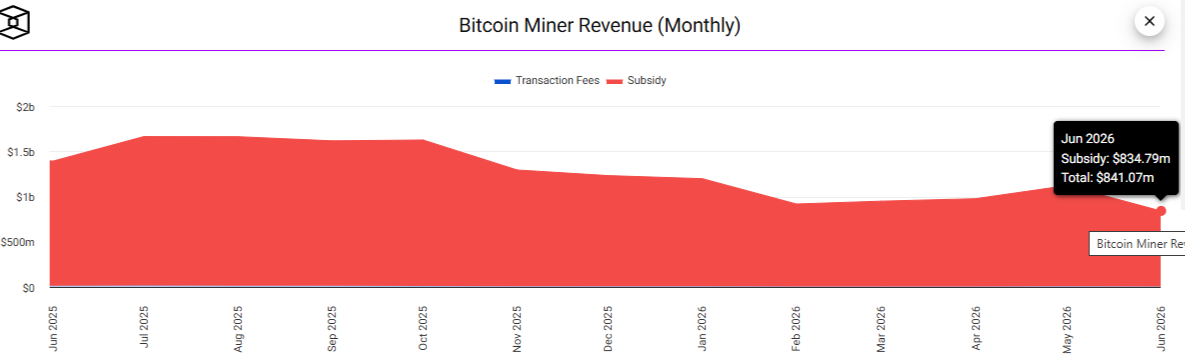
However, recent data reveals a concerning slump. BTC miners revenue for June 2026 reached only $841 million.
This figure falls dramatically below the $1.4 billion recorded in June 2025. Moreover, it sits well under the year’s peak of $1.2 billion.
Thus, industry participants seek answers and future clarity.
Understanding the Sharp Drop in Bitcoin Miners Revenue
Several interconnected factors drive this downturn in Bitcoin miners revenue.
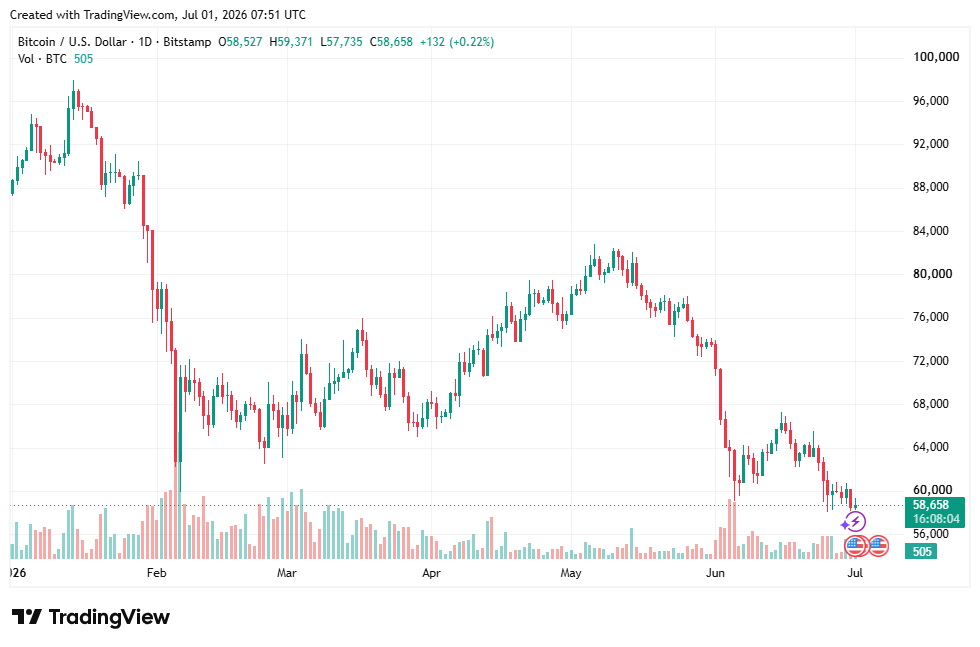
First and foremost, Bitcoin’s price consolidation limits block reward value. Miners who expanded operations during bullish periods now face margin pressure.
Additionally, the halving event reduced block subsidies, forcing greater reliance on transaction fees.
Furthermore, heightened competition intensifies the challenge. New entrants and efficient operators capture larger shares, while older hardware becomes unprofitable.
As a result, many miners curtail operations or exit entirely. Transitioning to this reality, hash rate fluctuations reveal a more competitive landscape that squeezes overall Bitcoin miners revenue.
Broader Market Dynamics Impacting Bitcoin Miners Revenue
Macroeconomic conditions powerfully influence BTC miners revenue. Investors monitor interest rates and institutional flows closely.
When capital shifts elsewhere, Bitcoin experiences reduced volatility and lower fees. Miners earn less from network activity.
Moreover, energy costs remain a critical variable. Operators in high-cost regions struggle particularly hard.
Nevertheless, efficient miners with access to renewable energy maintain advantages.
They actively optimise operations and sustain profitability even as industry-wide Bitcoin miners revenue contracts.
Will Bitcoin Cross $150,000 in 2026?
Optimism persists despite current pressures. Analysts forecast potential upside if institutional adoption accelerates. Bitcoin ETFs continue attracting capital, which supports higher valuations.
Additionally, favourable regulatory developments could unlock fresh demand.
Furthermore, historical patterns suggest strong post-halving cycles. Miners who survive the current squeeze often benefit most during subsequent rallies.
Therefore, many experts believe Bitcoin could realistically challenge $150,000 by year-end if macroeconomic conditions align. Active accumulation by long-term holders reinforces this bullish case.
Strategic Outlook for Mining Operations
Forward-thinking miners adapt aggressively to restore BTC miners revenue.
They invest in next-generation equipment and explore diversification into artificial intelligence (AI) computing or other blockchain services.
Moreover, some form strategic partnerships to stabilize cash flows.
The industry consolidates around stronger players. This evolution strengthens the network’s security while rewarding efficiency.
Investors who track BTC miners revenue metrics gain valuable insights into broader market sentiment.
Ultimately, the current slump represents a cyclical adjustment rather than permanent decline.
As Bitcoin matures, miners who innovate and optimize will drive the next growth phase.
Those who monitor key trends in Bitcoin miners revenue position themselves advantageously for future opportunities.