

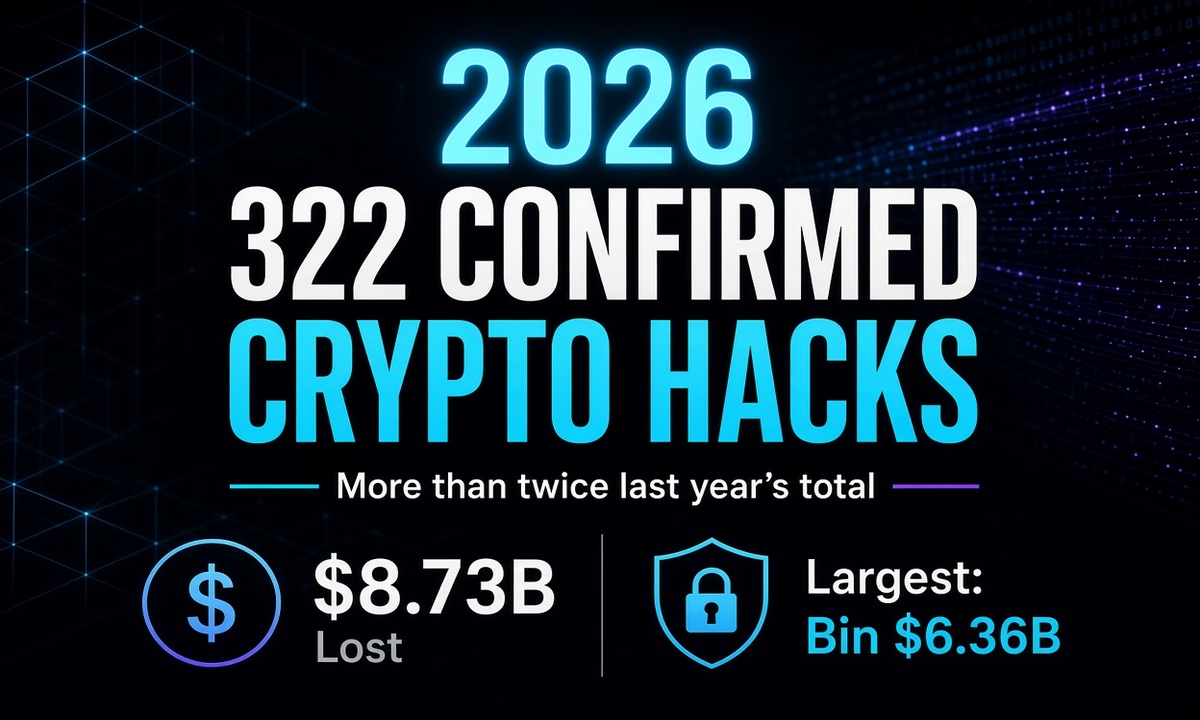
Crypto hacks keep climbing at a startling pace. DefiLlama data shows 322 confirmed incidents already in 2026, with two months still remaining. That total already tops twice the full-year figure from 2025.
The sheer volume stands out even more than the dollar figures. Losses this year sit near $8.73 billion, yet one event drives most of the money.
On Thursday, October 29, 2026 attackers drained roughly $6.36 billion from Binance infrastructure in what DefiLlama classifies as a front-end and key-leak case.
Remove that single night and the remaining 321 incidents average closer to $7.4 million each.

Why Are Crypto Hacks Rising So Fast in 2026?
Attack surfaces simply expanded. More protocols, more bridges, more centralised services, and more everyday infrastructure now hold value.
Meanwhile, sophisticated actors—including groups linked by analysts to North Korea—have refined social engineering and supply-chain methods.
Frequency jumped while average size of non-outlier events stayed more modest until the Binance case hit.
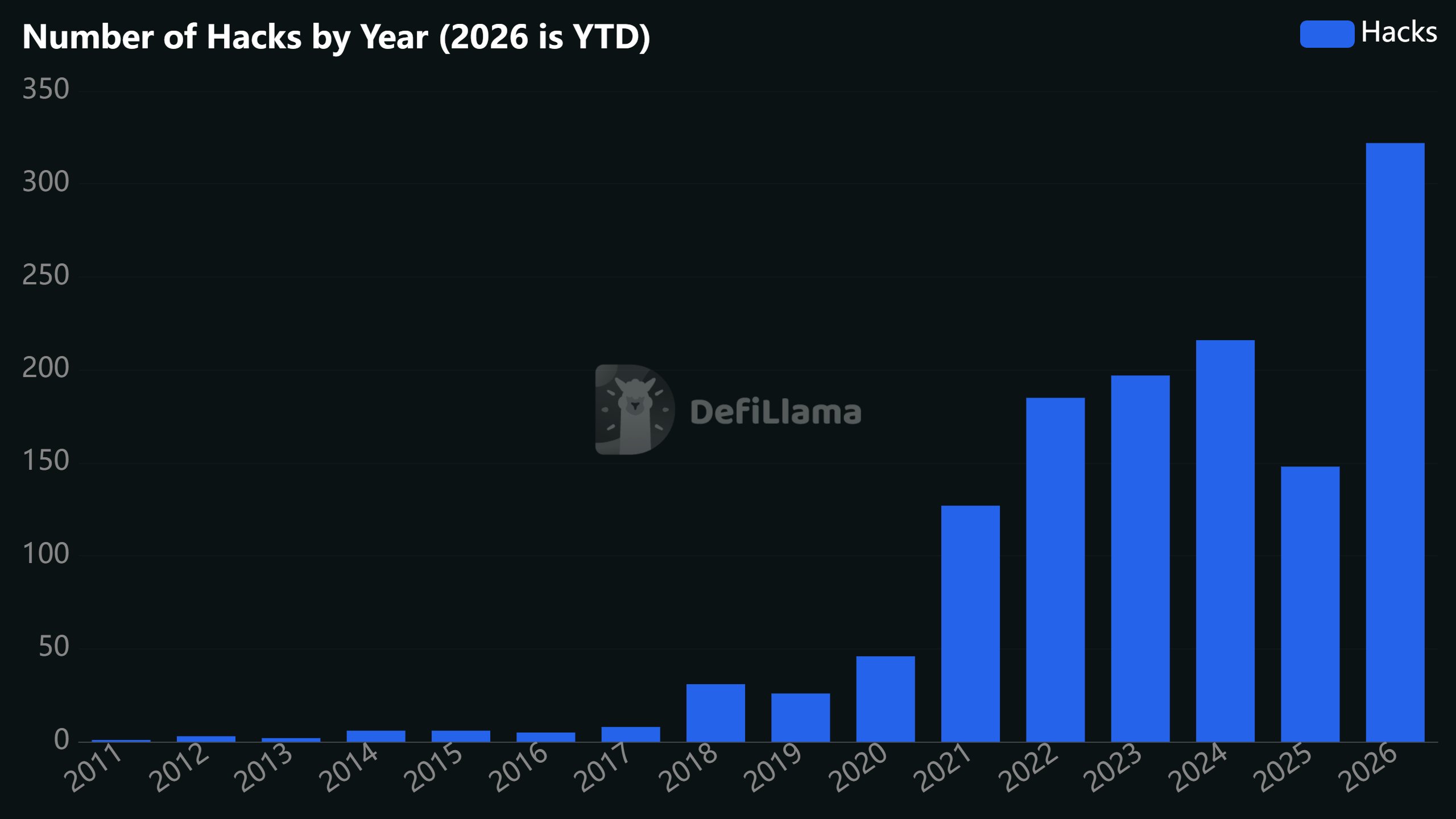
Historical charts from DefiLlama illustrate the climb. Numbers stayed low through the early 2010s, rose steadily after 2020, peaked near 210 in 2024, dipped in 2025, then surged past every prior mark this year.
What Caused the Largest Crypto Hack of 2026?
Investigators point to compromised operational infrastructure rather than a classic smart-contract bug.
Reports indicate a DevOps laptop or related service container allowed unauthorised withdrawals across multiple chains.
Binance has pledged full coverage via its SAFU fund and reserves while freezing portions of the funds on-chain.
Other notable 2026 events include Bitget’s earlier $387 million loss and various decentralised finance (DeFi) and bridge incidents, yet none approached the scale of the late-October exchange breach.

How Do Most Crypto Hacks Actually Happen?
Common vectors include leaked or compromised private keys, weak access controls, supply-chain attacks on front-ends, and cross-chain message spoofing.
Hot-wallet compromises and infrastructure key leaks account for outsized shares of total value lost.
Pure smart-contract logic flaws still occur, yet operational and human-factor failures dominate the biggest payouts.

What Can Users and Projects Do Against Crypto Hacks?
Projects must treat custody infrastructure with the same rigour as on-chain code—regular third-party audits, multi-party controls, hardware isolation, and rapid incident response.
Users benefit from minimising hot-wallet exposure, verifying addresses carefully, and preferring audited protocols with transparent security histories.
Industry-wide, better real-time monitoring and shared threat intelligence continue to help, though perfect protection remains elusive.
The 322-count milestone, arriving before November 2026 even begins, shows that crypto hacks remain a structural challenge.
Transparent trackers such as DefiLlama give the community clear numbers to work from.
Those numbers now demand equally clear security upgrades if the space hopes to keep building trust.
