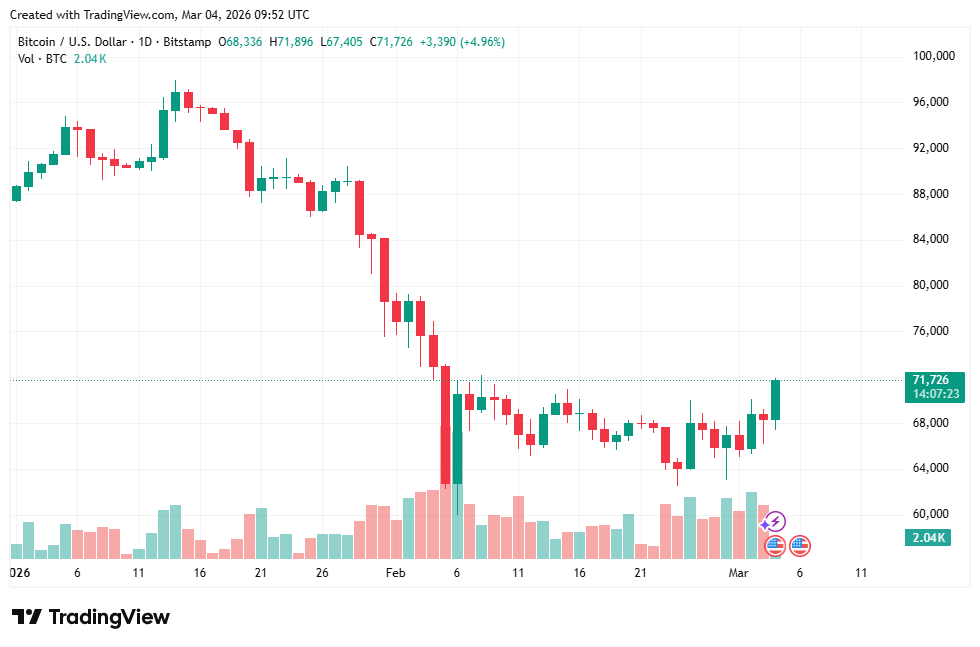


Bitcoin surges above $71,000, gaining over 6% in the last 24 hours, and investors worldwide take notice.
This powerful rally demonstrates Bitcoin’s remarkable resilience to escalating Middle East geopolitical tensions, including U.S.-Israel airstrikes on Iran and subsequent retaliatory actions.
While traditional markets reel from risk-off sentiment, Bitcoin leads broad cryptocurrency advances and solidifies its position as a potential digital safe-haven asset.
Geopolitical Tensions Trigger Market Chaos—But Bitcoin Stands Strong
U.S. and Israeli forces launch airstrikes targeting Iranian sites, sparking fears of wider regional conflict. Iran responds aggressively, disrupting oil supplies and heightening global uncertainty.
As a result, major stock indices plummet: South Korea’s Kospi index drops sharply by around 12%, Asian equities hit multi-year lows, and European benchmarks like the Stoxx Europe 600 slide over 3%.
Oil prices spike amid supply concerns through the Strait of Hormuz.
Yet Bitcoin reacts differently. It briefly dips during initial panic but quickly rebounds, climbing above $71,000 and posting gains exceeding 6% within 24 hours.
This bounce highlights crypto’s decoupling from traditional risk assets in times of crisis.
Analysts praise Bitcoin’s strength against a stronger U.S. dollar backdrop, noting how it absorbs shocks better than many expect.

Bitcoin vs. Traditional Markets: A Clear Contrast in Performance
Global equities face heavy selling pressure as investors flee to safety. Precious metals like gold surge, but Bitcoin outperforms in relative terms during this turmoil.
Ethereum and Solana, which are both cryptocurrencies, also rise significantly—often over 8%—fueling overall crypto market capitalisation growth.
Institutional demand plays a key role here. Bitcoin ETFs attract substantial inflows, supporting the upward momentum even as volatility spikes.
On-chain metrics show minimal panic selling from short-term holders, reinforcing confidence.
Moreover, Iran’s crypto outflows reportedly surge, indicating capital flight into digital assets amid local instability.
What Drives This Bitcoin Price Surge Despite Geopolitical Risks?
Several factors converge to propel Bitcoin higher.
First and foremost, buyers aggressively defend key support levels around $65,000–$67,000 after weekend lows near $63,000.
Secondly, leveraged short positions face liquidations during rapid rallies, amplifying gains.
Thirdly, market sentiment shifts toward viewing Bitcoin as “digital gold”—a store of value that holds firm when fiat systems face stress.
Traders are now eyeing resistance near $73,000–$75,000, with some patterns suggesting potential breakouts if tensions stabilise.
However, extreme caution remains: correlations with oil and gold tighten, and any further escalation could test this resilience anew.
Looking Ahead: Bitcoin’s Path in Uncertain Times
Bitcoin’s surge to over $71,000 marks a pivotal moment. It proves crypto’s evolving role beyond speculative trading, especially amid real-world geopolitical events.
As Middle East developments unfold, investors watch closely for de-escalation signals or new catalysts like U.S. economic data.
This event shows why many turn to Bitcoin during uncertainty—it rebounds faster and stronger than many traditional havens. Stay informed, monitor live prices, and remember: cryptocurrency markets move quickly amid global headlines.