

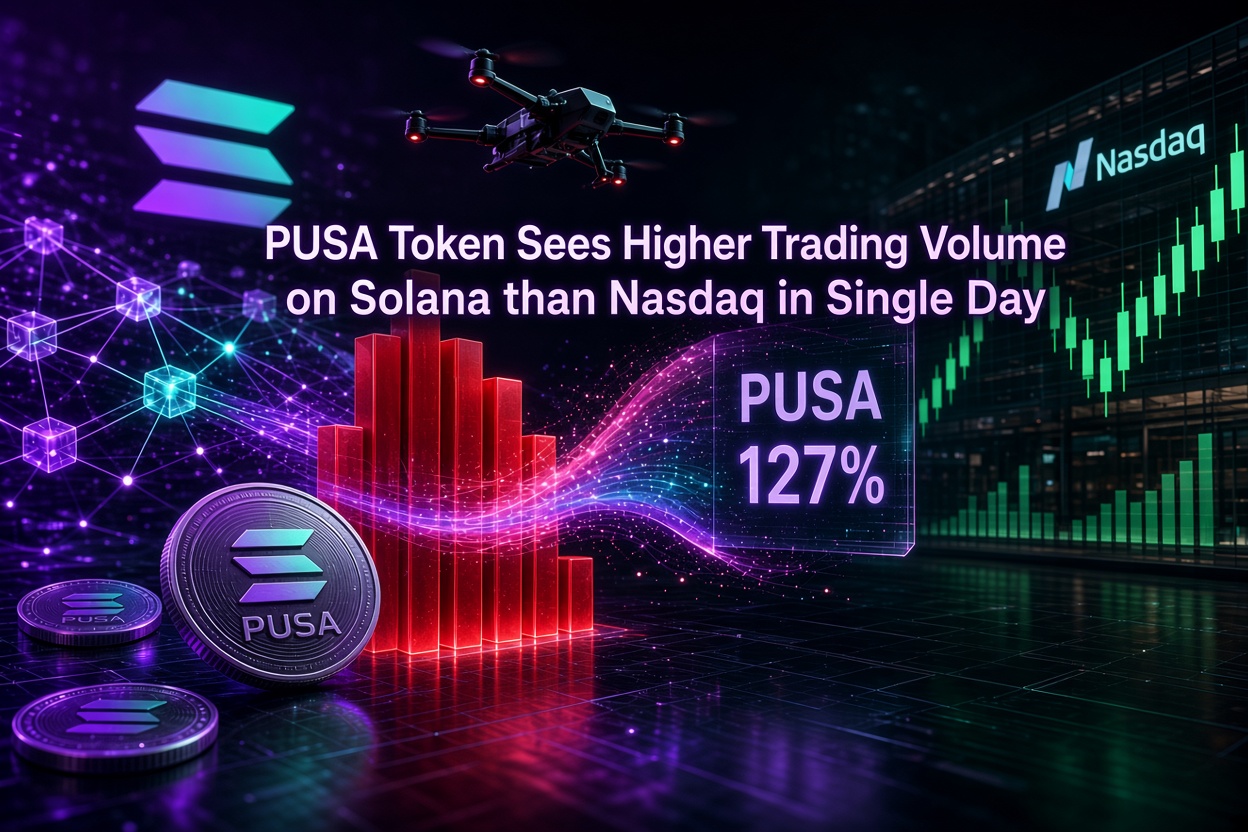
Powerus Corporation’s tokenized shares, known as PUSA, just delivered a striking market signal.
On its first full day of on-chain trading, the Solana version of the stock generated more dollar volume than the same shares did on Nasdaq.
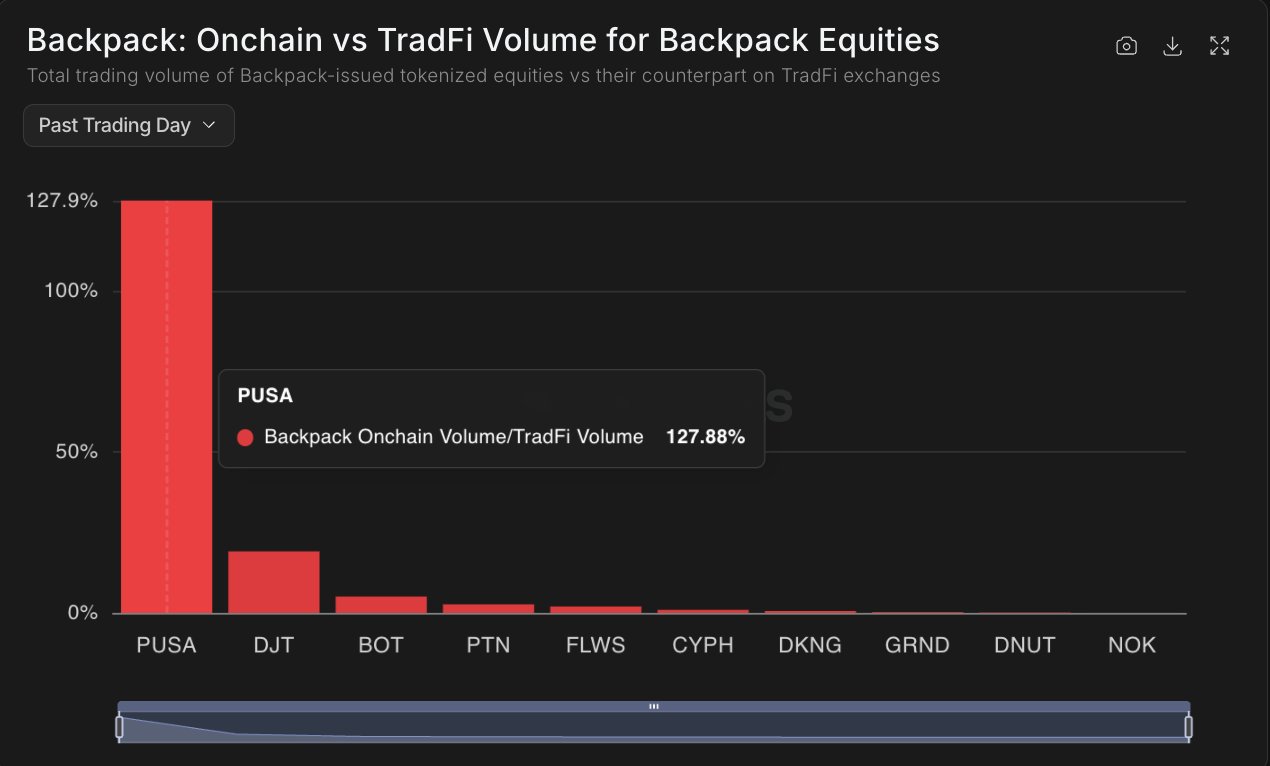
Messari Crypto highlighted the data point with a clear chart: Backpack’s on-chain PUSA volume reached 127.88% of the traditional market’s volume for that trading day.
The numbers landed quickly. PUSA tokens went live on Solana on Friday, October 2, 2026 through Backpack Securities and the Sunrise platform, one day after Powerus completed its merger with Aureus Greenway Holdings and began trading on Nasdaq under the same ticker.
Early reports put first-four-hour on-chain volume near $8 million—more than double the Nasdaq figure in the same window—and total first-day volume around $12 million.
What Exactly Is the PUSA Token?
PUSA on Solana is not a memecoin or a separate crypto asset. Each token represents a real Powerus common share held in custody.
Holders can redeem it one-for-one for the underlying Nasdaq-listed stock or transfer the position into a traditional brokerage account when eligible.
The canonical mint address is PUSAG1stksTcAoK9MjinEHUwAYRJsbovywYCk37m6hy.
Both Sunrise and Backpack published it and urged traders to verify before buying, given how easily look-alike tokens can appear.
Powerus itself builds autonomous drones, counter-drone interceptors, and related systems for high-risk environments.
The company secured recent defence orders, including a roughly $2.5 million first-person view (FPV) aircraft purchase and a longer-term Air Force IDIQ contract with a potential ceiling of $90 million.
The Nasdaq listing and near-immediate tokenization turned a traditional defence-tech equity into a 24/7 tradable instrument.
Why Did On-Chain Volume Outpace Nasdaq?
Several factors lined up at once. Solana markets never close, so trading continued after the Nasdaq bell and through the night.
Liquidity formed quickly across Raydium, Jupiter, Phantom, and other major Solana venues.
Retail and on-chain traders who cannot easily access or stay up for U.S. equity hours found an immediate way in.
At the same time, the novelty of a brand-new public company appearing on-chain the next day drew attention and speculative flow.
Backpack Onchain later noted that the token logged roughly $11.6 million in its first 12 hours—about 1.4 times Friday’s Nasdaq turnover and three times the stock’s recent daily average.
The Messari chart confirmed the broader pattern: among Backpack-issued tokenized equities that day, PUSA stood far ahead of peers such as DJT, BOT, and others.
How Does Tokenization Change Access for Investors?
Tokenized shares let anyone with a Solana wallet trade outside traditional market hours, across borders, and with lower friction than many brokerage setups.
Settlement happens on-chain in seconds rather than the multi-day T+1 or T+2 cycle of traditional markets.
Redemption rights keep the instrument tethered to the real equity, which reduces some of the pure-speculation risk that pure memecoins carry.
Still, price discovery can diverge between the two venues, especially overnight, and liquidity depth remains thinner than the Nasdaq order book.
PUSA: Is This the Start of a Larger Trend for Tokenized Equities?
Early evidence points that way. Other tokenized stocks have already appeared on Solana through the same rails, and network-wide data previously showed that a majority of tokenized-equity volume already occurs outside U.S. market hours.
When a defence-tech name can out-trade its own Nasdaq listing on day one, the infrastructure is clearly ready for more listings.
Future volume records will depend on sustained liquidity, clear regulatory pathways, and whether more issuers choose the same rapid dual-track approach.
PUSA’s debut shows that on-chain markets can absorb meaningful equity volume almost immediately after a traditional listing.
Traders, issuers, and infrastructure providers must follow closely to see whether the pattern repeats with the next wave of tokenized stocks.
