

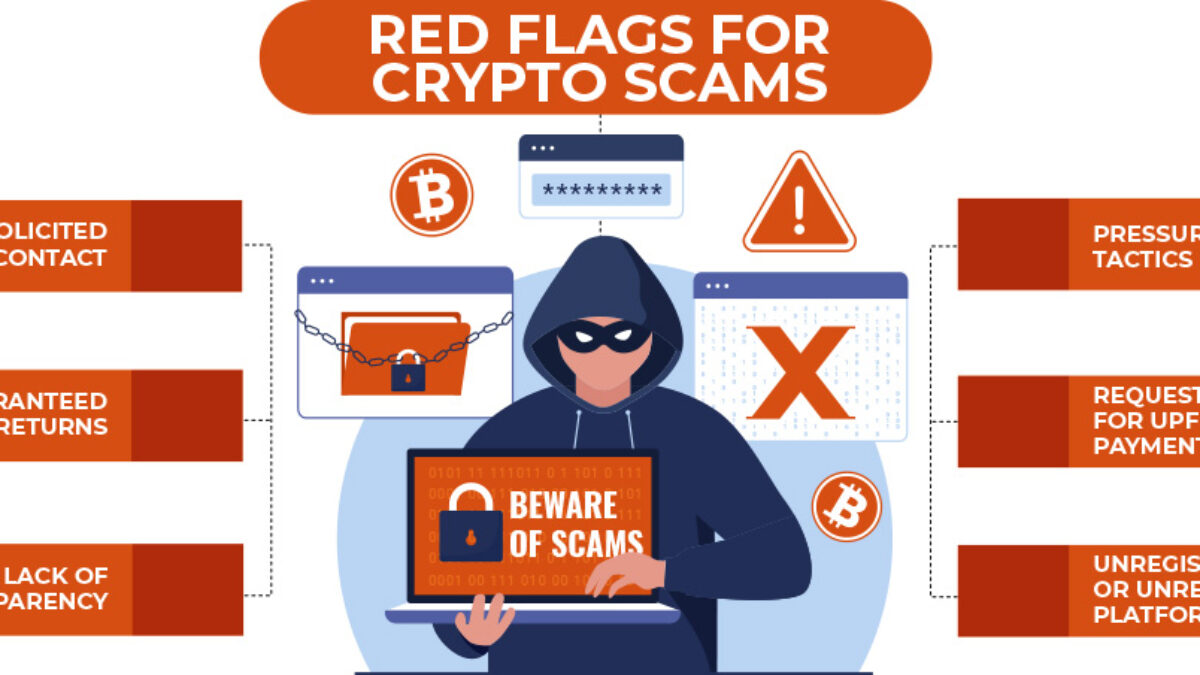
Cryptocurrency continues to attract massive interest, but it has also made crypto scam a common theme within the crypto economy.
In 2026, staying informed about the most dangerous crypto scam types is essential to protect your investments.
This guide breaks down the top 10 threats, complete with how they work, their scale, and practical ways to spot and avoid them.
1. Pig Butchering (Sha Zhu Pan)
Pig Butchering, also known as Sha Zhu Pan, is a long-con romance and investment fraud. Scammers build a relationship over weeks or months before introducing a fake crypto investment platform.
The Chinese term sha zhu pan (the pig-butchering plate) describes the patient fattening of a victim before financial slaughter.
This scam has siphoned well over $4.4 billion in a single year. The FBI’s Operation Level Up, which began in January 2024, identified and notified 8,103 victims before they lost additional funds.
How to spot it: Any online relationship — regardless of duration — that introduces a crypto investment opportunity is almost certainly pig butchering. Legitimate investors do not recruit strangers online. Ever.
2. AI Deepfake Celebrity Endorsement Scams
AI Deepfake Celebrity Endorsement Scams use AI-generated video or audio of celebrities — most frequently Elon Musk or Vitalik Buterin — appearing to endorse a fake giveaway or investment platform.
Losses from deepfake fraud reached $897 million cumulatively, with $410 million in just the first half of 2025 alone.
Elon Musk was targeted in 20 deepfake incidents, comprising 24% of all celebrity deepfake fraud. AI voice cloning has crossed the indistinguishable threshold, meaning human listeners can no longer reliably distinguish cloned voices from authentic ones.
How to spot it: No legitimate crypto giveaway requires sending crypto first to receive more back. This mechanic is always a scam — no exceptions.
3. Rug Pulls and Honeypot Tokens
Rug Pulls and Honeypot Tokens occur when developers create a token, attract buyers through hype, then drain the liquidity pool or sell their holdings simultaneously — crashing the price to zero.
Honeypots allow buying but block selling through malicious smart contract code.
Rug pulls accounted for over $2.8 billion in losses during 2025, with a notable shift from DeFi and NFT projects to memecoin-related schemes.
How to spot it: Run the contract address through Honeypot.is before buying. Verify liquidity is locked for at least 90 days. Check token distribution for concentrated wallets funded from the same source.
4. Phishing Scams Targeting Exchanges and Wallets
Phishing scams involve fake exchange security alerts, KYC update requests, and withdrawal confirmation emails directing you to a site that looks identical to the real platform but records your credentials.
AI now generates perfectly written phishing emails with no detectable errors.
How to spot it: Set an anti-phishing code on every exchange. Never click links in unsolicited emails. Navigate to exchanges directly via bookmarks. Any email without your personal code is not from the exchange.
5. Fake Crypto Recovery Services
Fake Crypto Recovery Services target victims after they lose funds to a crypto scam. Scammers contact them posing as blockchain forensics firms or law enforcement liaisons, promising to recover stolen funds for an upfront fee.
The Chainalysis 2025 report documented victims losing an additional $100,000+ to recovery scams.
How to spot it: No legitimate firm charges upfront fees for crypto recovery. No government agency charges fees to assist scam victims. Report to FBI IC3 at ic3.gov — free of charge.
6. Pump and Dump Schemes Vital Part of Crypto Scam
Pump and Dump Schemes see insiders accumulate a token cheaply, artificially hype it through coordinated social media campaigns and paid influencers, then sell into the price spike while retail investors buy.
Over 700 copycat tokens attempted to impersonate a single legitimate project in early 2025.
How to spot it: Look for near-vertical price spikes on DEXTools with only buy candles visible. Check token age and developer wallet history. Verify influencer disclosures before acting on any recommendation.
7. Fake Exchange and Wallet Crypto Scam
Fake Exchange and Wallet Scams present a convincing imitation of a legitimate platform — complete with trading charts, account balances, and customer support.
All designed to receive deposits and prevent withdrawals.
How to spot it: Verify the exact URL against CoinGecko and CoinMarketCap’s verified exchange listings. Test a small withdrawal before depositing significant funds. Any withdrawal condition (fee, tax, compliance charge) is a stop sign.
8. SIM-Swap Attacks
SIM-Swap Attacks happen when attackers impersonate you with your mobile carrier to transfer your phone number to their SIM card, then reset exchange passwords and bypass SMS-based 2FA.
SIM swap fraud increased over 1,000% year-on-year in the UK.
How to spot it: Sudden unexplained loss of mobile signal is often the first sign. Prevent it entirely by switching from SMS 2FA to an authenticator app or hardware security key on every exchange account.
9. Bitcoin ATM Scam
Bitcoin ATM Scams direct victims to Bitcoin ATMs by phone callers impersonating government agencies, law enforcement, or banks. The FTC reported Bitcoin ATM losses topped $65 million in the first half of 2024 alone.
How to spot it: No legitimate government agency, law enforcement body, or financial institution will ever request payment via a Bitcoin ATM. This mechanic is used exclusively by scammers. Hang up immediately.
10. Advance Fee and Asset Recovery Crypto Scam
Advance Fee and Asset Recovery Scams tell victims that a large amount of cryptocurrency is accessible to them but requires an upfront activation fee, gas fee, or tax to unlock. No such funds exist. The DFPI Crypto Scam Tracker documents this as one of the most consistently reported fraud types.
How to spot it: Any opportunity requiring you to pay money to receive more money is an advance fee scam. No exceptions.
By understanding these 10 most dangerous crypto scam types in 2026, you can navigate the crypto space more safely.
Always verify platforms independently, never share private keys or seed phrases, and remember that if an offer sounds too good to be true, it almost certainly is. Stay vigilant and protect your assets.
