
LayerZero actively emerges as one of the most ambitious interoperability protocols in the crypto space and a trending token in April 2026.
Moreover, it delivers seamless, trustless cross-chain messaging that connects over 50 blockchains.
In this article, we’ll take an overview of LayerZero (ZRO), its core technology and business model, and — most importantly for prospective investors — the pros and cons of whether you should buy LayerZero right now.
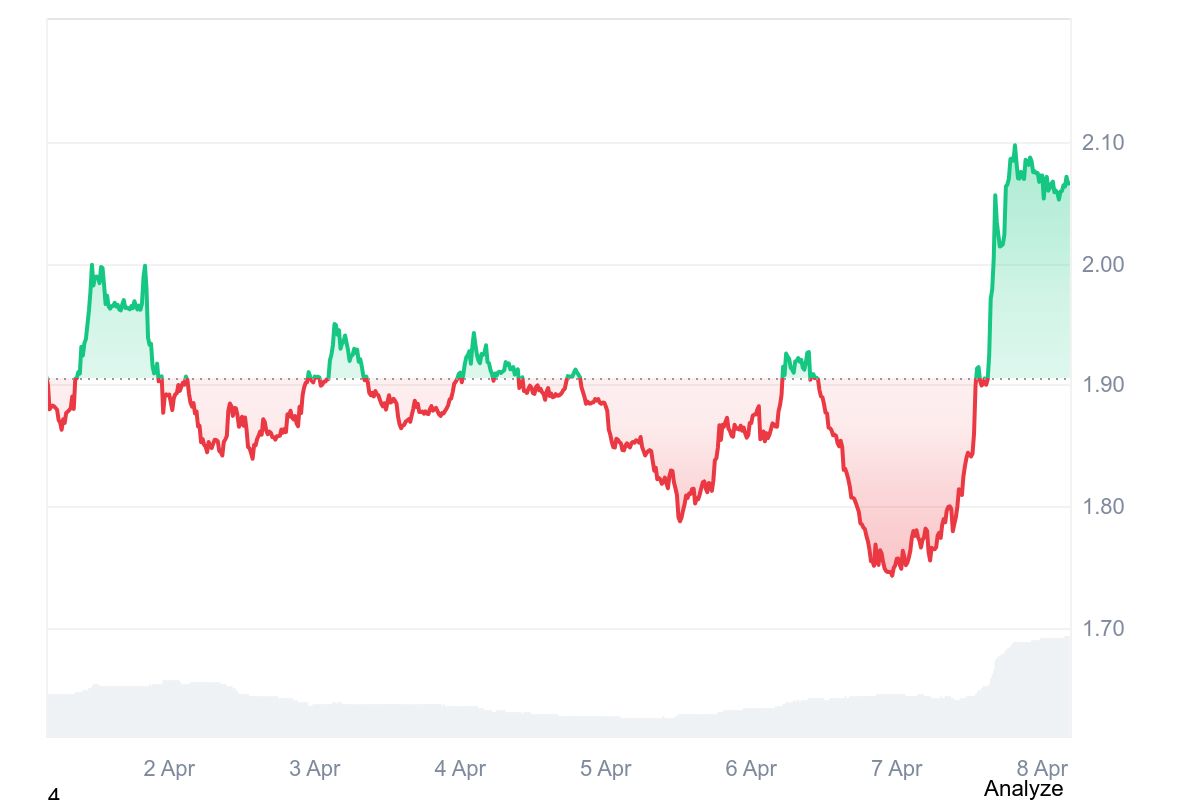
LayerZero (ZRO) has shown strong momentum in early 2026. Furthermore, the token surged over 16.45% in the last 24 hours, pushing its price to approximately $2.06 with trading volume exceeding $91 million.
Thus, this impressive move draws fresh attention from DeFi developers and institutional players alike. Like many interoperability projects,
ZRO rides the multi-chain narrative while benefiting from major ecosystem expansions.
LayerZero competes directly with established players such as Chainlink CCIP and Axelar by offering ultra-light nodes and generic messaging.
Additionally, its recent launch of the institutional-focused “Zero” Layer 1 blockchain positions it strongly in the evolving omnichain future.
LayerZero at a Glance
‘LayerZero’ refers to the omnichain interoperability protocol, while ZRO is its native governance and staking token.
Furthermore, ZRO powers protocol decisions, secures the network through staking, and participates in the upcoming fee-switch mechanism.
Bryan Pellegrino, Ryan Zarick, and Caleb Banister founded LayerZero Labs in 2021.
Moreover, the protocol uses Ultra Light Nodes and Decentralized Verifier Networks to enable lightweight, secure message passing across EVM and non-EVM chains.
The project raised over $255 million from top-tier investors including a16z, Sequoia, Binance Labs, and Coinbase Ventures.
How Many LayerZero (ZRO) Tokens Are In Supply?
Approximately 314.96 million ZRO circulate out of a maximum supply of 1 billion tokens.
Furthermore, this partially unlocked supply creates both liquidity and potential sell-pressure dynamics for investors.
LayerZero Partnerships and Price Performance in 2024–2026
LayerZero actively gained massive traction after its 2024 token launch.
Moreover, it reached an all-time high of $7.53 in December 2024 before correcting to an all-time low near $0.903 in October 2025.
Thus, the token recovered strongly in 2026. The February 2026 announcement of “Zero” — a high-performance Layer 1 backed by Citadel Securities, ARK Invest, Tether, and Google Cloud — sparked fresh rallies and institutional interest.
As a result, ZRO now trades with renewed momentum amid growing omnichain adoption.
Pros of Buying LayerZero
LayerZero actively differentiates itself through revolutionary interoperability technology.
Furthermore, its Ultra Light Nodes and instant finality deliver fast, low-cost cross-chain communication without compromising security.
Additionally, the upcoming Zero L1 blockchain promises up to 2 million TPS and near-zero fees, targeting institutional use cases.
Moreover, major partnerships with Citadel, ARK Invest, Worldpay, and Cardano drive real-world utility.
Thus, ZRO benefits from governance voting, staking rewards, and a potential fee-switch that could create deflationary pressure.
High trading volumes and strong community sentiment further enhance its visibility.
Cons of Buying ZRO
However, LayerZero faces notable challenges. Intense competition in the interoperability sector creates market-share pressure.
Furthermore, the large maximum supply and ongoing distribution generate sell pressure that can trigger corrections.
Additionally, broader regulatory scrutiny on cross-chain protocols remains a persistent risk that could slow adoption.
How to Invest in ZRO?
You can purchase ZRO on major exchanges including Binance, where it trades actively.
Simply create an account, complete verification, deposit funds, and trade the ZRO/USDT pair. Always use secure wallets and enable two-factor authentication.
ZRO Price Predictions: What Are Analysts and Experts Advising?
Analysts offer optimistic yet cautious forecasts. Some project ZRO reaching $2.20–$2.65 by the end of 2026, driven by the Zero L1 launch and institutional adoption.
Longer-term views see potential for $4+ by 2030 if omnichain usage accelerates.
Nevertheless, conservative estimates warn of volatility due to supply dynamics and market conditions.
The Bottom Line ─ Should You Buy LayerZero?
Analysts and on-chain metrics suggest LayerZero shows strong long-term promise thanks to its innovative interoperability design and institutional backing.
Nevertheless, competition, supply overhang, and execution risks make it a high-risk, high-reward asset.
Smart investors therefore conduct thorough research, diversify their portfolios, and only allocate capital they can afford to lose.
Frequently Asked Questions (FAQs)
Can you mine LayerZero?
No — LayerZero does not use mining. Instead, ZRO holders actively stake tokens to secure the protocol and earn rewards.
Will LayerZero go up?
Many analysts believe ZRO could deliver significant upside with the Zero L1 launch and growing adoption, though short-term corrections remain possible.
Why is LayerZero so volatile?
High trading volumes, narrative-driven hype around interoperability, and token distribution schedules create rapid price swings.
Is LayerZero a good crypto?
LayerZero offers compelling technology and real utility as an omnichain protocol, but success depends on execution in a competitive landscape.
